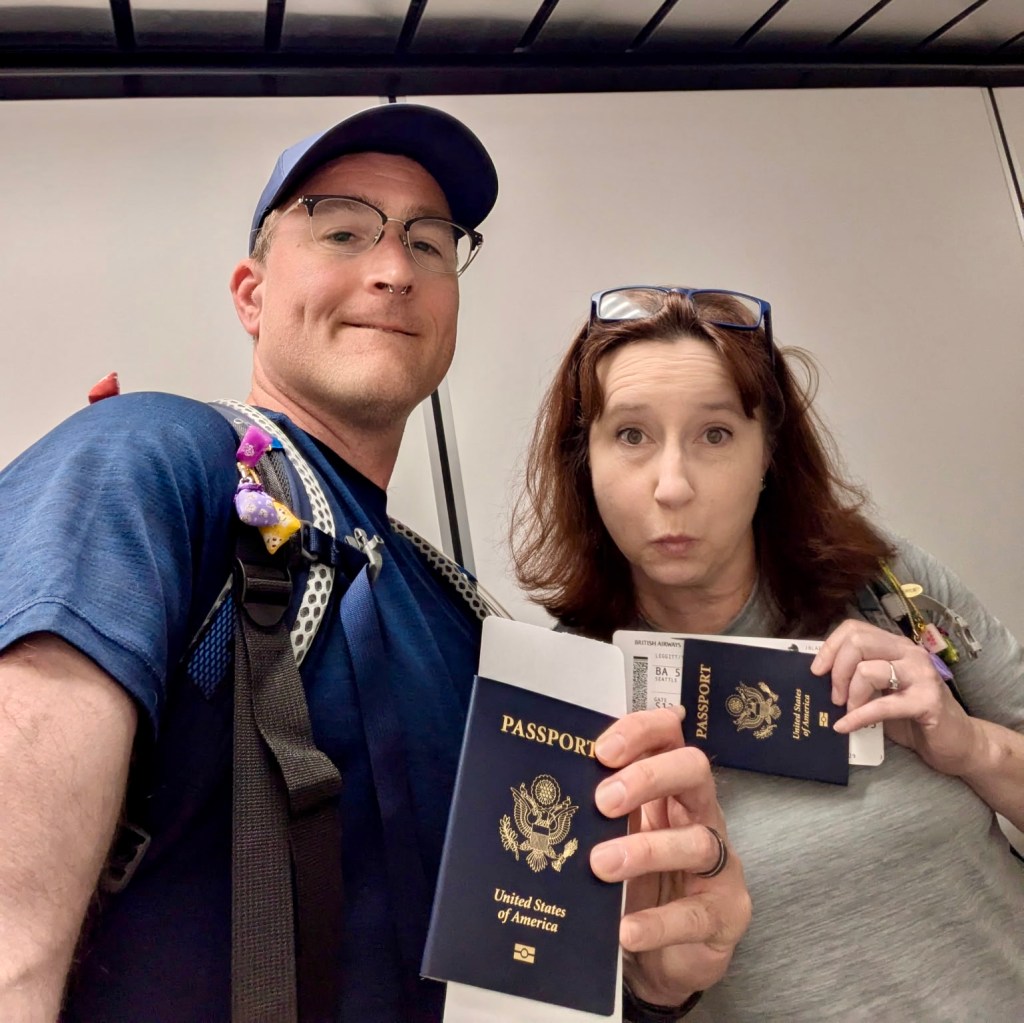
Per usual I was unable to sleep on the plane, and Scott had nearly no sleep as well. Overall it was an easy direct flight from Seattle to London on British Airways, and we even landed a bit early.
Our route from Heathrow to Canterbury would involve taking the Elizabeth Line to the Thameslink connection to St. Pancras, and then getting on a regional rail line. Thank you Google Maps for outlining this type of navigation which in the the past would have taken so much more work… this GenXer still marvels at times. Navigating ourselves in Heathrow to the Elizabeth Line was surprisingly difficult. Was the signage unclear or were we just zombies? A tap of our credit cards took care of our fares until St. Pancras. We attempted to use the kiosk at St. Pancras for our regional line tickets to Canterbury, but were confused as to whether we should pay for a “peak” or “off-peak” fare. I suppose it being a Sunday should have clued us in, but again… zombies, so we elected to stand in the short queue for a real human.
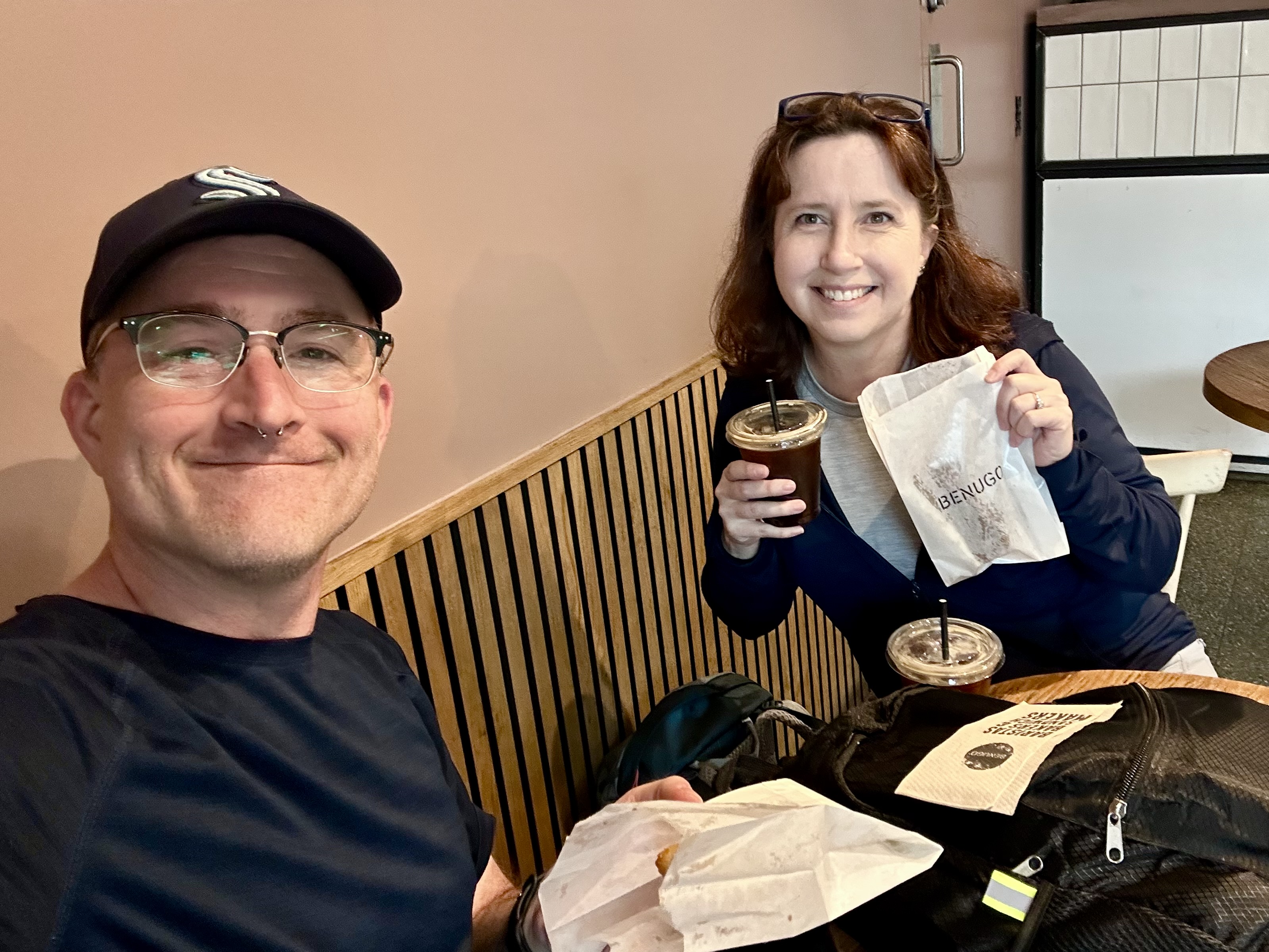
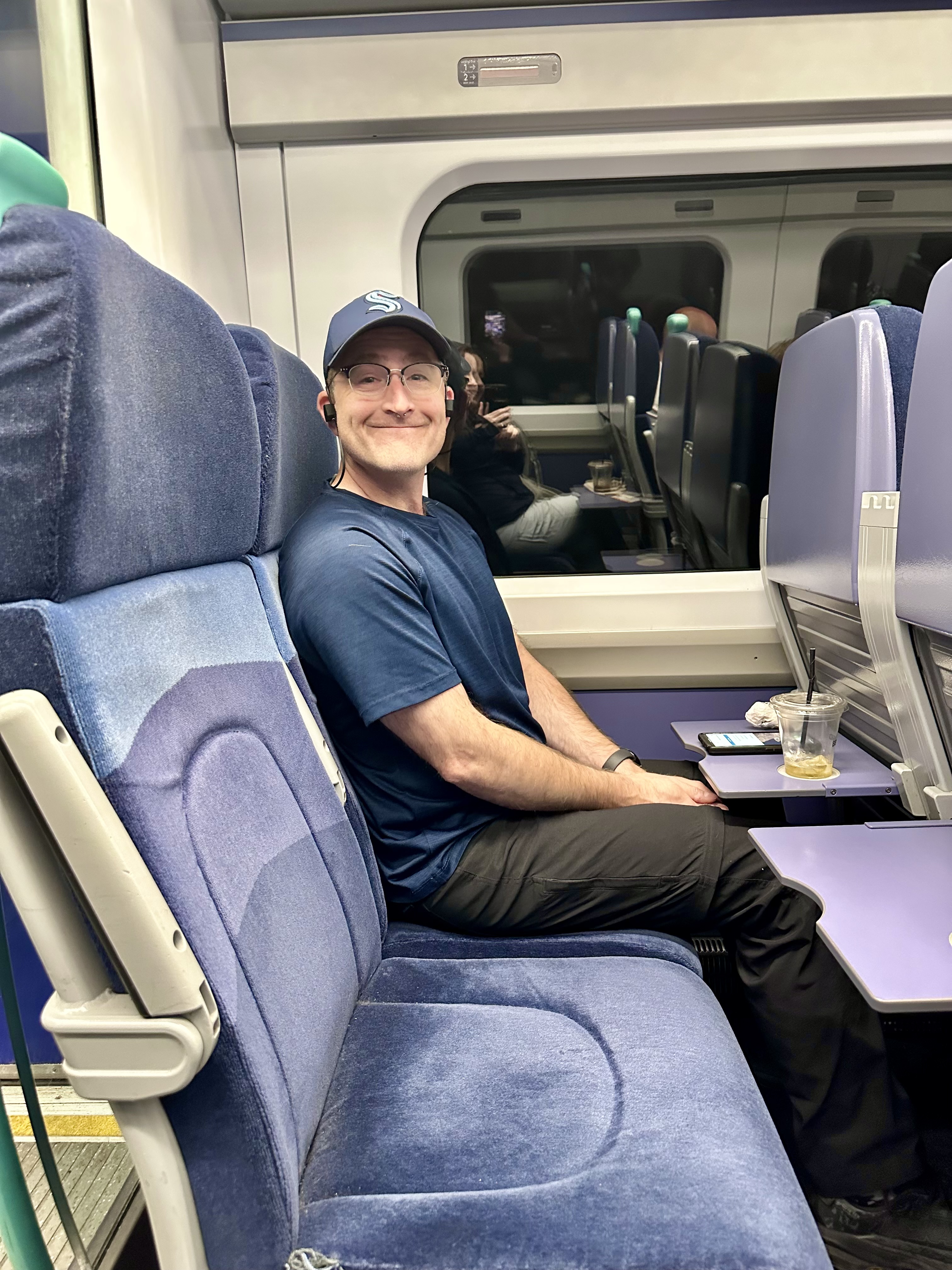
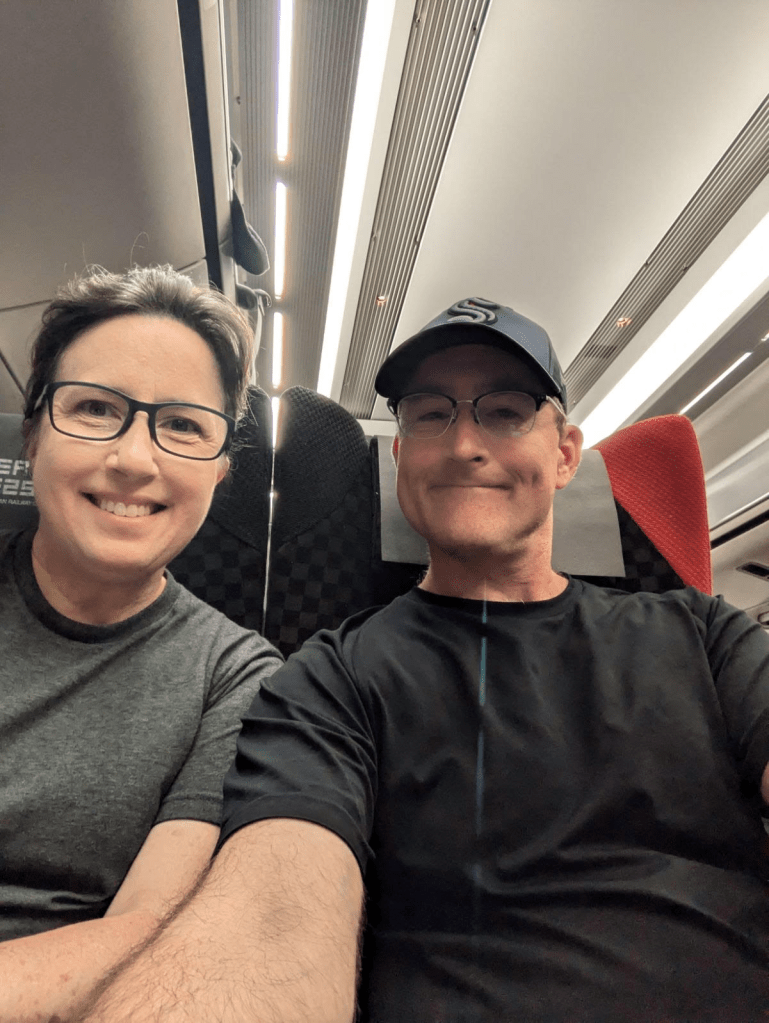
We had a brief wait for our departure from St. Pancras and sat for a coffee and a treat break at Benugo. Our ride to Canterbury was just about an hour, and the uncrowded train meant both of us had window seats to enjoy the view of the countryside.
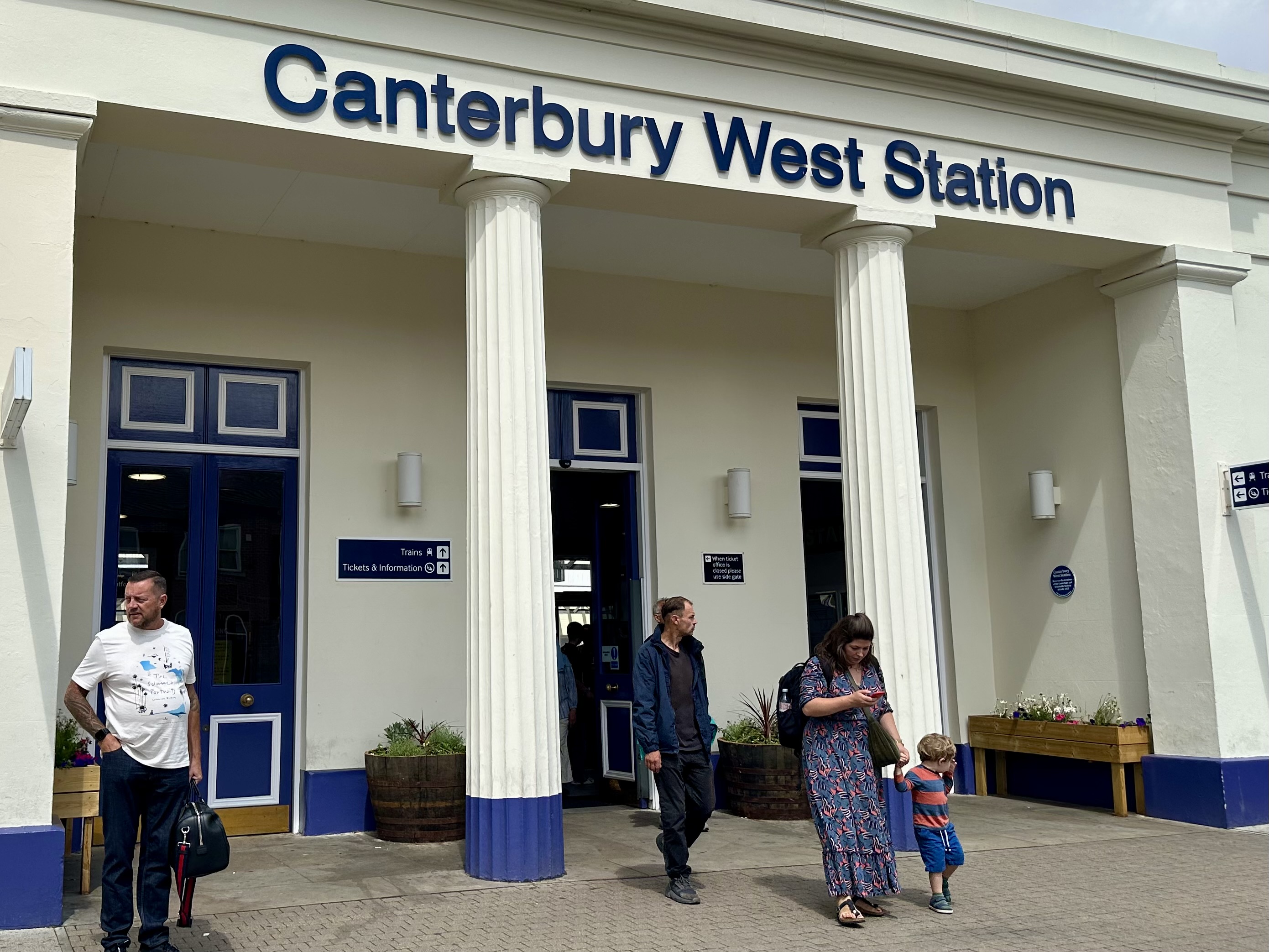
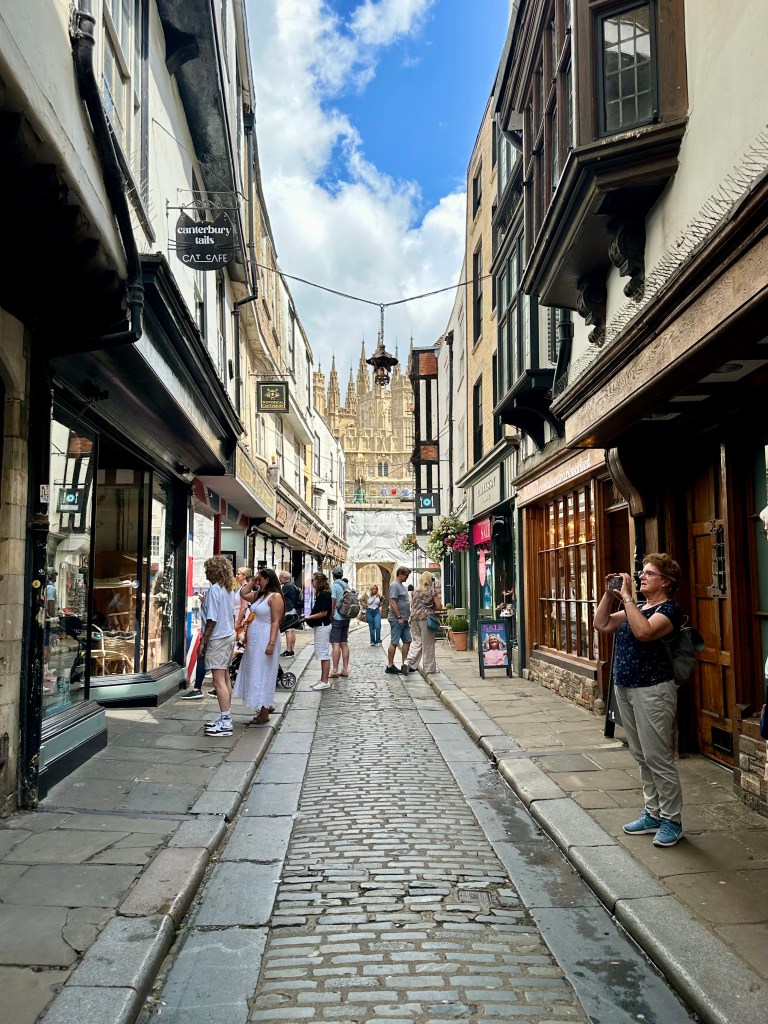
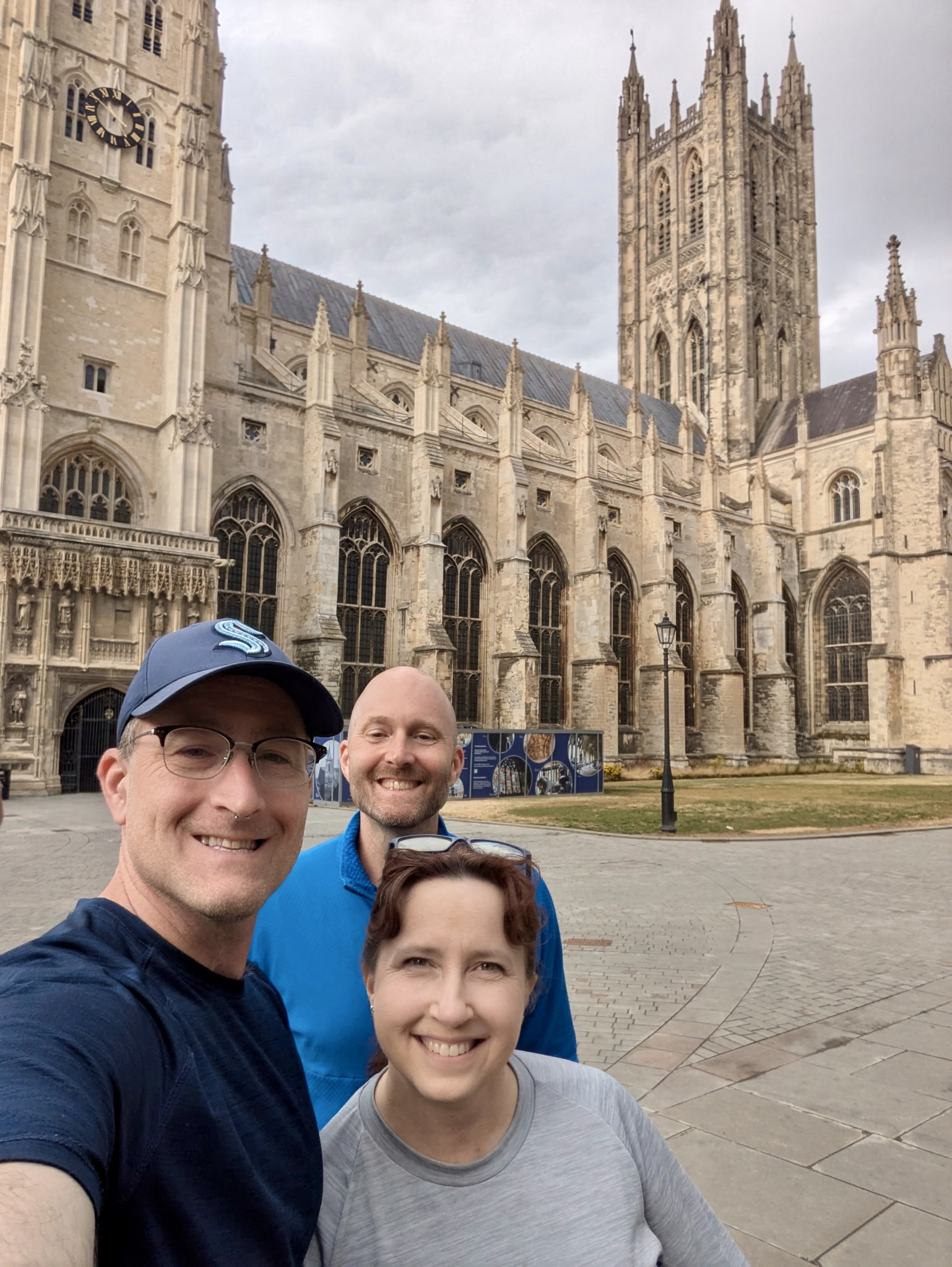
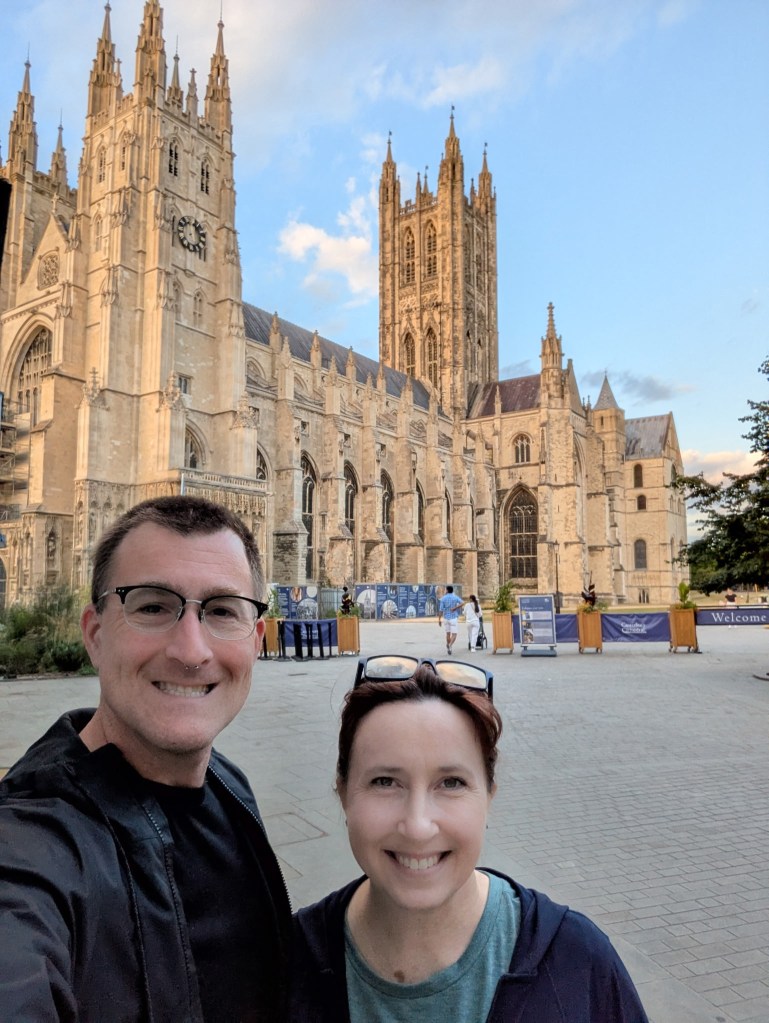
The walk from Canterbury West station to our hotel was a pleasant half mile. When we turned left down Mercery Lane and I got my first view of the cathedral I was moved. I had been looking forward to seeing her, but did not expect her to elicit that much emotion.
At the entrance of the cathedral grounds I told them we had reservations at the Lodge and we were ushered right in, past all the poor souls that have to pay for entry. With the Lodge stay we got free unlimited access! We were about three hours early for check-in but of course able to leave our bags at reception.
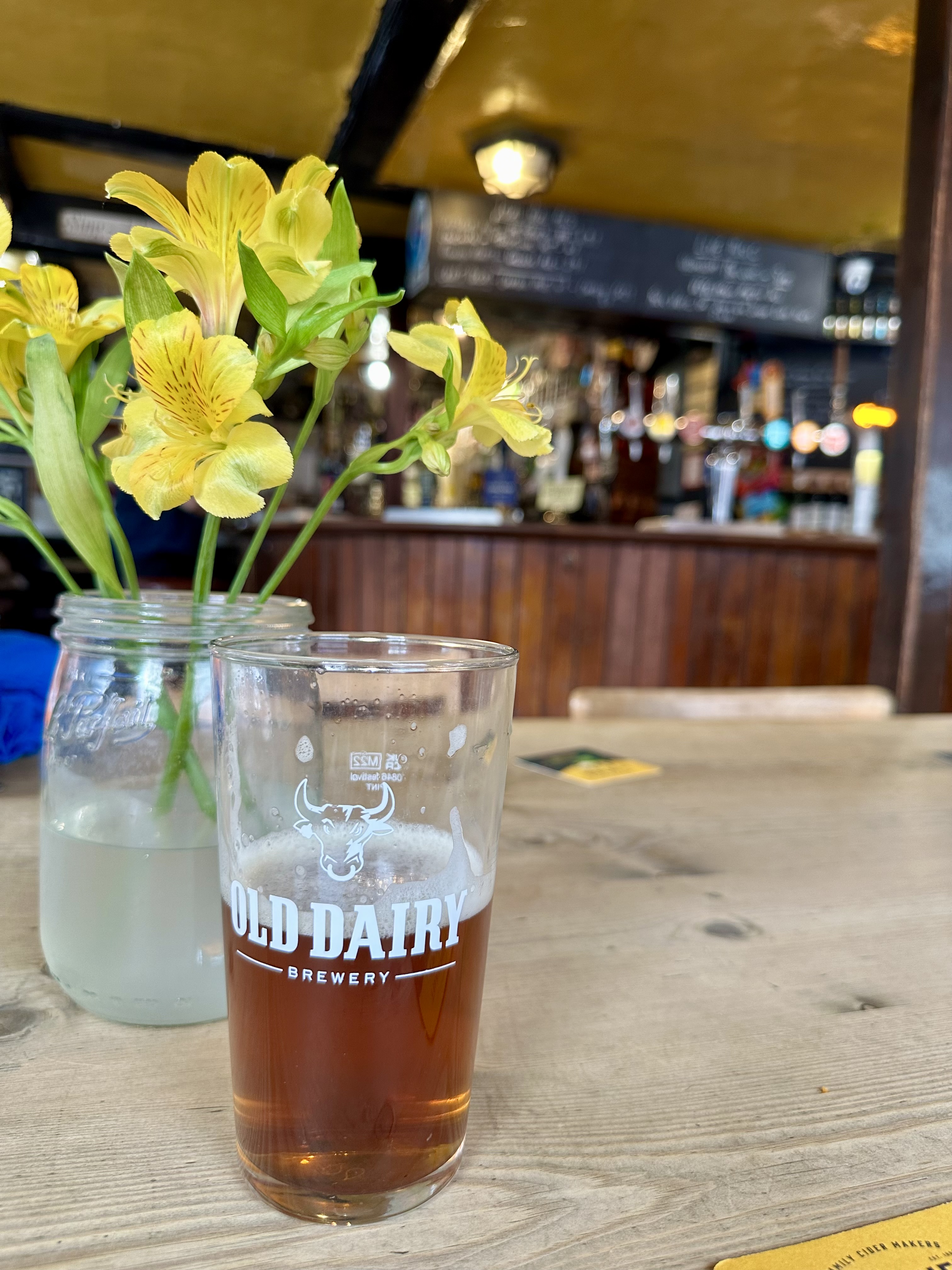
Scott’s brother and his wife live somewhat nearby in Essex, and Steve was able to come meet us for our first visit in six years! The three of us set off to find pints and food, our first stop at the Bell & Crown which was first licensed in 1862. Later we enjoyed some carb-loading at Franco Manca which specializes in sourdough pizzas.
After all of this nutritional intake we meandered the streets aimlessly until it was time to check-in at the hotel. I knew the Lodge was on the grounds of the cathedral, but didn’t realize exactly how close!
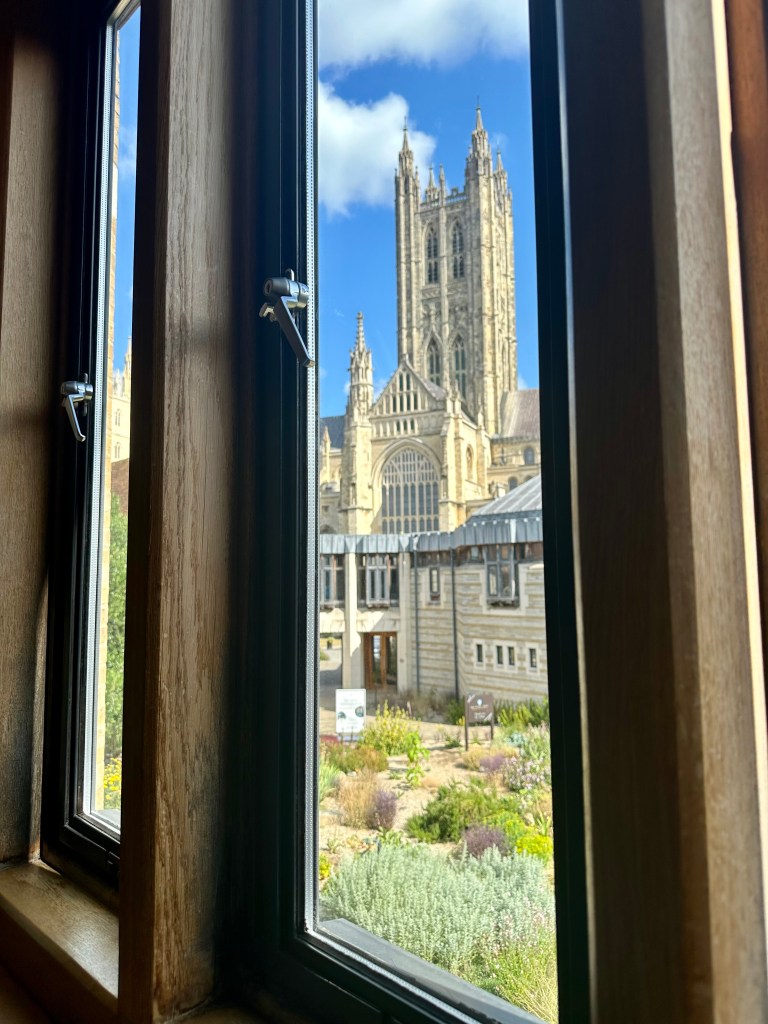
Our room was simple, but well-appointed and clean. The highlight was the framing of the cathedral in our window.
Here’s a little video tour I put together…
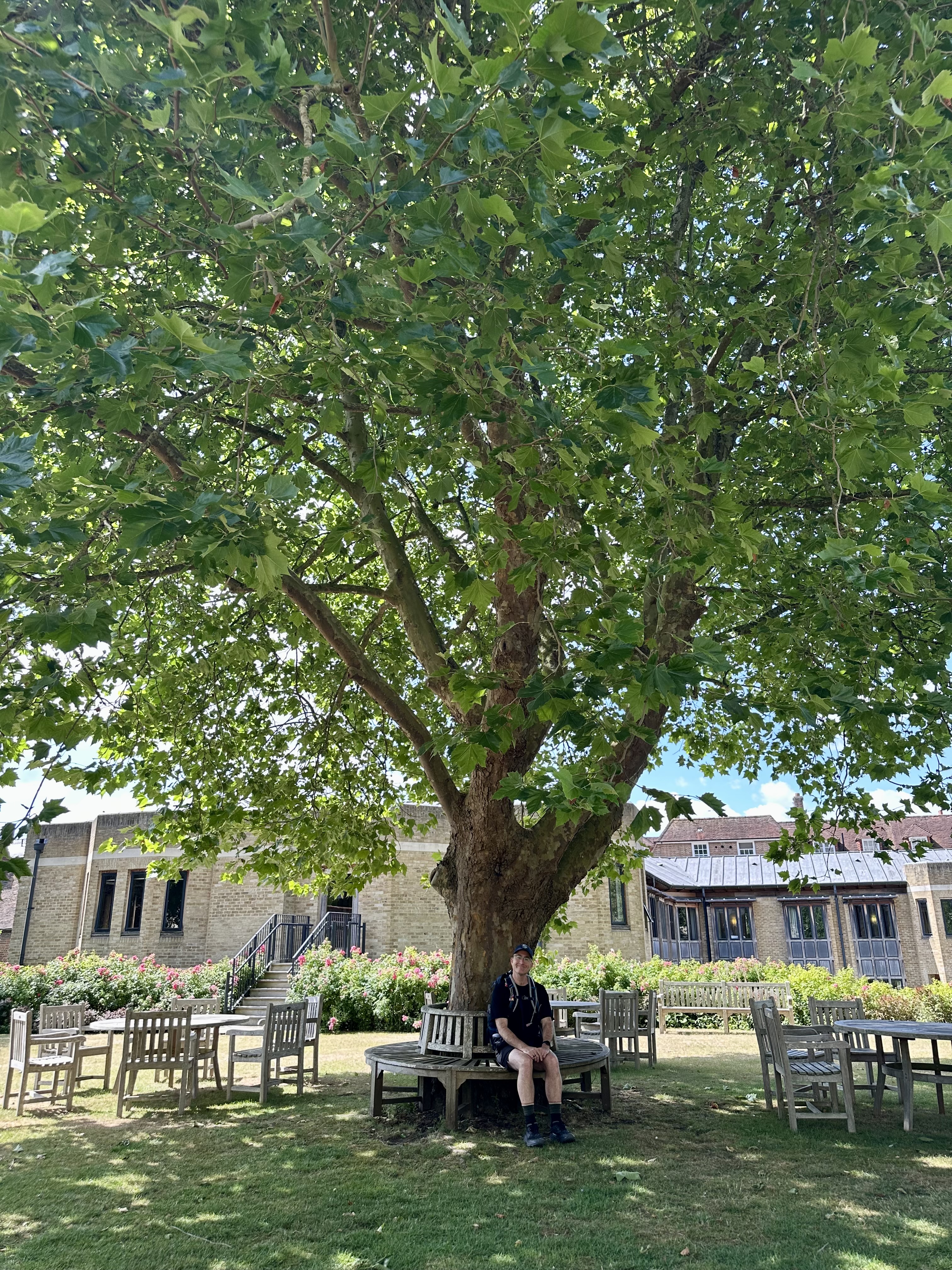
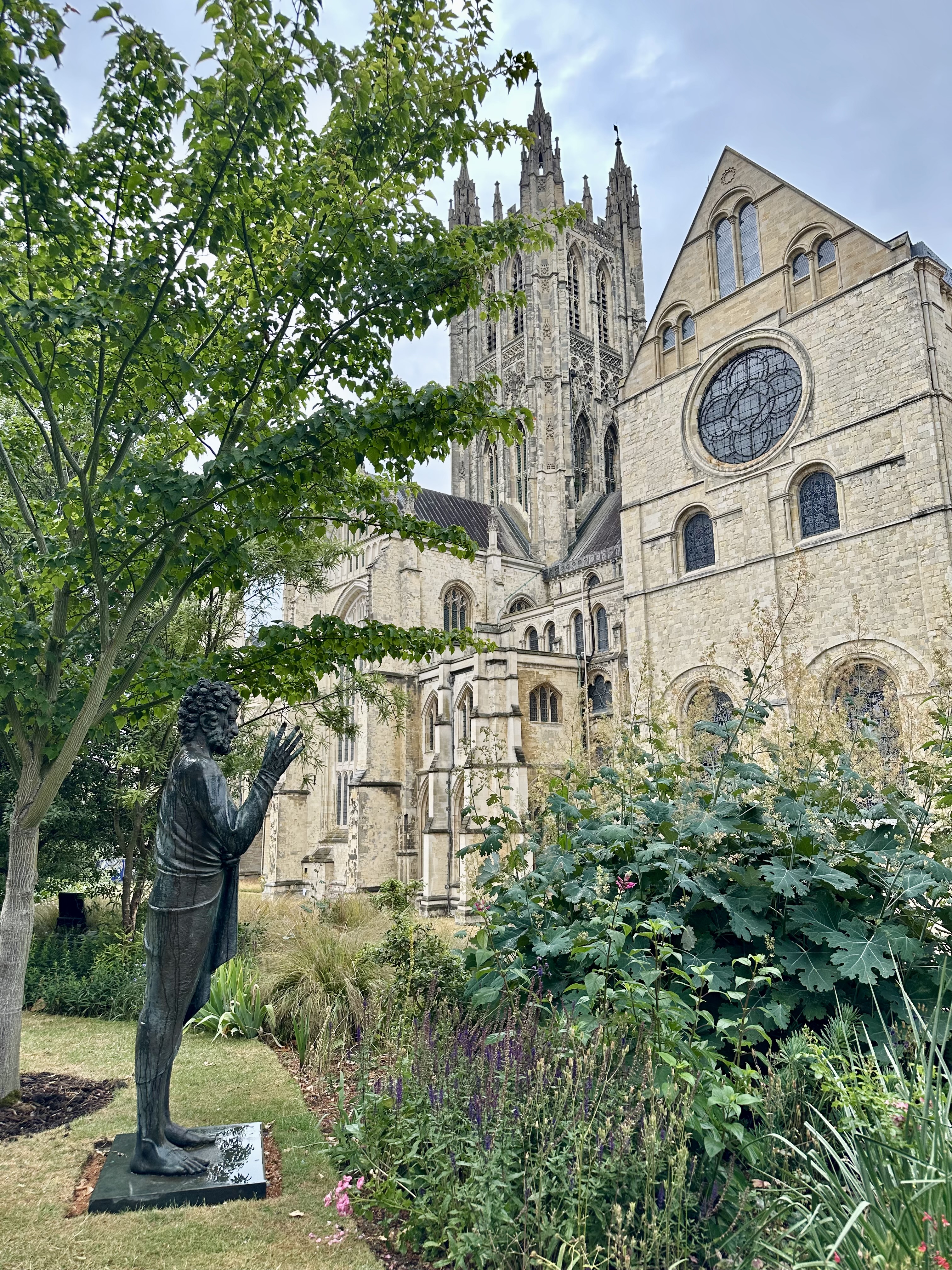
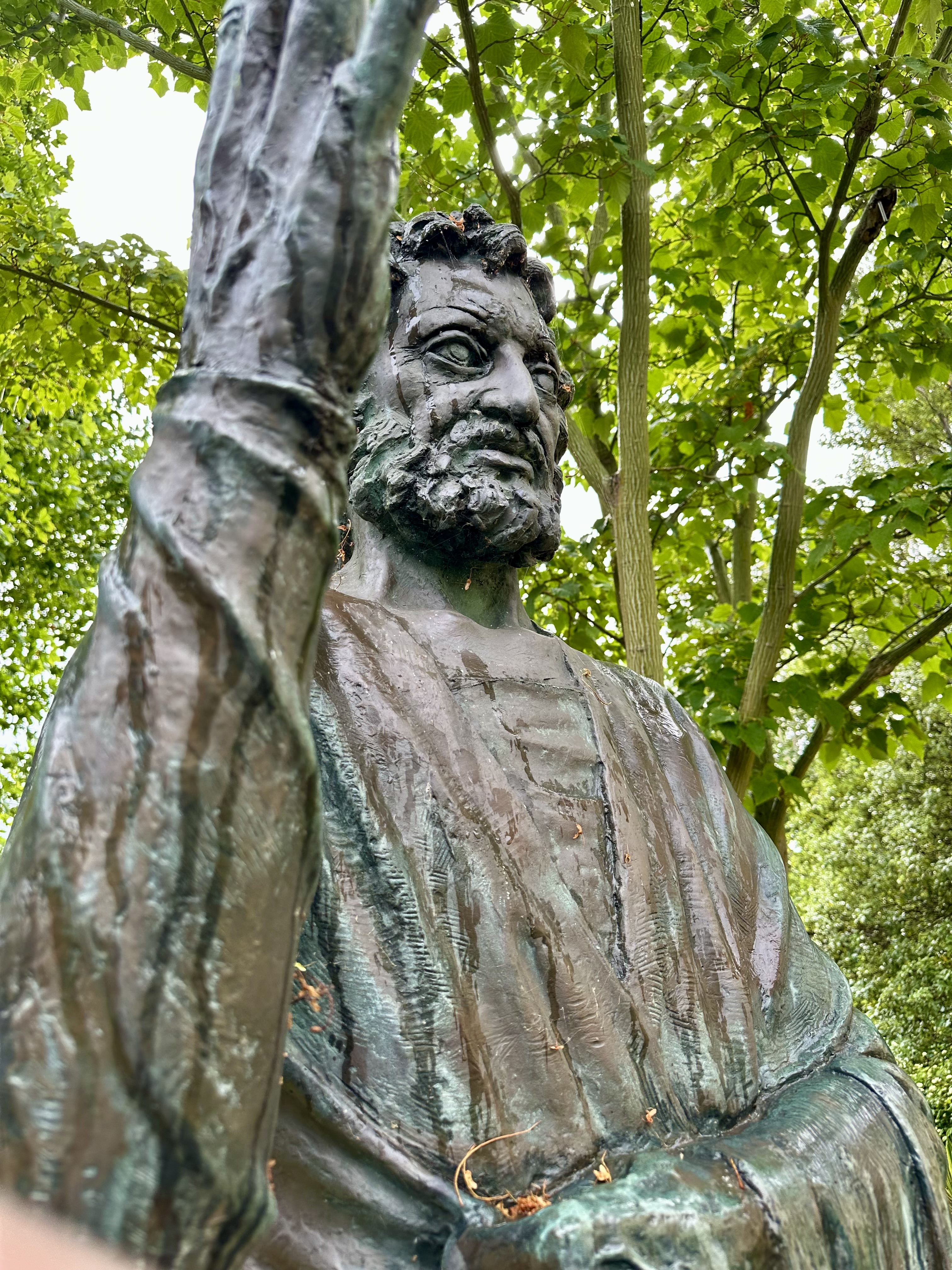
At the end of the video there’s footage of a garden at the Lodge that was lovely, and included a really interesting sculpture of Jesus depicted as a middle-aged man. Naturally I didn’t recognize him, but Google helped me out.
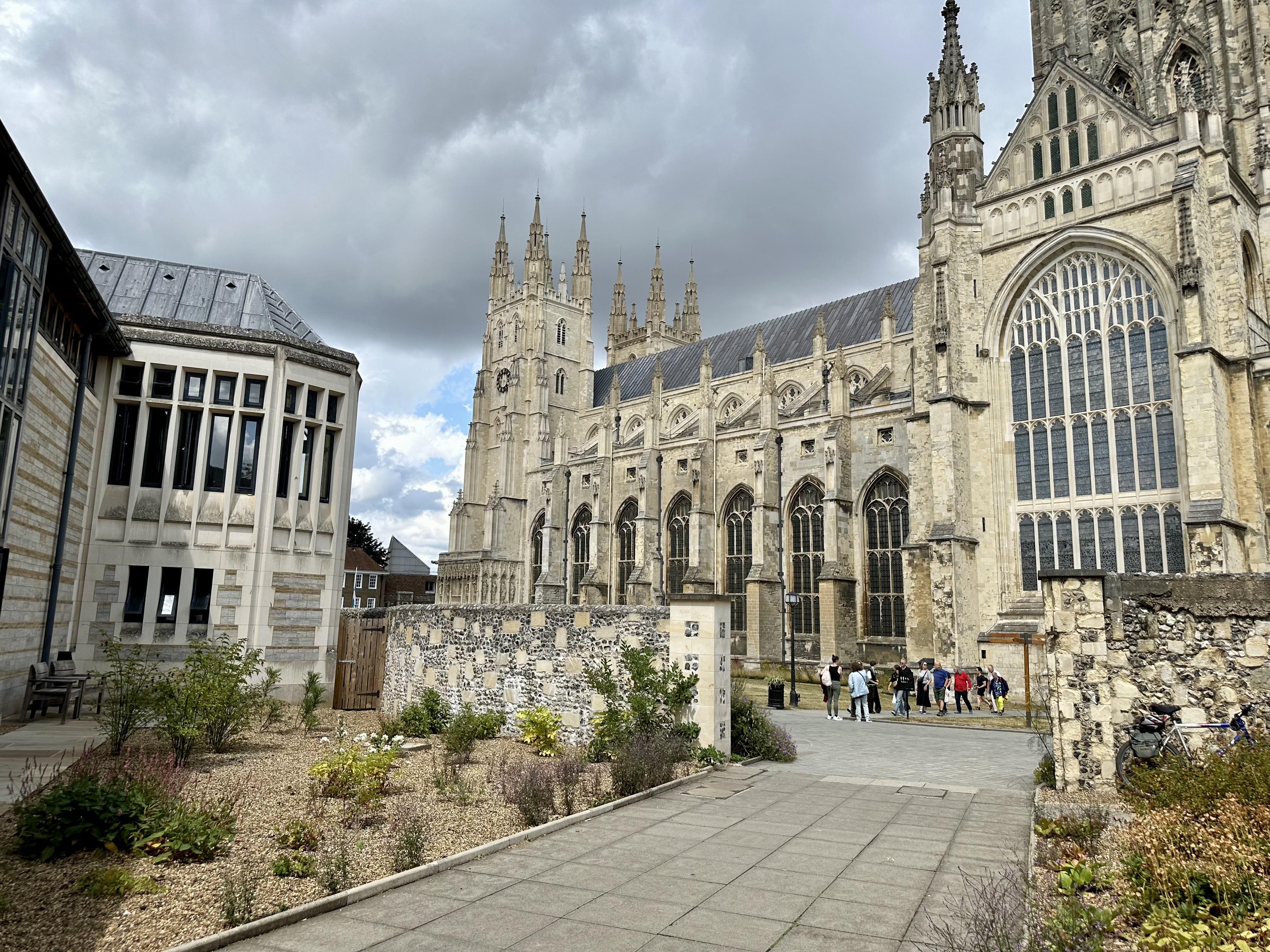
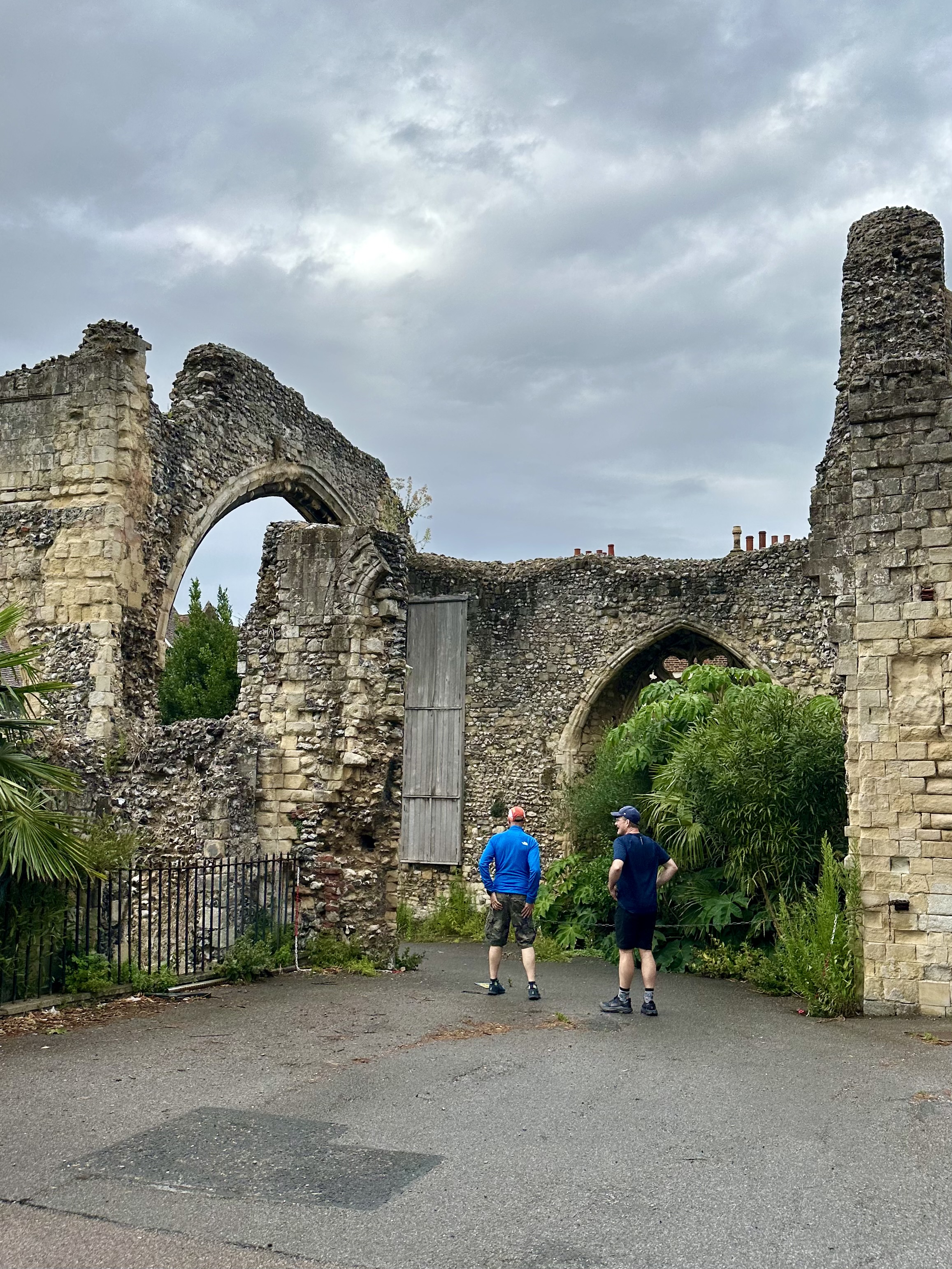
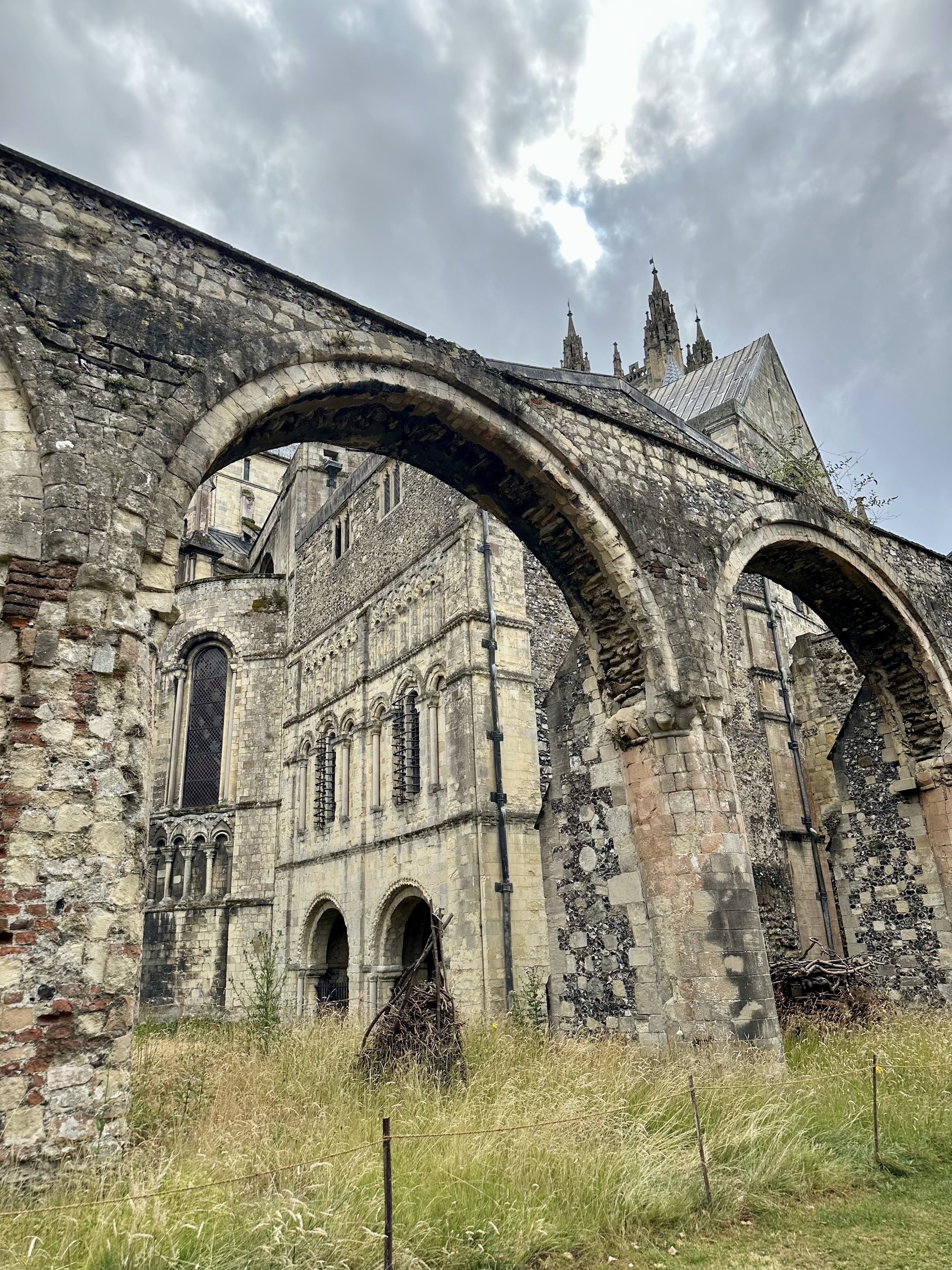
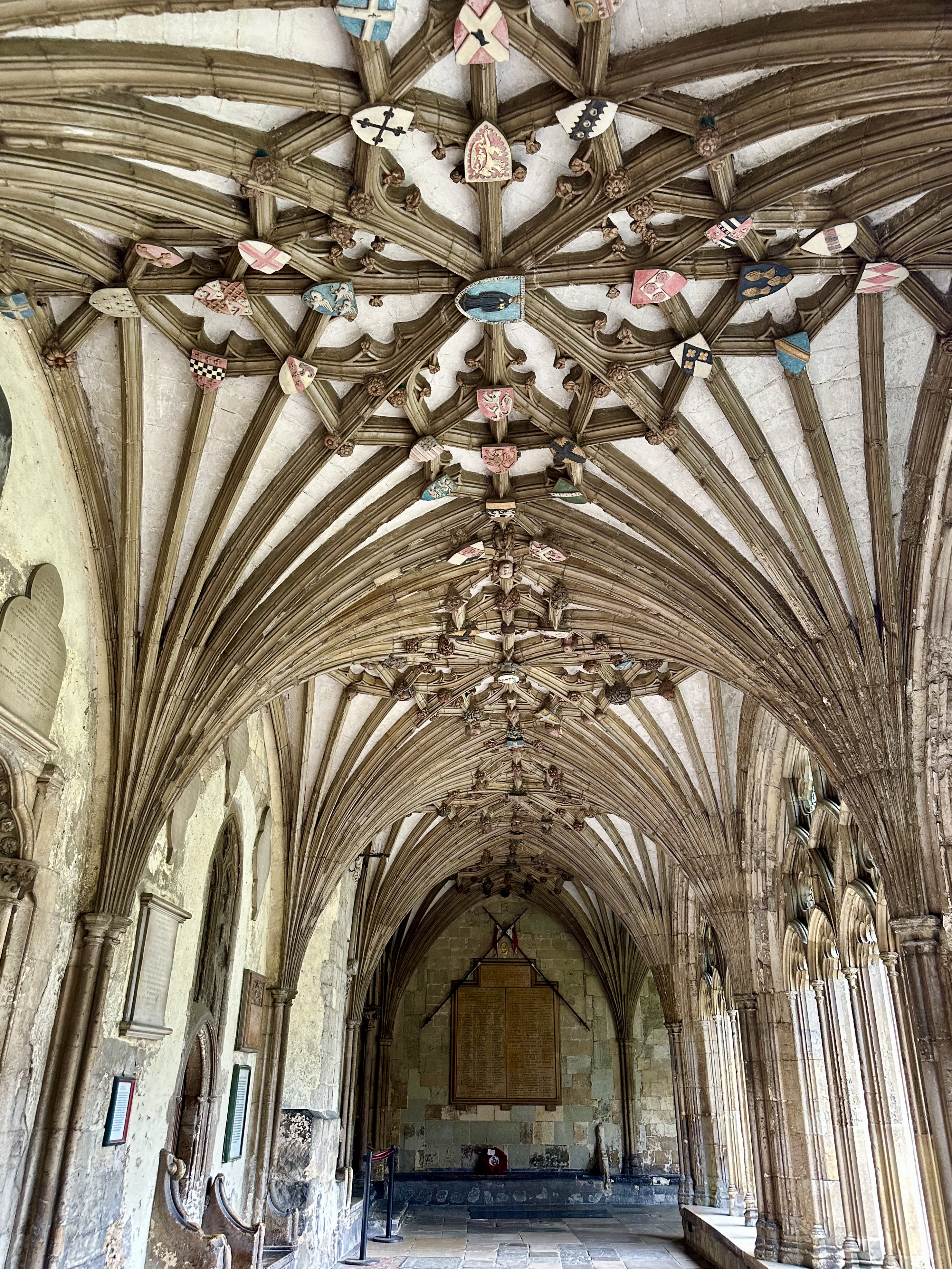
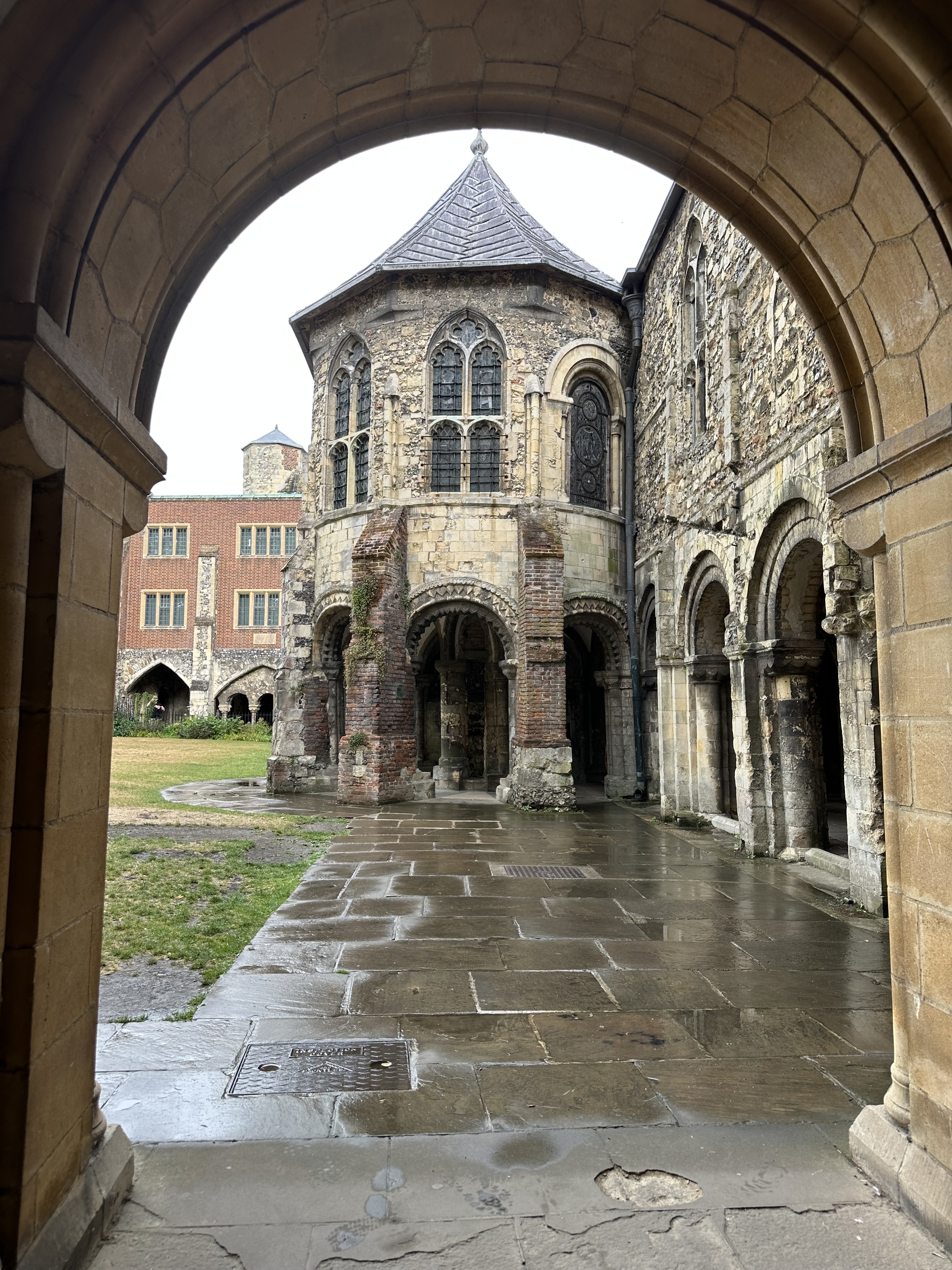
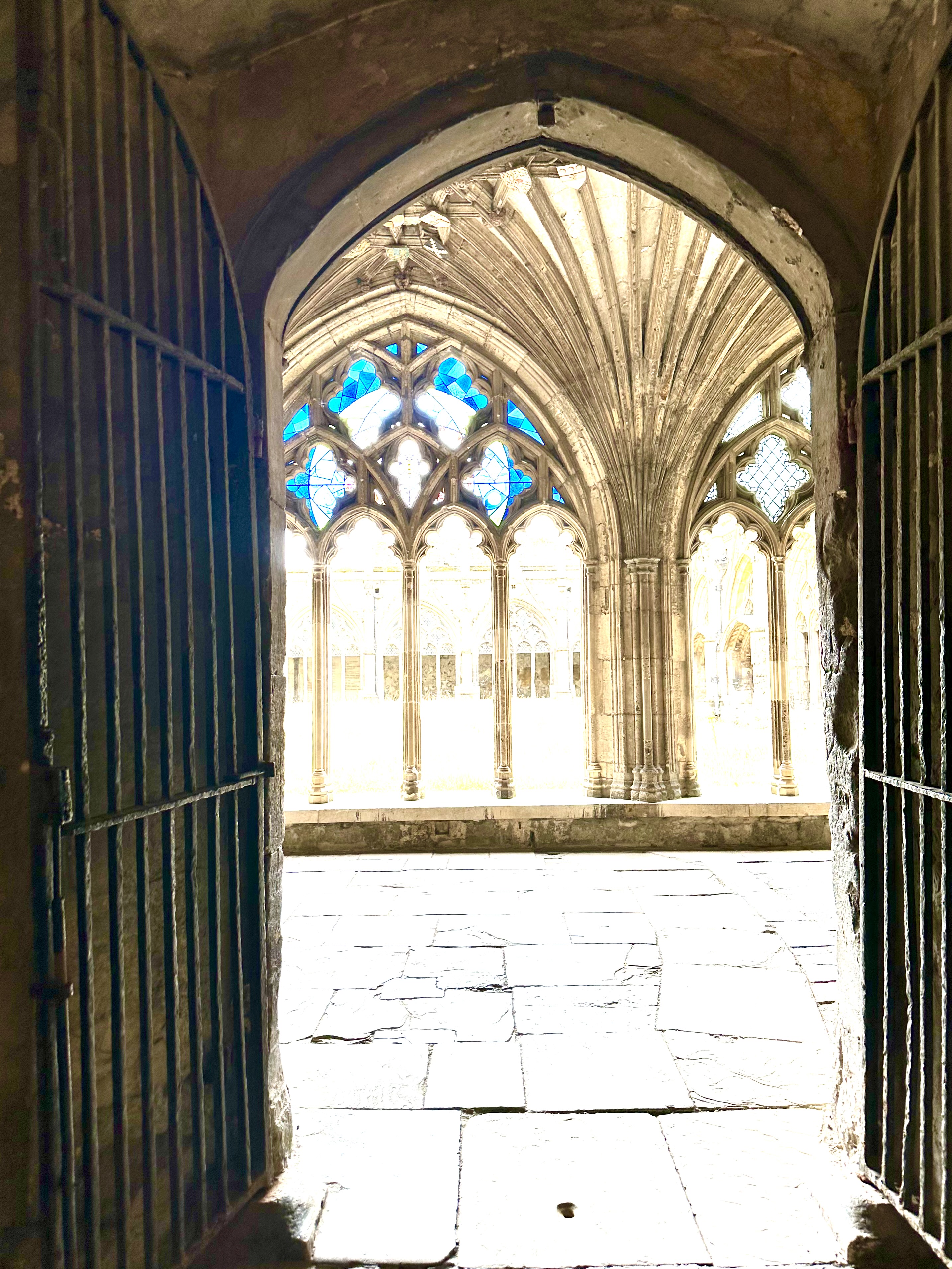
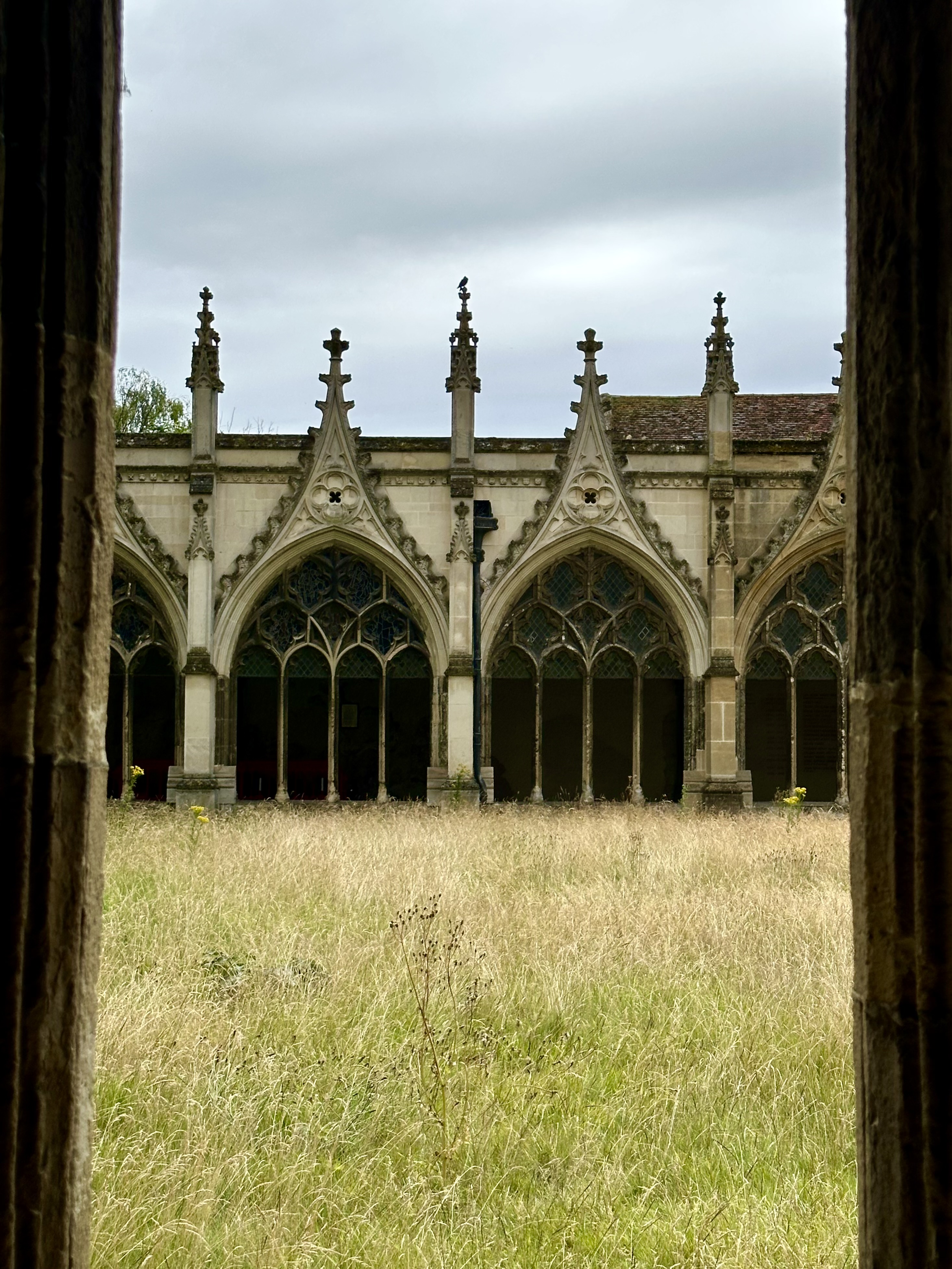
After our sojourn, the three of us set out to explore the Cathedral grounds which were quiet in the late afternoon. There were gardens and a cloister, some ruins of an infirmary built in the 12th century, the Chapter House of the old monastery, as well as other points of interest. Really gorgeous spaces – it has been a number of years since I’ve found myself appreciating a cathedral this much, and this was only the exterior!
By this time the lack of sleep was catching up with us travelers, and Steve was ready to drive the 80 miles back home. Our travel/arrival day ended abruptly, and I was asleep by 5:00 pm.
I turned 50 years old in May, which still seems odd to say out loud. I don’t really have a hangup about the number, it’s more that I feel a bit too immature to have earned it if that makes any sense. But then sometimes I’ll have conversations with younger friends, like in their 30s and early 40s and they’ll say something along the lines of “you’ve lived a lot of lives”. I guess that’s true.
Although we travel a fair bit, this felt like the kind of birthday you schedule a special trip for. Something meaningful. To me it needed to feel like an adventure and I wanted something that included a physical challenge. Because, you know, I’m not too old for those kinds of things, right? Yes, I suppose I feel the need to prove something to myself.
Through a very long maze of conversations and online research that I won’t bother detailing here, I managed to settle on a pilgrimage route in Europe. No, not that pilgrimage route. Have you heard of the Via Francigena? I hadn’t before stumbling across it online, either.
“The Via” as I’m apt to call it these days had a few points of appeal for me. One, it terminates at the Vatican. My first real travel abroad experience was a semester abroad in Rome from whence I trace the birth of my travel bug that is never satiated – oh does that make it a parasite? Secondly, it’s pretty obscure and sparsely populated particularly at the start of the journey from England into France and Switzerland. To earn the Testimonium at the Vatican a pilgrim must show proof of having walked only the approaching 100 kms starting somewhere in Italy. And that’s what a lot of people do – start in Italy – leaving the beginning part of the route quite empty of the hoards of pilgrims you might find in Spain. Others report going days without ever seeing another pilgrim, and to me that sounded like perfection. Finally, this is a long ass route. Almost 1400 miles. A fair few do the whole route in one shot walking for months, but for our schedule and purposes this is a Life Project that will take several years of trips to complete. I can’t articulate it, but for some reason that was appealing. I wonder if it’s related to my preference for book series over standalones? I recently finished the Patternist series. Anyway…
We are budgeting 12 days of walking for this chapter, which will take us from Canterbury, UK across the channel into the Hauts-de-France region with a final target of Arras, France.
The planning for this has been pretty intense. Because the first part of the route is not heavily trafficked, you cannot just show up and wing it like you can on some other routes, calling ahead each day to multiple accommodation options to see which one has room. Food options are also somewhat limited in these rural towns. If you care to roll the dice the advice is to carry a sleeping bag and tent so that you can utilize camp grounds or other potential unofficial options if you are stuck. Um, no thank you I’m done sleeping on the ground. Our typical slow travel style involves booking no more than one or two beds over a 1-3 week trip; this was quite different. Not only did I need to book 13+ places to stay, I also had to research how and where we would get food along the route.
Training hasn’t been as intense as one might think. Or perhaps my training hasn’t been as intense as it should have been. I guess time will tell. Primarily we did urban walks up to 12.5 miles in length, wearing clothes we plan to bring and carrying our packs full of the things we plan to bring. The ball of my foot just under my left big toe is prone to blisters. My average walking speed is 3 miles an hour. I haven’t had any upper body pain, and only minimal leg muscle soreness that resolves quite quickly with rest. Taking a break at a brewery around the 8.5 mile mark is ideal. The elevation gains/losses in the area of this first trip aren’t terribly significant so I’ve just been doing flat routes. Again, time will tell.
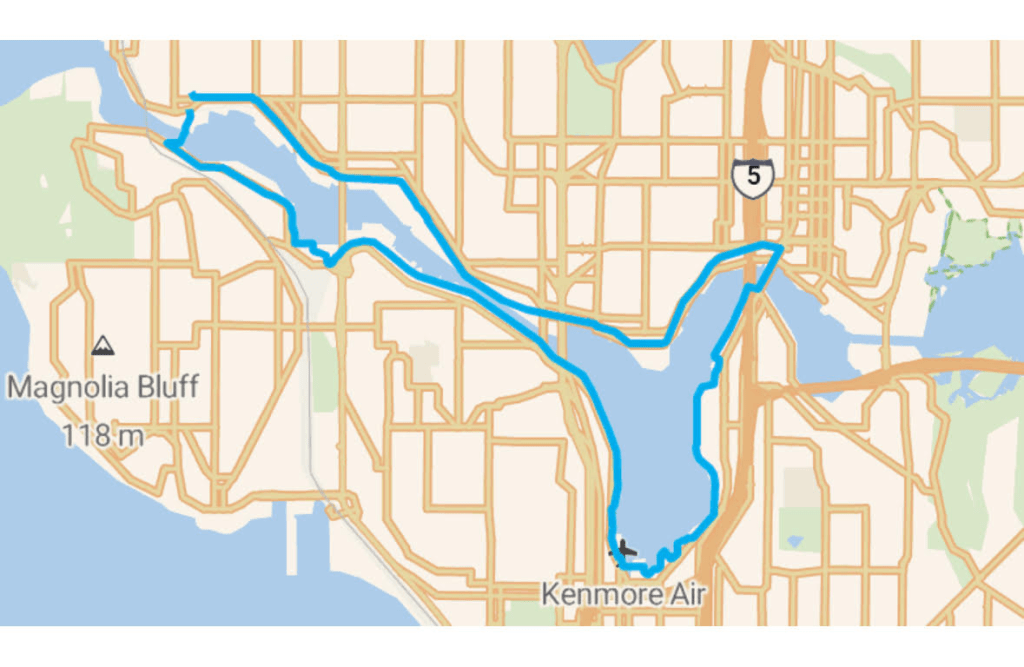
Our most common training routes have included a shorter one we call “The Fremont Loop”, and then our 12.5 mile route that circles Lake Union and includes a stop at Gasworks Brewing. Beer and smash burgers are good fuel, right?
And then there’s the packing. You have to carry your own stuff every day. You need to be prepared, but limit those “just in case I need it” things. It will likely be really hot walking across farmland in July exposed to the sun, but if it rains the trails can be unbelievably muddy. After several hours of walking every day you’ll also have down time at your destination, sometimes in towns without anything to really do so how do you entertain yourself? Will the items that you wear dry overnight so you can launder them most days? Search the internet for “camino packing list” and you’ll see everyone has an opinion.
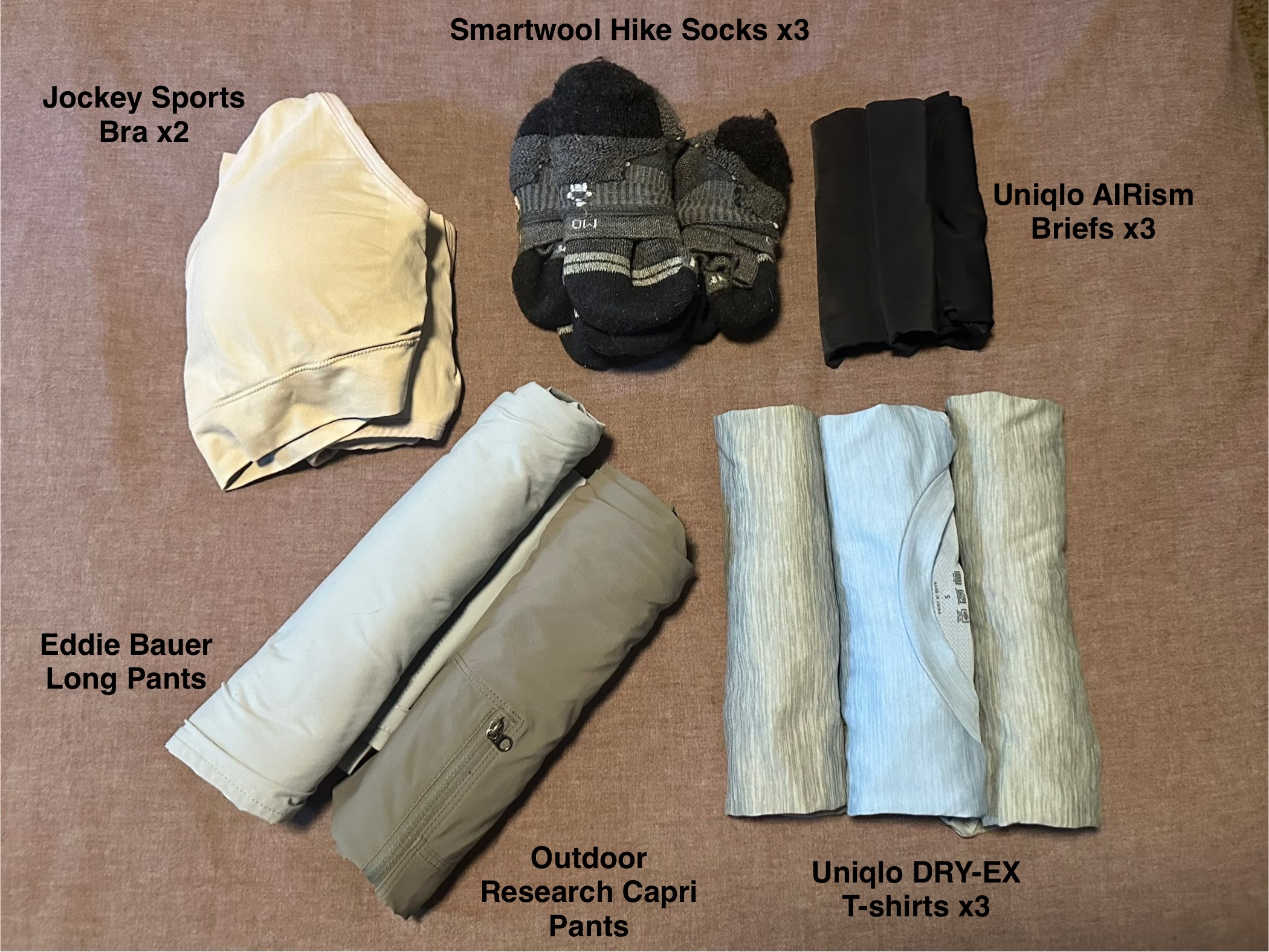
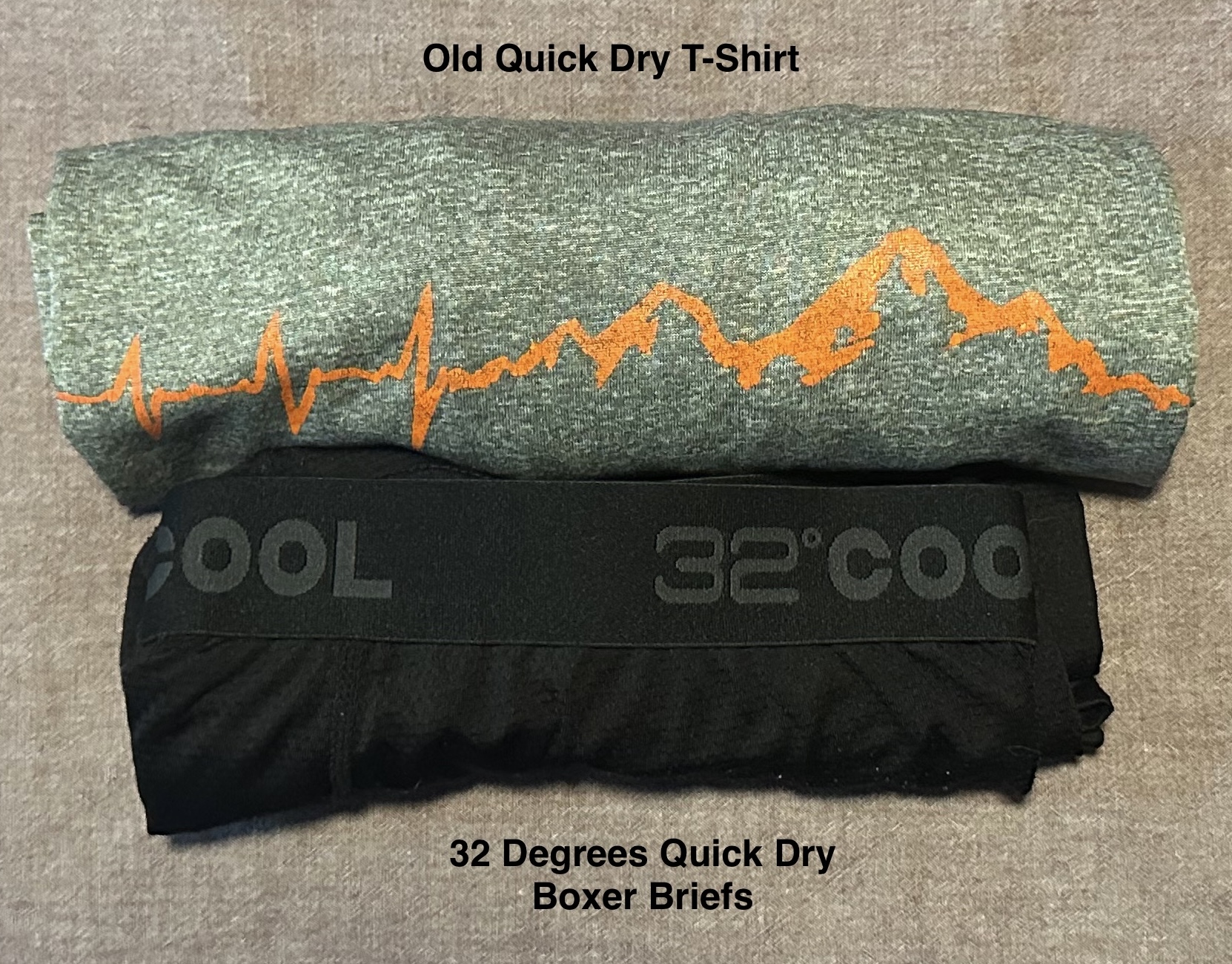
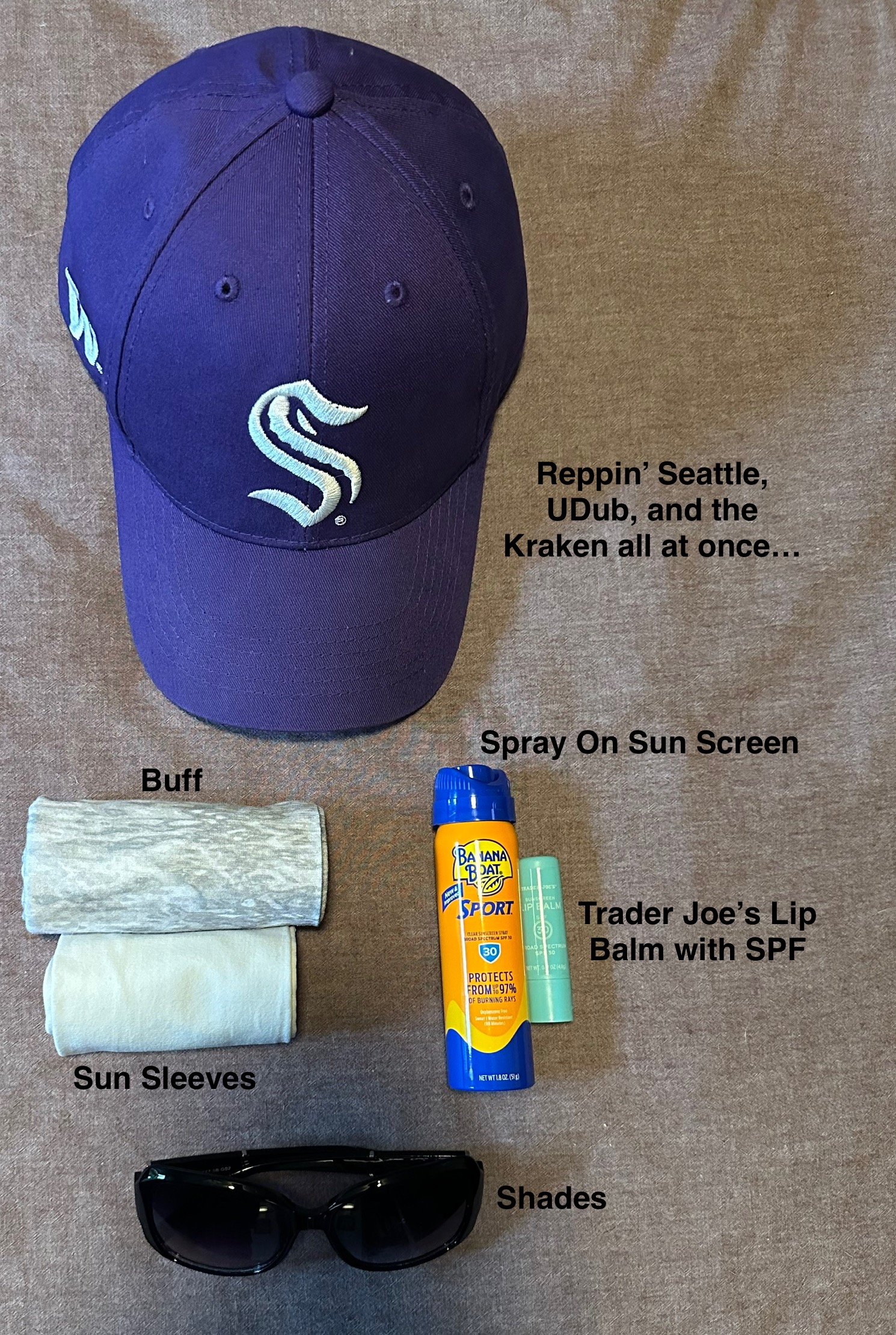
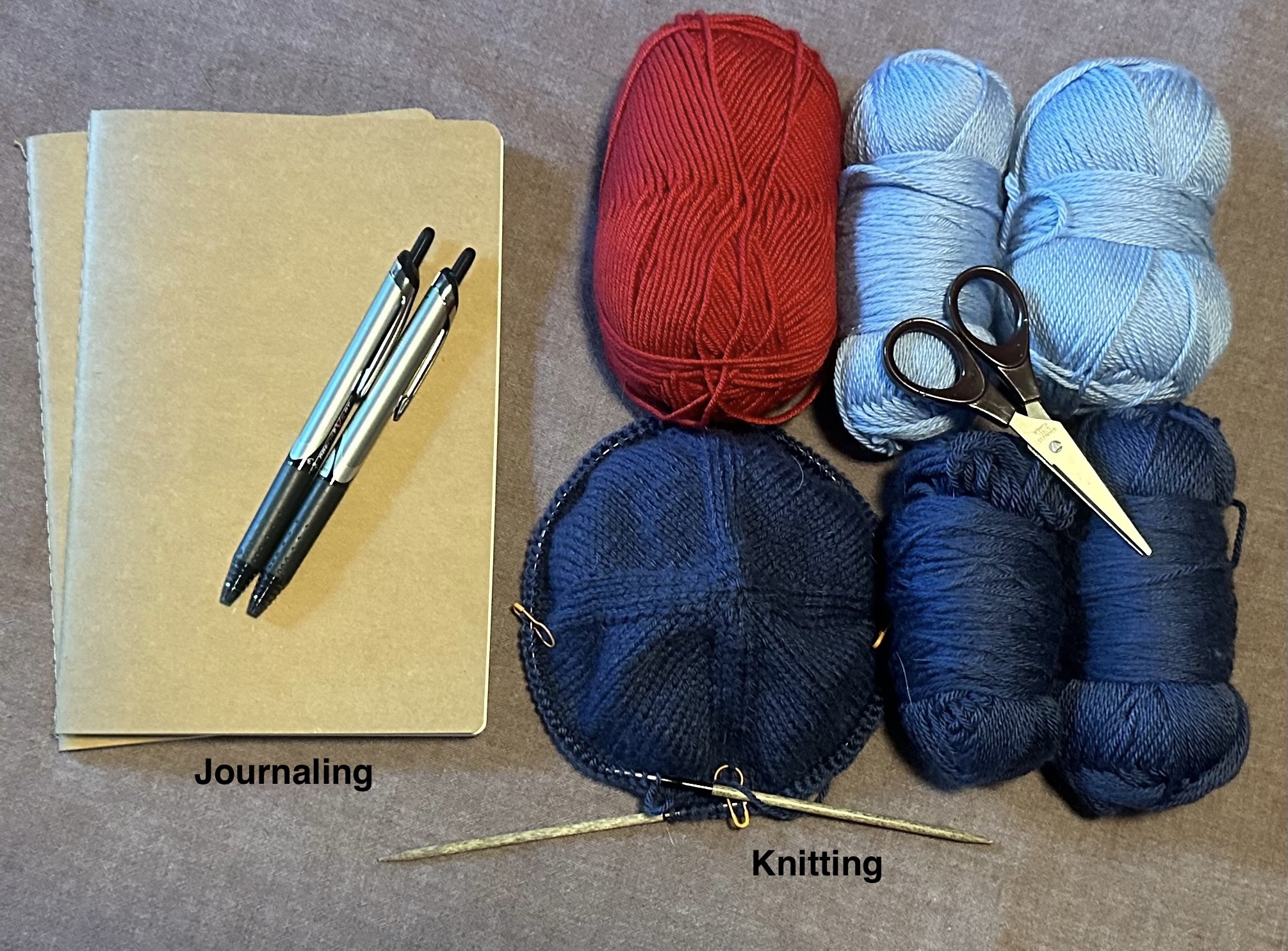
After all of the blogs and YouTube videos and guidebooks and social media posts and our own training walks, this is what I’ve settled on that’s worth carrying. I haven’t weighed it, but I’ve done a bunch of long walks carrying my pack with almost everything here, so it’ll be fine, right? Right? RIGHT?
For carrying…
For trail and off-trail walking…
Jackets…
Trail-wear…
For off-trail activities, incl. a few days in Brussels at the end!
Sleepy time wear…
Sun protection…
Hydration…
Hygiene…
Also, hygiene (etc.)…
Leisure time…
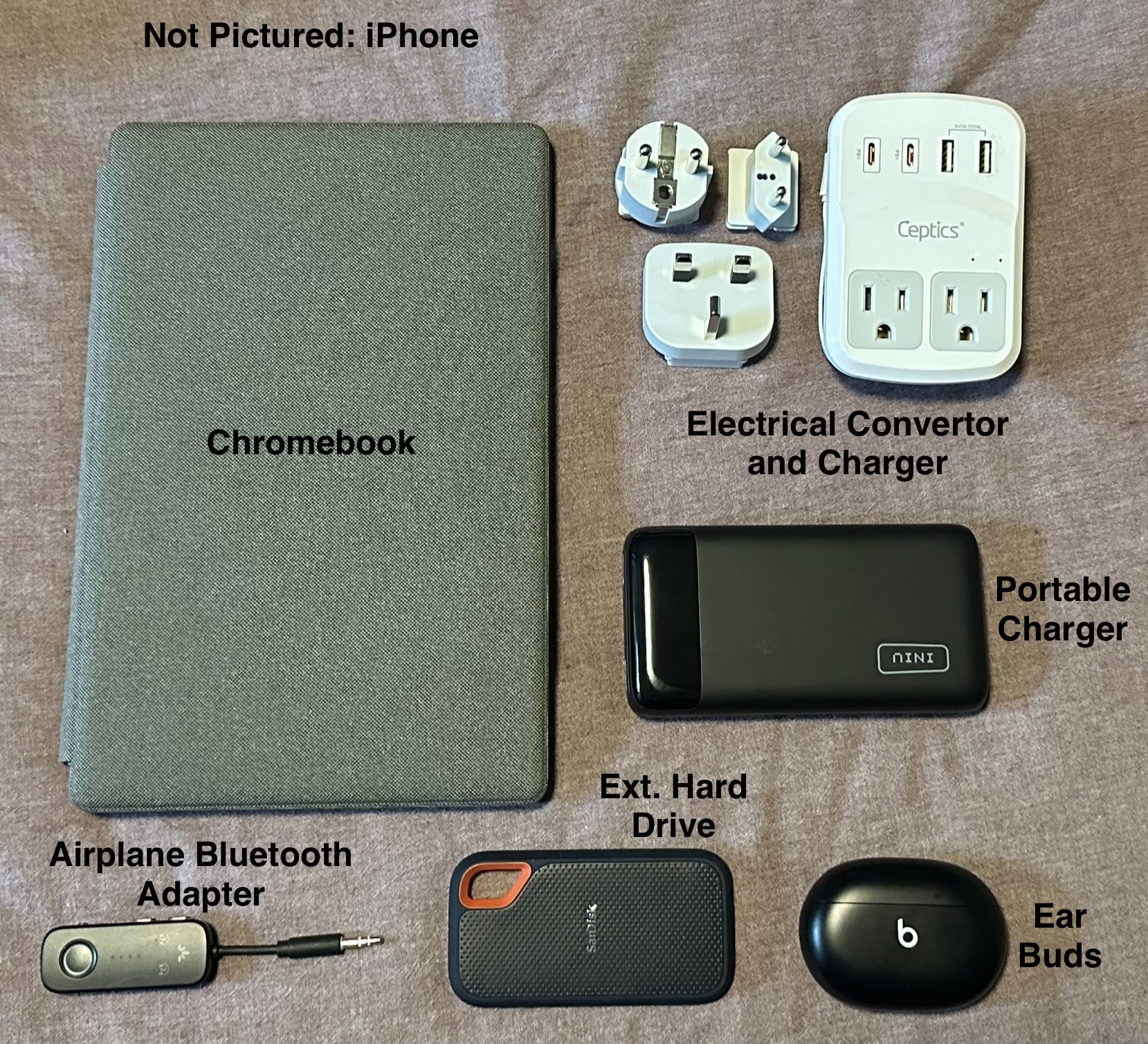
Electronics…
Healthcare…
In addition to these physical items, the following are loaded onto my phone as resources for this trip:
The Via Francigena app, that includes downloaded walking maps for offline use (the icon is blue with a white outline of the pilgrim logo)
The AllTrails app with our stages downloaded for offline use as a backup option
But first… shout out for my love’s 48th birthday. He’s my favorite person.
******
Near the beginning of our visit to Japan I was messaging with a friend and I said, “I knew they were better than us, but now I know it know it.” There’s no question in the debate of which country is better – US vs. Japan – they win. By a landslide. They won even before The Moral Failure of November 5, 2024.
But after our 16-day visit I will definitely say that Japan is hyper idealized. Here are some things that were amazing, and some things that weren’t THE MOST PERFECT THING IN THE WHOLE WIDE WORLD. And some things that honestly gave me the ick.
******
Our Free Walking Tour guide in Kyoto (who was from Switzerland) said that people frequently say that Japan is “futuristic”, but it isn’t really. And he’s right. I didn’t see any technology or solutions that seemed particularly space-aged. Bullet trains? Robots serving you coffee? The former is not new technology. The reason we don’t have it in the US is because… well, all of the other reasons we can’t have nice things. The latter I don’t personally want to see until we have universal basic income. Also, I’m not sure the future has as many things wrapped in single-use plastic as Japan does.
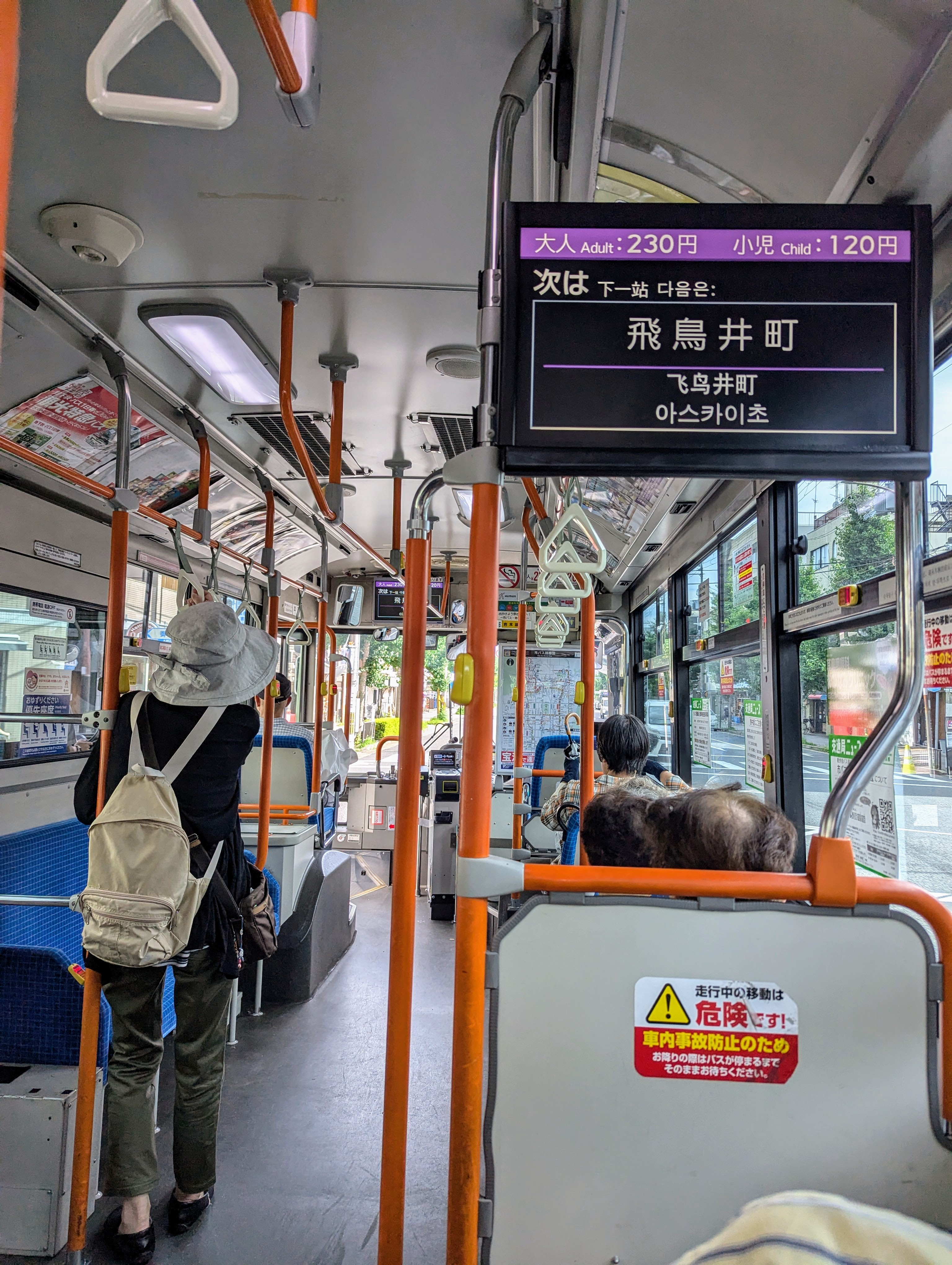
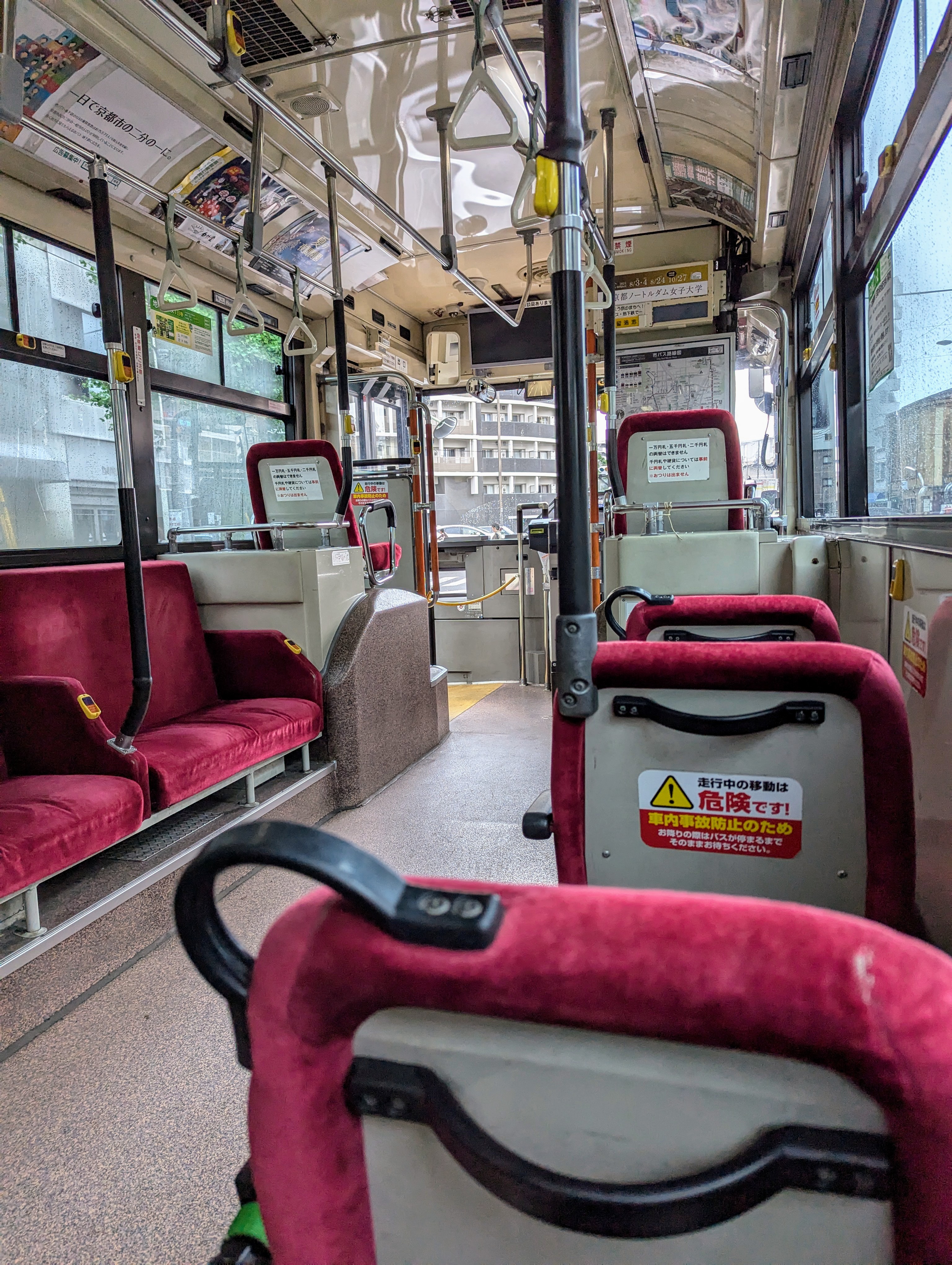
But what Japan really seems to excel at is implementing obviously positive solutions for community benefit. The biggest and most obvious example of this during our trip was using their transportation system. It is AMAZING, but it’s not futuristic. It’s prolific, it’s reasonably priced, and it’s efficient. For the purposes of our itinerary, it was never a question if we would need a car. We even doubted we would use cabs (but we did a couple of times). The public/shared transportation options we used were shinkansen/bullet trains, the subway system in Tokyo, above-ground local/commuter trains, and city buses. For airport transfers we utilized a coach bus option and a train specifically designed for that purpose.
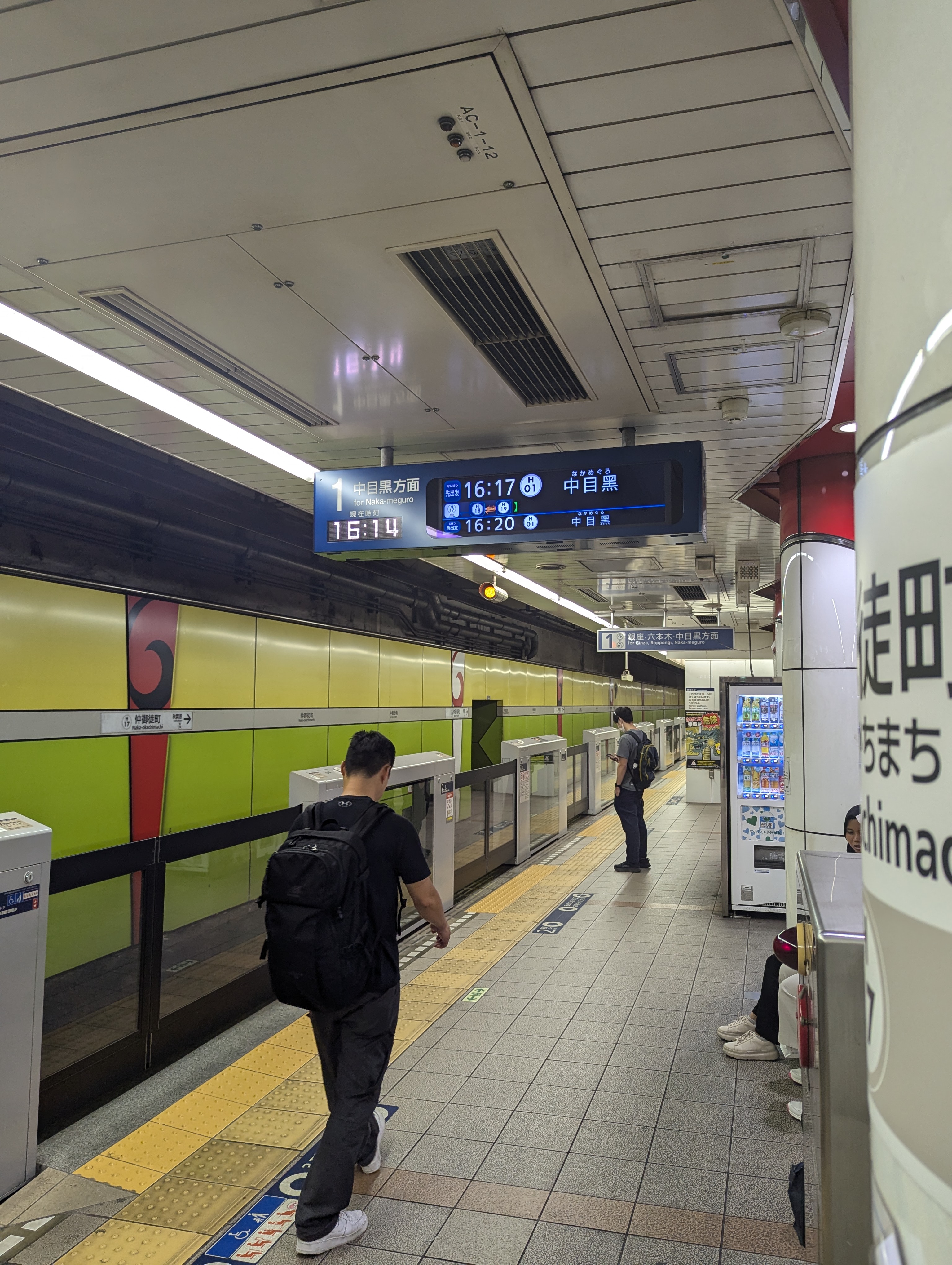
Google Maps was on point every time for transit directions, even giving us which platform number to be on to catch a train and which exit number to follow when leaving a station. Signage at stations and onboard was almost always in both Japanese and English. Tickets and navigating stations were generally easy to figure out, and there were always humans available for help when needed (who all seemed to speak the amount of English needed to help us).
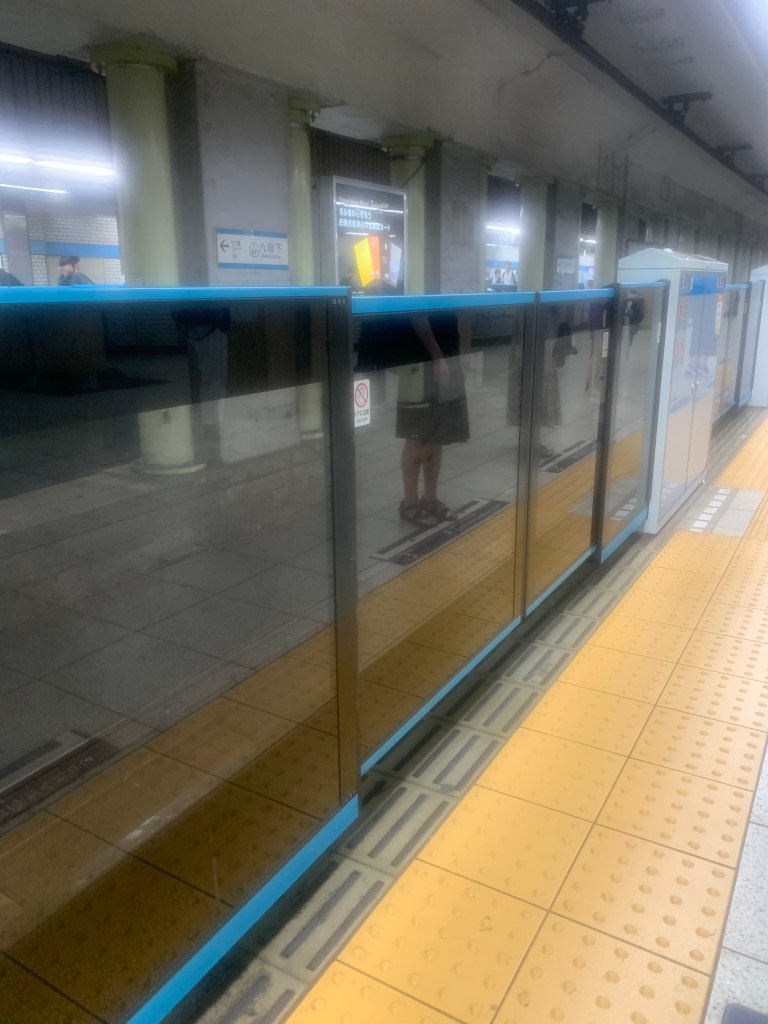
In some cases there were barriers between platforms and tracks to keep people safe. Did you know that in 2022, 234 people were hit by NYC subway trains?
In addition to the infrastructure making sense, cultural norms should be equally credited for the success of transportation in Japan.
People stand in lines and patiently wait their turns. People exit and then people get on. Weird, right?
People don’t typically vandalize or litter at waiting areas or onboard. People are quiet and don’t make others uncomfortable (WELL EXCEPT FOR THE PERVERTS, but more on that later). The seats in many (all?) methods of transportation we took were cloth. CLOTH! Can you imagine how nasty those seats would be in your closest US city? Nope – they’re pristine in Japan.
******
So we will put Japanese transportation in the PLUS column. Brace yourself… I’m about to balance the sheet.
******
We saw a couple of local men wearing 45/47 aka The Moral Failure paraphernalia. I couldn’t buy a replacement iPhone there because they have the camera shutter sound hardwired as mandatory because of all of the up-skirt photos that perverts take there. Although the arts performed by geisha are gorgeous, it doesn’t take much imagination or follow-up research to hear about how men at the upper echelons of society abuse maiko. And then there was this sign that was directly outside of a public bathroom I used… the top line says, “I’m watching! Voyeurism is a crime.” (The second line is the name of the local police station.)
Regina King has this amazing line in Watchmen: “I’ve got a nose for white supremacy and he smells like bleach.” I’m sorry Japan, but there was definitely an odor of penis. The misogyny is real. Is it worse than than the US? Absolutely not. Is that a low bar? Absolutely yes. So when I say that Japan is better than us I mean it, but when I also say that they are hyper idealized, this is one of my points.
******
OK… now some positives. (See how I’m doing that shit sandwich thing?)
******
The kids. Oh my gawd. I work in a public school system and I think this job has made me more observant of kids overall and seeing how kids in Japan function and behave was super interesting. A few months ago a friend had told us about this Japan-based TV program called Old Enough! that Americans can watch on Netflix. Parents send their very young children, typically ages 3-6, on an errand in the neighborhood, then a film crew follows. It’s adorable and funny, but also as a US person it’s really sad thinking about the very good reasons we would never do that here. But from the perspective of an occupational therapist, I feel sad watching it because of all of the bad reasons our kids don’t/can’t/won’t benefit from this level of independence and responsibility until a much later age.
I had heard that 5-year olds in Japan are expected to get to school on their own, and I visualized that as walking a short distance in a small town to their neighborhood school, perhaps with a friend. What I didn’t expect was to see two (perhaps) 5-year old little girls get on the train a bit outside of Kyoto, one of them exit the train and go up the escalator of a platform several miles later, and then the other one continue the ride on their own for several stops and repeat the independent exit themselves. I tried not to stare but holy crap it was crazy to see. They are better than us. I started to rant out a list of people and systems that are failing our children (and future adults), but I stopped.
******
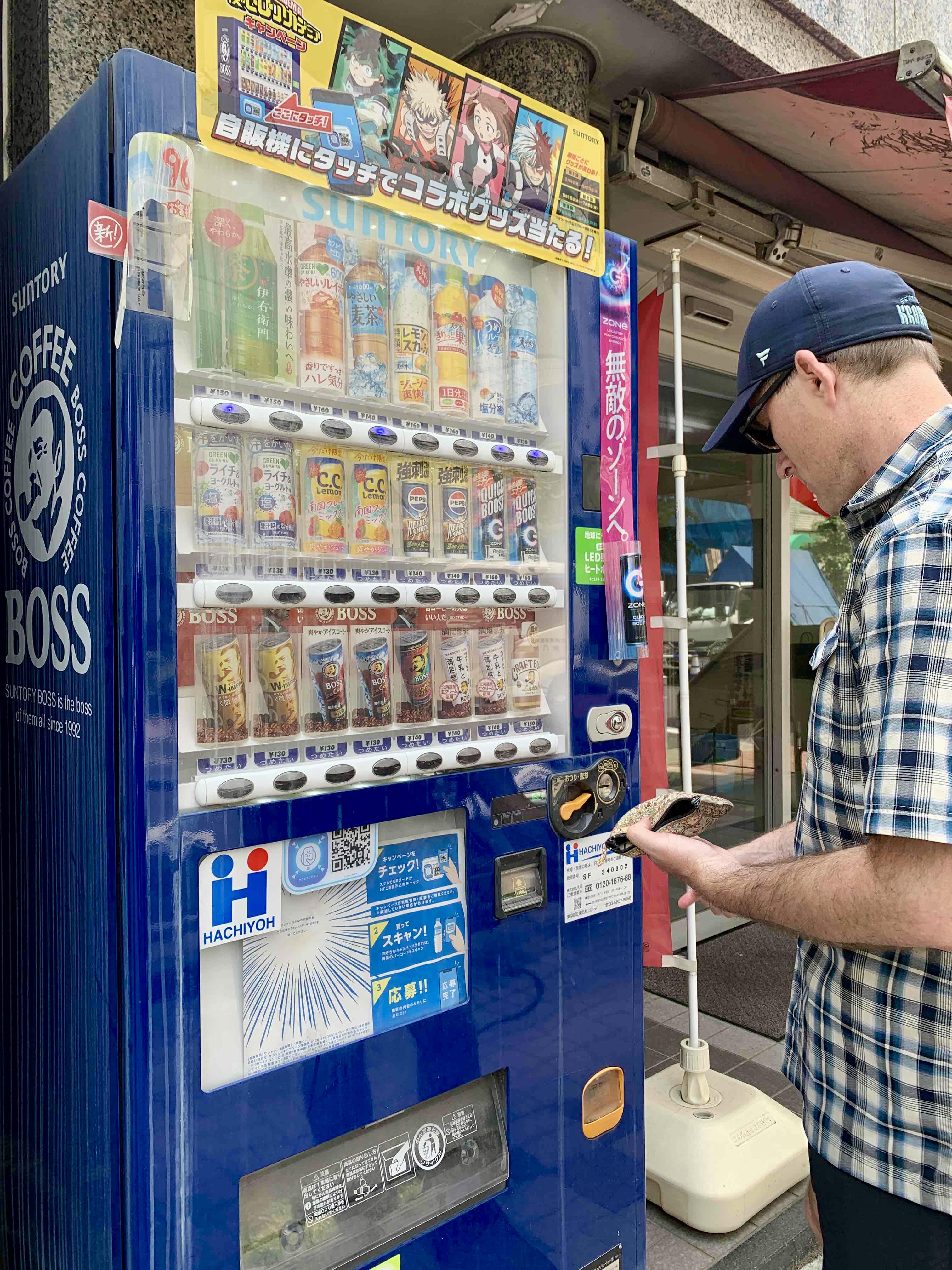
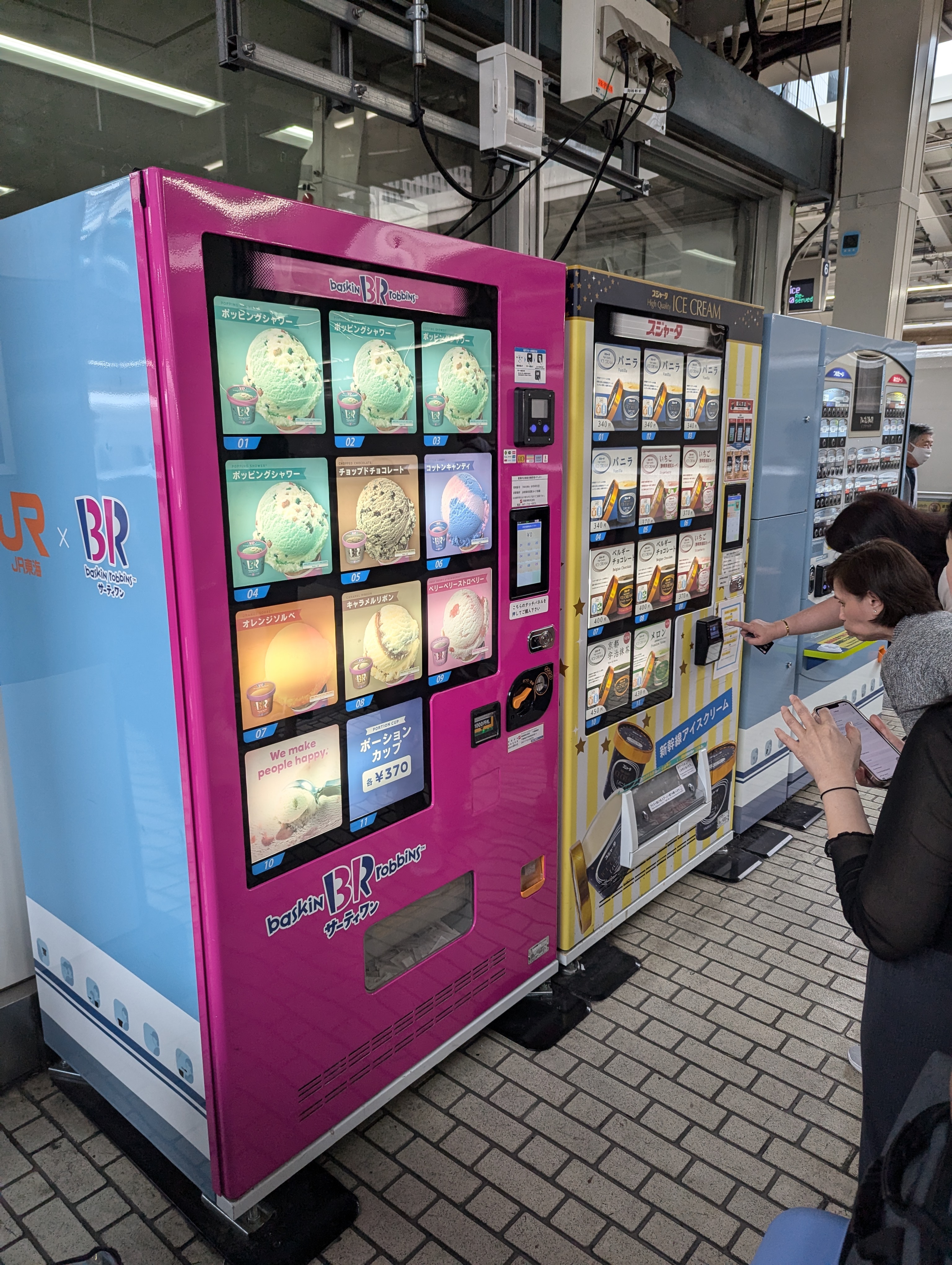
Vending machines and konbini. You hear about these all the time when you’re planning a trip, but the sheer volume and awesomeness of both is fucking fantastic. Vending machines are everywhere and have so many options – some the same as we see at home, some adjacent to things we see at home, and some completely new treasures. Because it was HOT AS BALLS while we were there (more on that in a minute), it seemed like we were constantly in need of a cold beverage and dropping coins into those slots (before we understood the power of the Suica). And even though it is true that Japan does not really do public trash cans, there are recycle bins next to pretty much every vending machine so that rubbish is easy to dispose of on the go. The only awkward thing about vending machines is that it’s against cultural norms to walk and drink, but honestly there were times that I was just so damn hot I went ahead and broke that norm. #uglyamerican
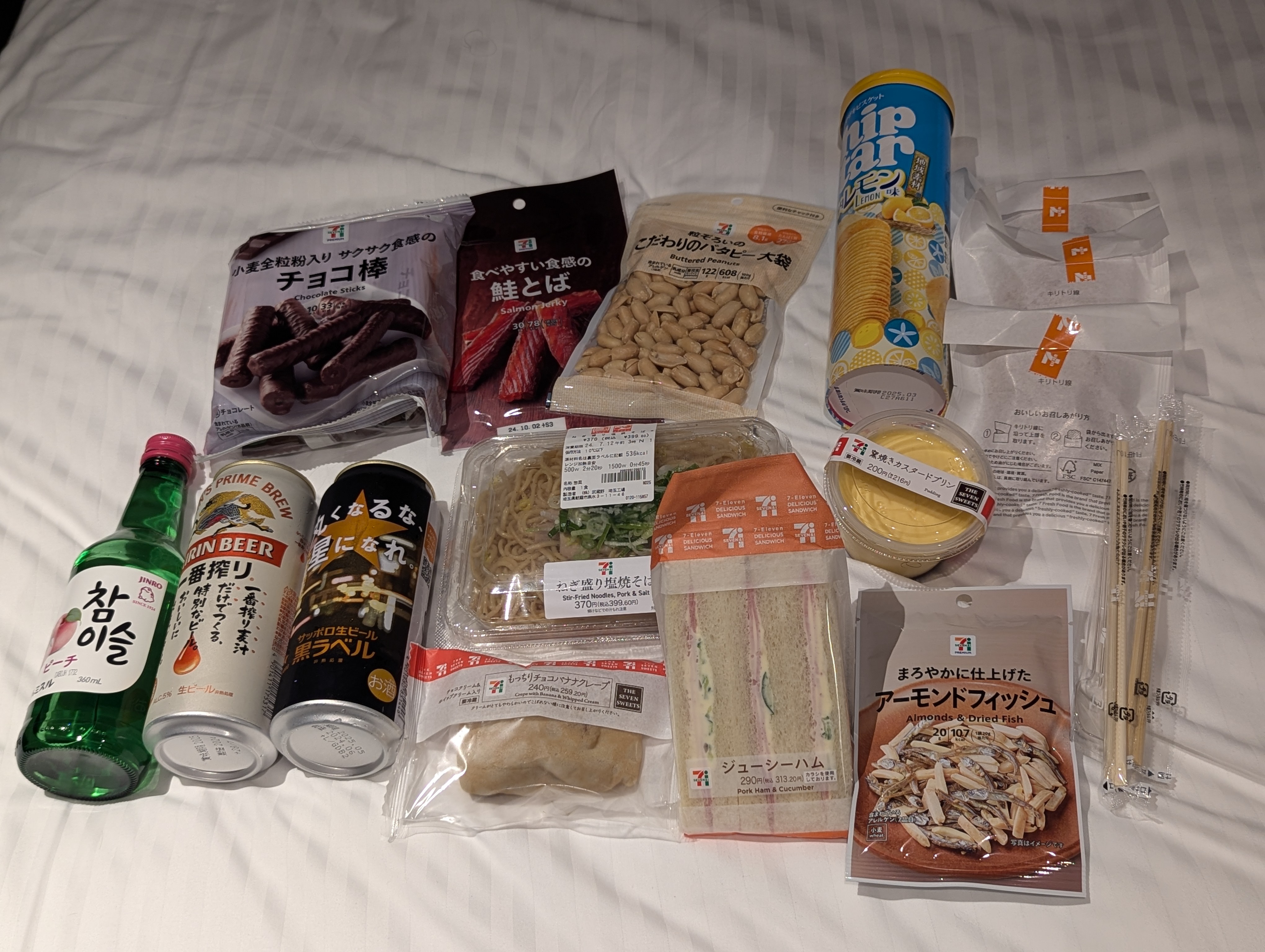
The konbini killed me. We were totally those people that stopped into 7-11/Family Mart/Lawson every night on the way back to the hotel to grab those cheap single-use plastic-wrapped goodies. And I am that basic bitch that couldn’t get enough of those crack egg salad sammiches. I had a lot of conversations in my head about finding an experienced business partner to open a store on the ground level of an apartment complex in my neighborhood and call it “Konbini”. Seriously, who’s in?
******
People always talk about the food in Japan, and they’re right, it’s fantastic. Eating in the markets and various restaurants was lovely and tasty. Not to mention it was all so reasonably priced! But I think we are spoiled in Seattle with so many authentic Japanese options. Many of the things we ate on this trip – sushi, tempura, wagyu, gyoza, takoyaki, okonomiyaki, yakitori, unagi, curry, karaage, udon, ramen, etc. – are available and equally authentic in our hometown THANKS TO IMMIGRANTS YOU BIGOTED REPUBLICANS. We were happy to eat all of the goodies in Japan, but it wouldn’t be the number one reason for us to go back.
******
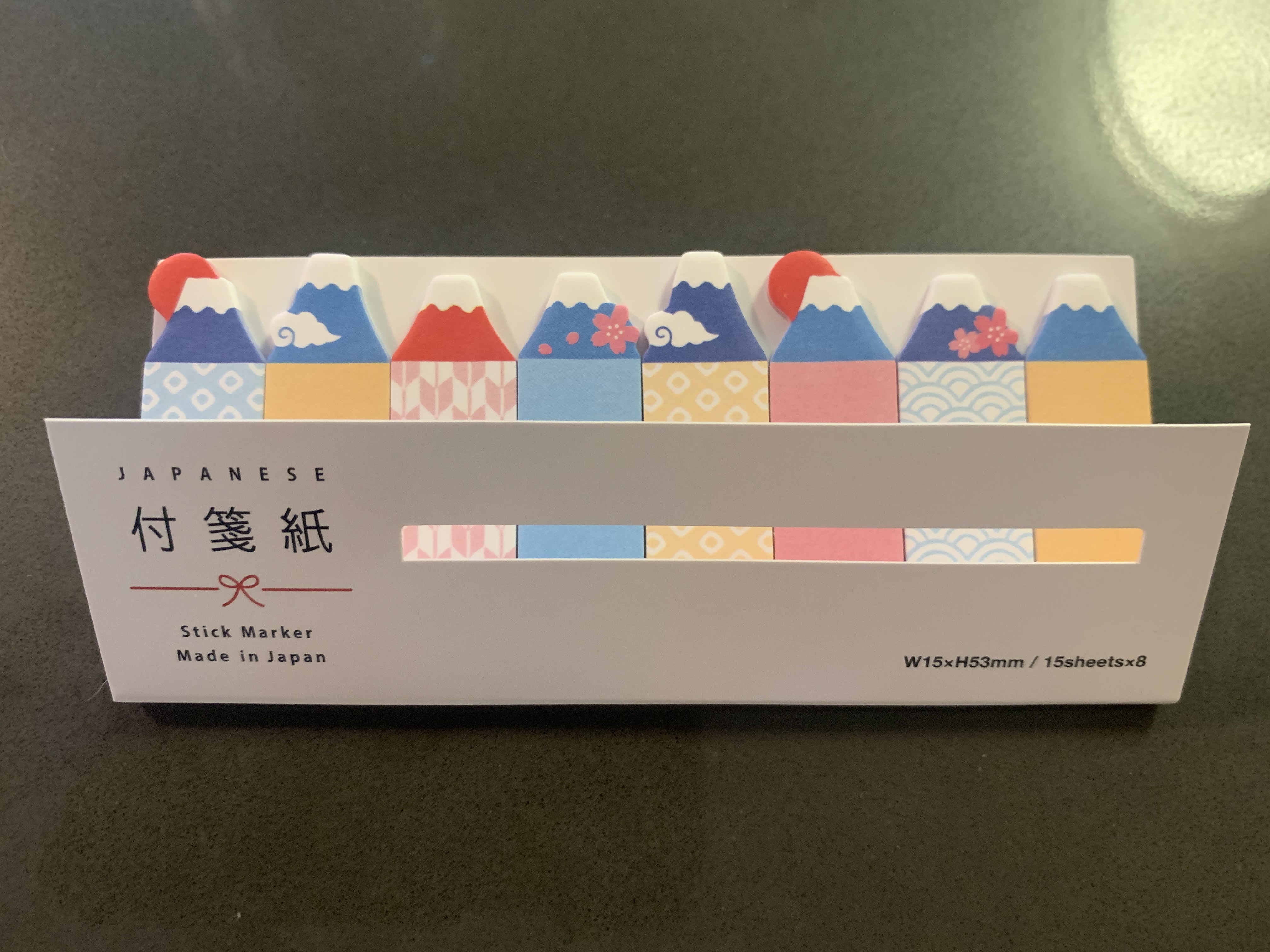
While we were there I became enamoured with the whole stationery store scene. Who knew rows of pens, notebooks, and sticky notes could be so enchanting? For some reason I demonstrated a mild amount of restraint and only brought home a couple of stationery finds – like these Fuji sticky flags and a bunch of these pens. But since coming home I’ve discovered we have a few Japanese stationery stores right here in Seattle so I can buy these exact same things at any time. The main appeal of the stores in Japan though? Severely less expensive for the exact same products.
******
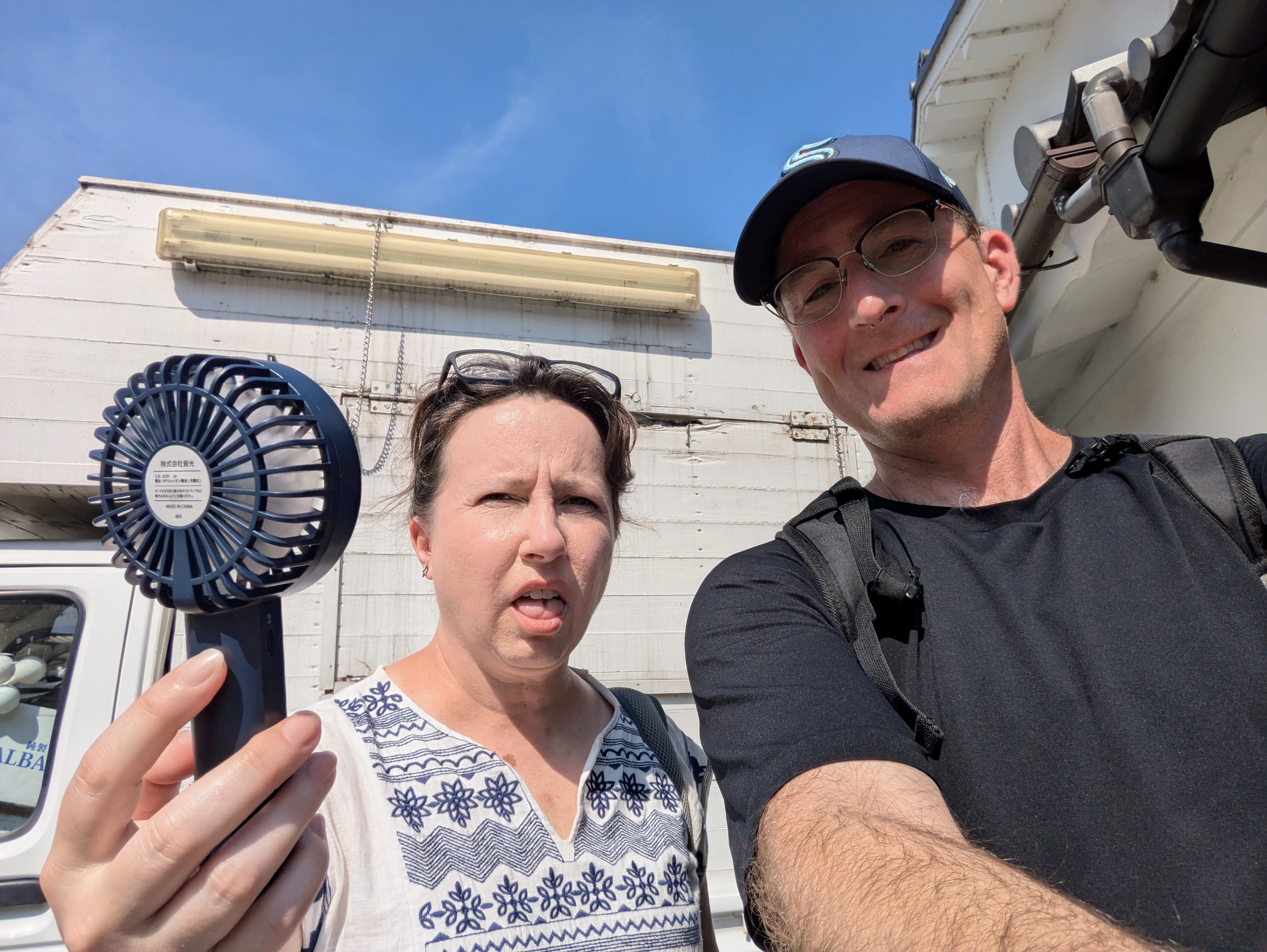
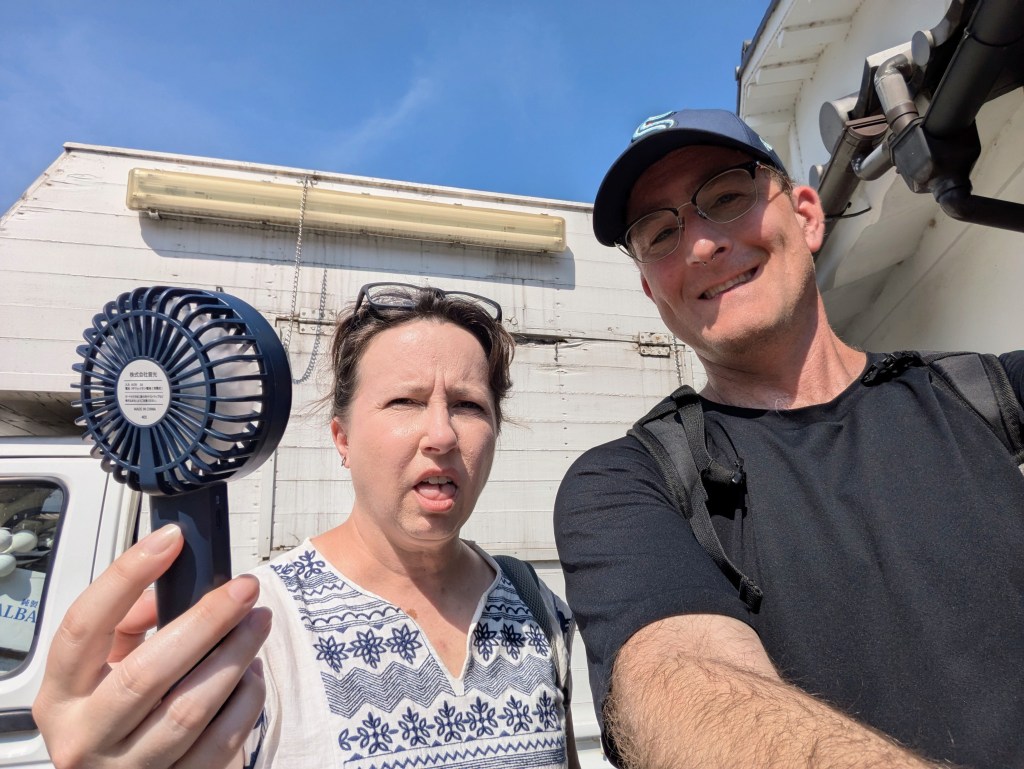
OK now a bad thing that isn’t Japan’s fault at all. Japan in July was so, so gross. High 90’s fahrenheit, really high humidity… so much sweat. It was truly disgusting. We sometimes did that NYC thing where you slow your stride walking past big stores with air conditioning spilling out their front door. I will never return to Japan in the summer ever again. I made fun of Scott when he bought the dorky handheld fan, but then proceeded to hog it for most of the trip. And that’s a sweating torii gate from our Fushimi Inari day.
******
Some tips for someone planning their first trip:
…Here’s a cute little Hello Kitty sign that gives some etiquette tips. Expect to see a lot of cutesy stuff during your time there. But also expect to see a lot of unhinged stuff, too. It’s an interesting place.
…Based on our itinerary (Tokyo, Kyoto, short day trips), ignore travel content creators that talk about how it’s difficult for English speakers there. There was so much signage in English and most locals we interacted with had pretty good English. Besides, Google Translate has really made language barriers a non-issue. You should still learn how to say “thank you” in Japanese, though. At the very least.
…On the topic of language, my food tour guide gave the tip to learn how to say “yummy” in Japanese – it’s “oishi” (oh-ee-shee) – and say it to people that serve you food on your trip. Every time I said it I always got a big smile in response. It’s a simple and awesome way to connect with locals on your trip.
…Travel content creators during our research phase harped about needing cash everywhere you go. That was definitely not the case, especially if you get yourself a Suica for vending machines. There were a few places we went that were cash only, but really not that many. Maybe this is more of an issue in smaller and/or less touristy places.
…The other “tip” I heard about all the time was how there are no towels in the public bathrooms so bring your own. Most of the ones I went into had hand dryers so I’m not sure where this anxiety is coming from. Maybe this is a smaller town issue?
…If you’re traveling between Narita Airport and Tokyo Station, just use the coach bus service you’ll see as soon as you exit customs and skip the Narita Express train. The bus is cheaper, takes the same amount of time, and you might be the only gringos on it like we were.
…If you wear eyeglasses, make a point to get some while you’re there. Just stop into JINS or Zoff or whatever. So cheap and the service speed might blow your mind. American healthcare seriously sucks.
…Tune Stay in Kyoto is highly recommended by us! Our Tokyo hotel was OK, but I wouldn’t go out of my way to recommend it. You can do better.
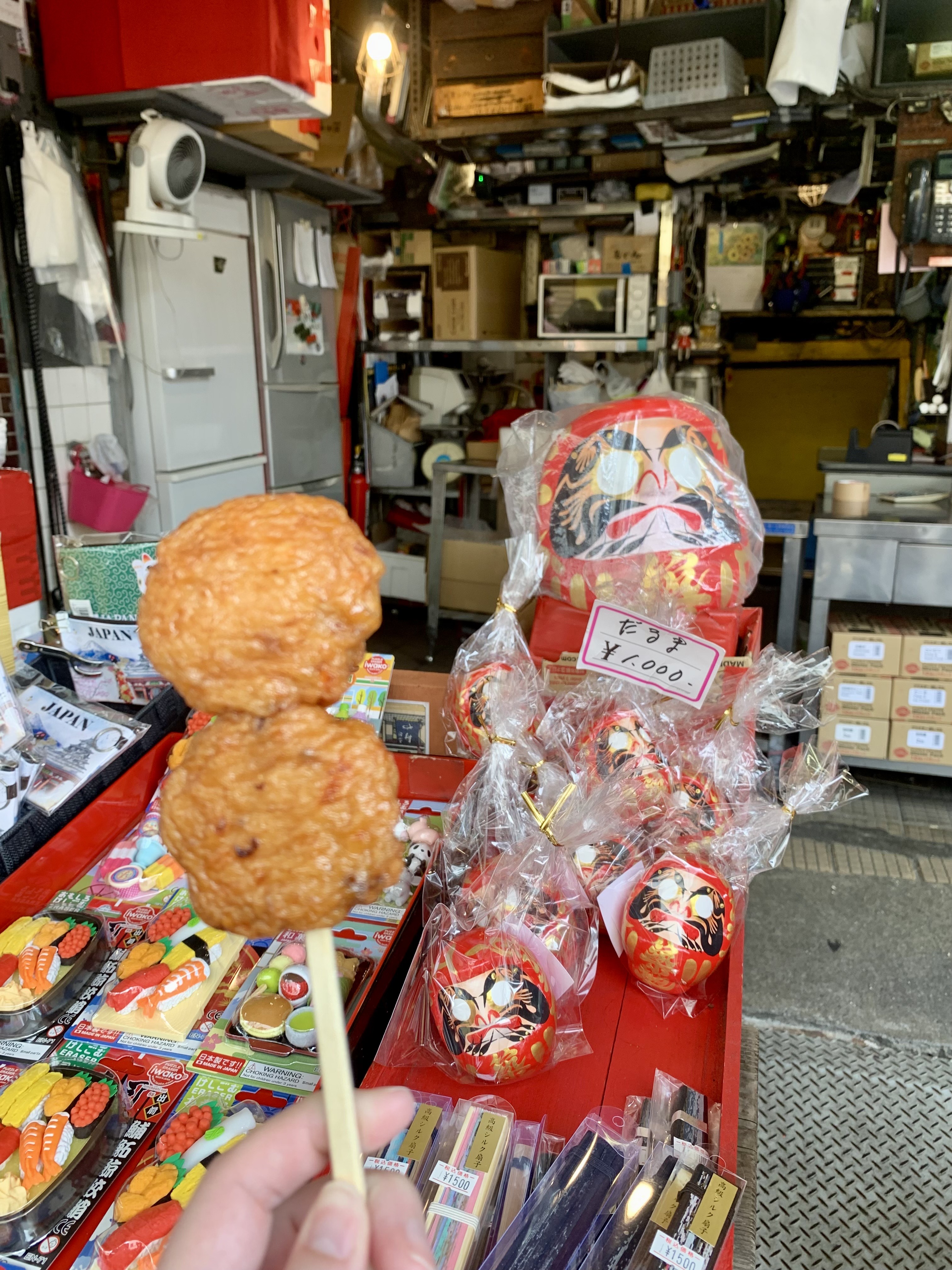
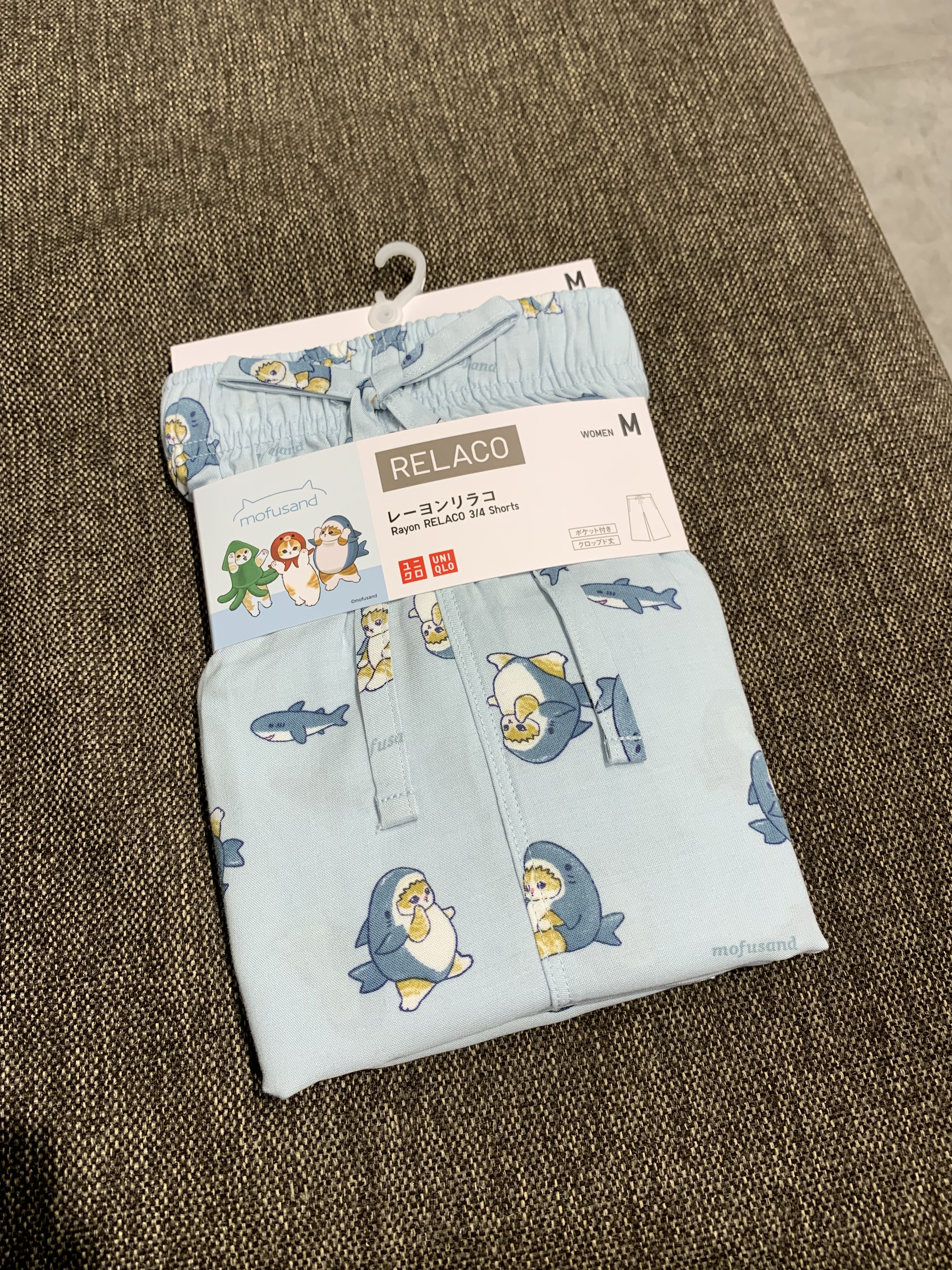
…Pack an extra duffel bag or do that suitcase-in-a-suitcase thing. Maybe bring your holiday gift budget with you. The shopping is so good. We are not shoppers, we are even borderline minimalists, and even we couldn’t restrain ourselves. It’s kind of hard to explain. Here’s a small sample of my damage:
******
Since coming home we both regularly miss Japan. Compared to other places I’ve visited it has this unique dichotomy of being a place that is so foreign in so many ways, but also a place that is so comforting and easy to navigate. It’s a place to go where you feel a million miles away from the familiar, surrounded by gorgeousness and grace and kindness and patience and simple pleasures. I suspect our next visit won’t be until after retirement in a couple of years, but we will also likely max out our 90-day tourist limit as US citizens on that trip.
“It is impossible to remain indifferent to Japanese culture. It is a different civilisation where all you have learnt must be forgotten. It is a great intellectual challenge and a gorgeous sensual experience.” ~Alain Ducasse
“For those with restless, curious minds, fascinated by layer upon layer of things, flavors, tastes and customs, which we will never fully be able to understand, Tokyo is deliciously unknowable. I’m sure I could spend the rest of my life there, learn the language, and still die happily ignorant.” ~Anthony Bourdain
I made a video compilation of all most of the clips we took during the Japan trip. These were taken using my iPhone, Scott’s Pixel, and the GoPro 12. This is pretty rough and ready as I mostly just threw the clips into Clipchamp. Video editing is not something I enjoy so I think YouTube will be spared another travel content creator. But this is an easy way for us to relive some of these moments so in the long term it’s worth the few minutes I spent on it.
Thanks to the magic of time zones we managed to live two days between waking up at 6:30 am in Kyoto on June 21st and walking through our front door in Seattle about 4:00 pm, also somehow on June 21st.
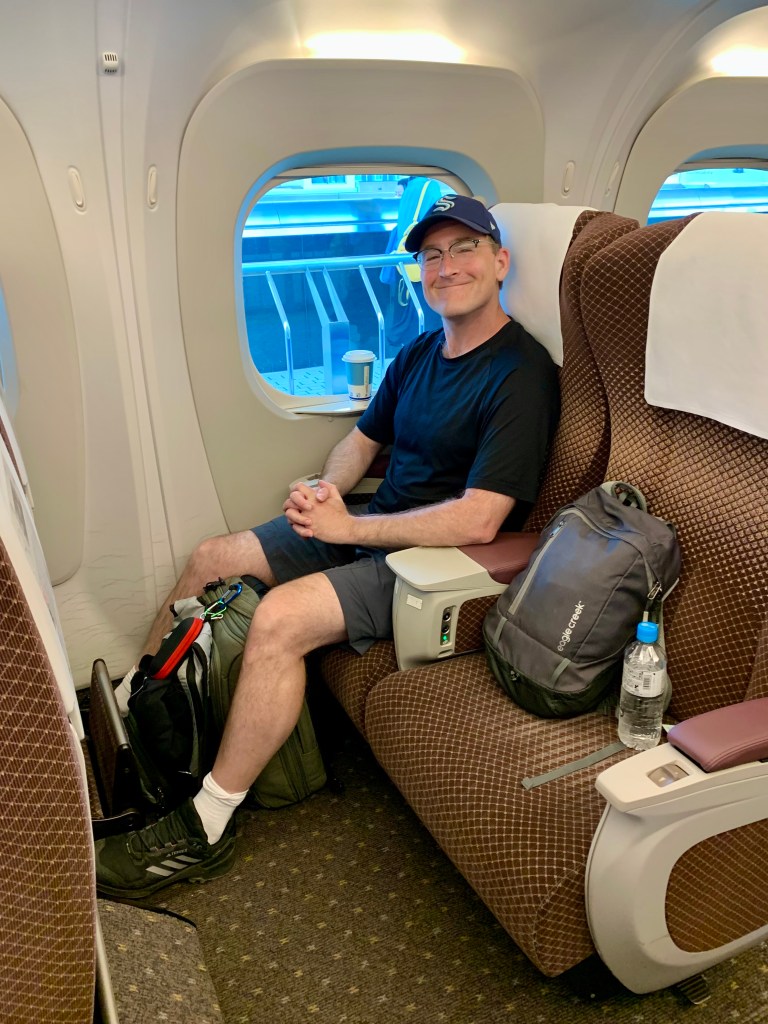
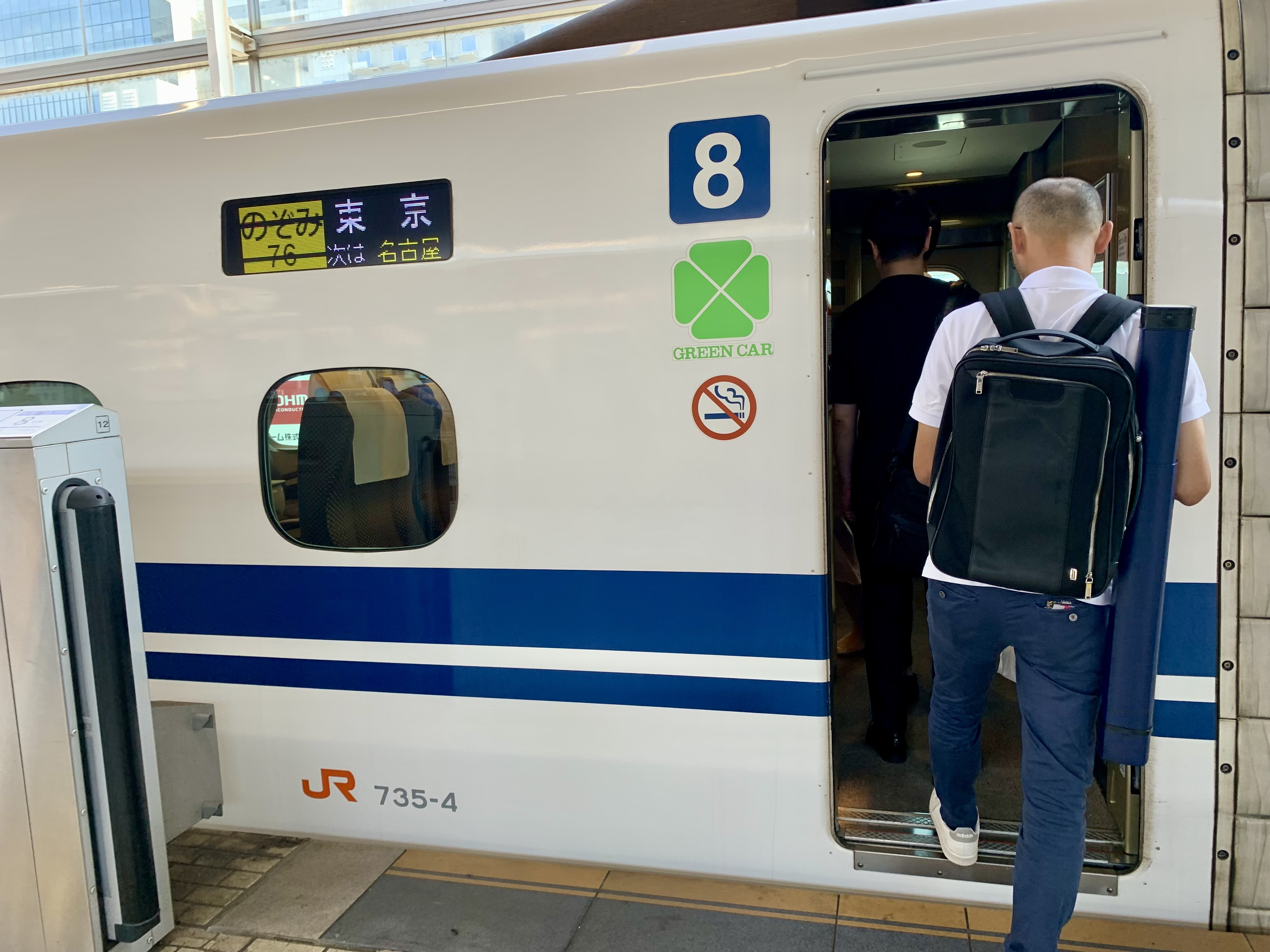
To make sure we had the seats we wanted for our transit between Kyoto and Tokyo – two together on the 2-seat side – we had purchased our shinkansen tickets on Friday. Even then we couldn’t find them in the 8:00 am hour of departure in a regular class car. So we sprung for the fancier “Green” car. Mr. Keeper of the Spreadsheet said it was nominally more and not a problem.
We checked out of the lovely Tune Stay hotel about 7:15 am to walk over to Kyoto Station and catch our 8:13 am train. Bless Scott for carrying one of my bags – the one stuffed with evidence of my Japan shopping weakness. We had free checked bags for the flights home, so I consoled myself with that.
Our experience in the Green car was fine and we were glad we tried it, but in the end we decided it wasn’t worth extra money in the future. We will know on future Japan trips to book seats further in advance so we can be picky about their location, but otherwise we are perfectly content in a standard reserved seat. It’s Japan… transit is always clean and comfortable!
Although we had been thoroughly happy with our cheaper (and honestly more convenient) coach bus transfer from the airport to central Tokyo back when we arrived, we wanted to try the Narita Express option since it is so popular. During pre-trip research I had found a tip to get off of the shinkansen from Kyoto in Shinagawa instead of Tokyo because walking to the Narita Express was shorter and easier in the smaller station. Excellent tip! The walks in Shinagawa Station from the shinkansen to the Narita Express ticket counter, and then to the Narita Express platform were very short. We waited about 20 minutes on the platform then found our reserved seats for the ~1 hour ride to the airport.
We are nerds and were several hours early for our flight, and had to wait a bit for bag check to open. Normally we are carry-on only type people, so this whole extra step was annoying. To pass the time we took turns browsing the shops outside security because we definitely needed to be buying more Japan things. After bag check and security we found our way to the Priority Pass lounge. I was a bit apprehensive because online reviews were horrible. But I was pleasantly surprised – we found seats without issue and there was a little food buffet. Free food and drinks in airports is one of the ways we justify that VentureX annual fee.
The flights home on Air Canada were fine. Nine hours to Vancouver + easy and stress-free connection + one hour to Seattle. I was thankful to not have a repeat of the layover stress from our outbound trip and that they didn’t pass out hundreds of tuna fish sandwiches again. Seattle transit home for $3 each, and then we walked into our home sweet home to love on our Zoe girl who we missed very, very much.
Yeah, didn’t really take any blog-worthy photos during our travel day(s), but a pic of Zoe is always worth a million others.
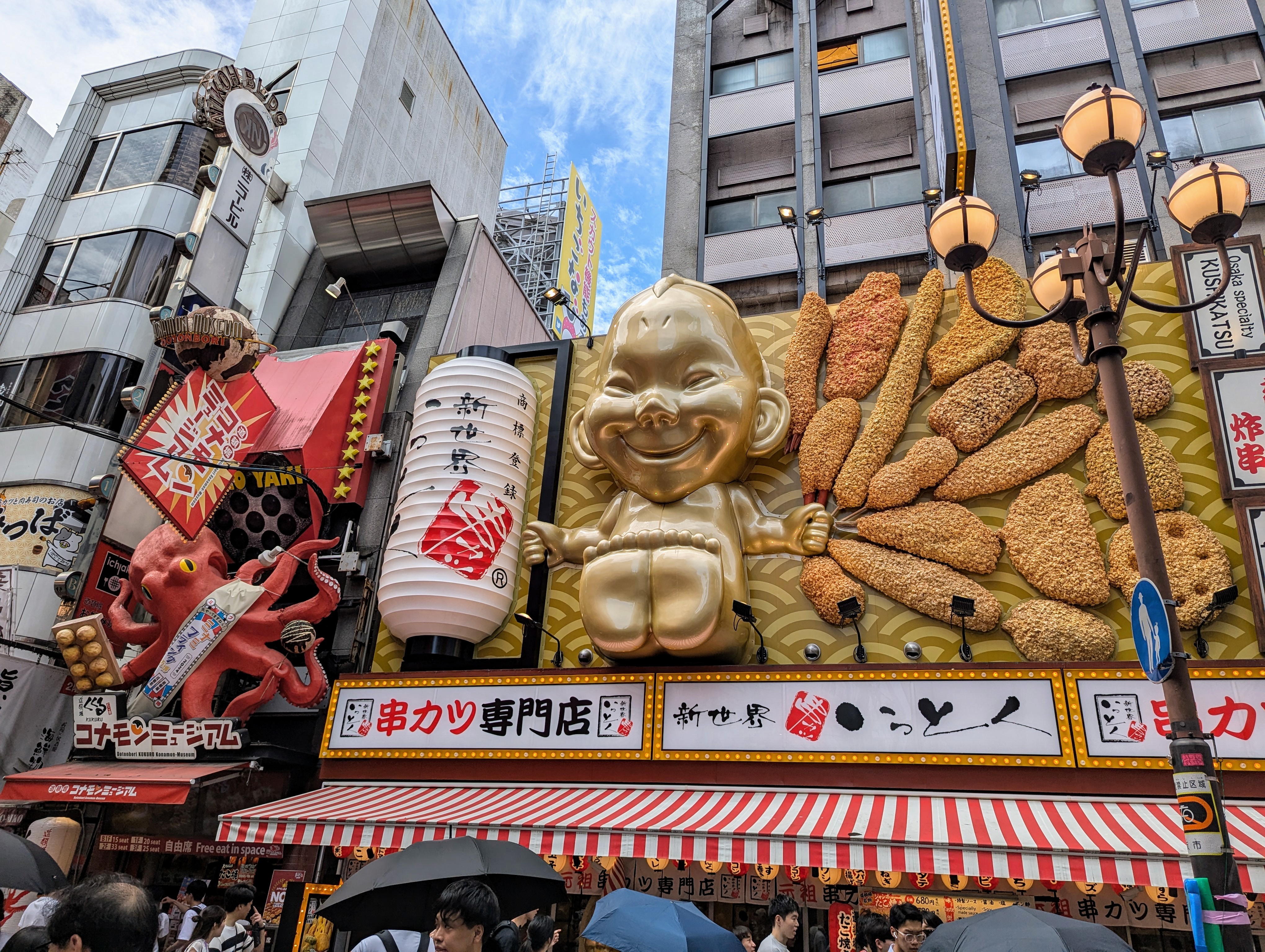
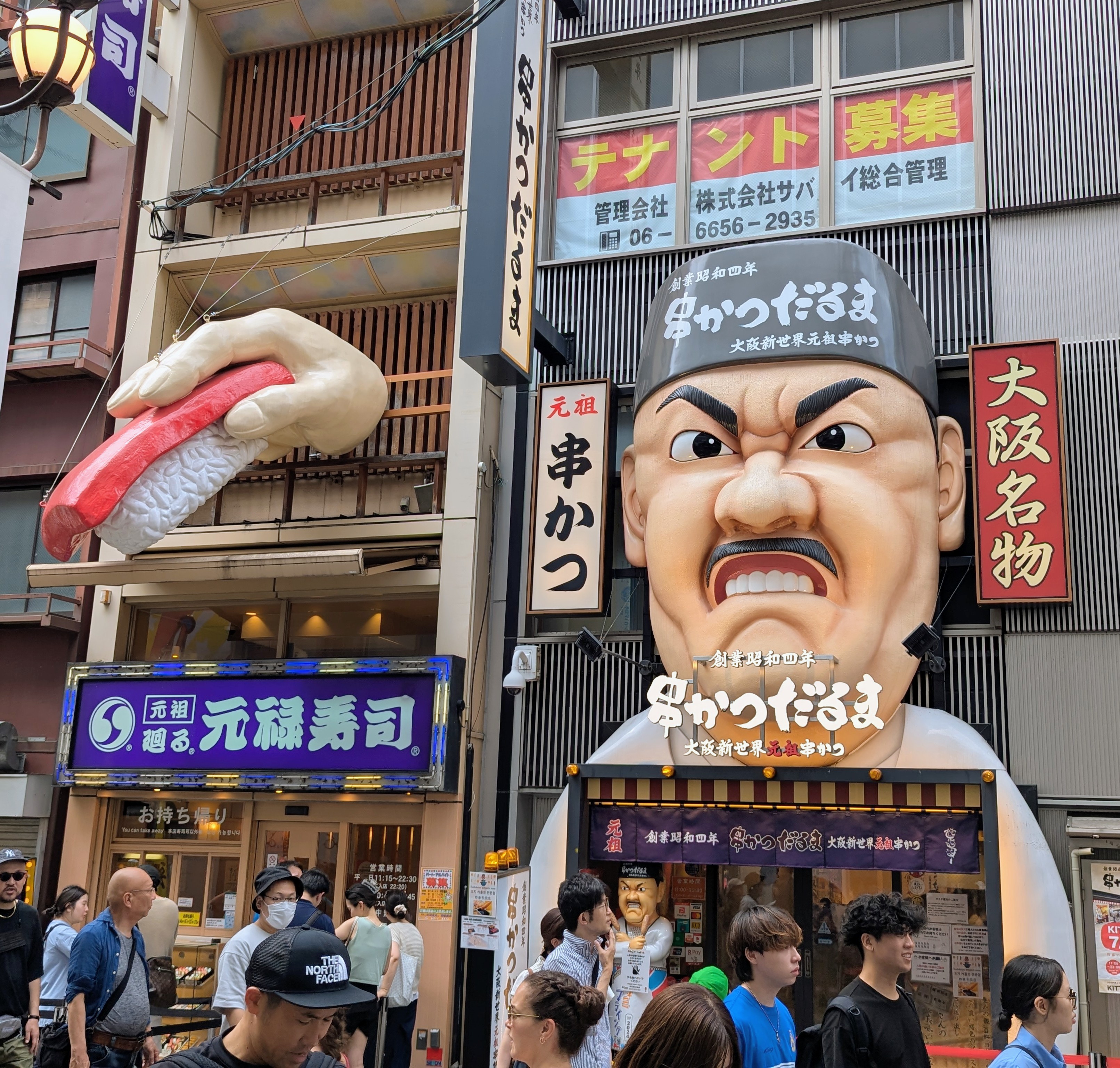
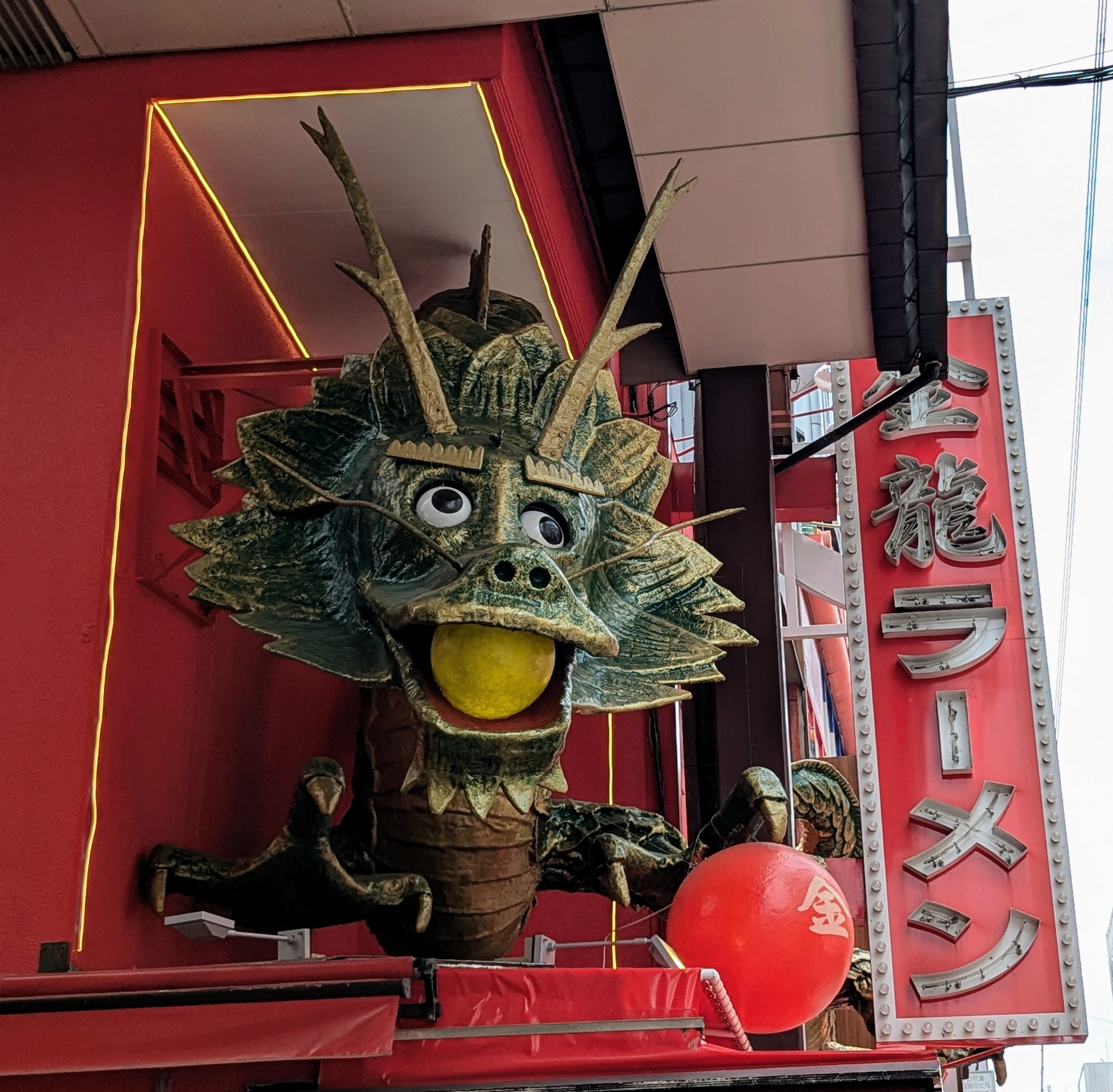
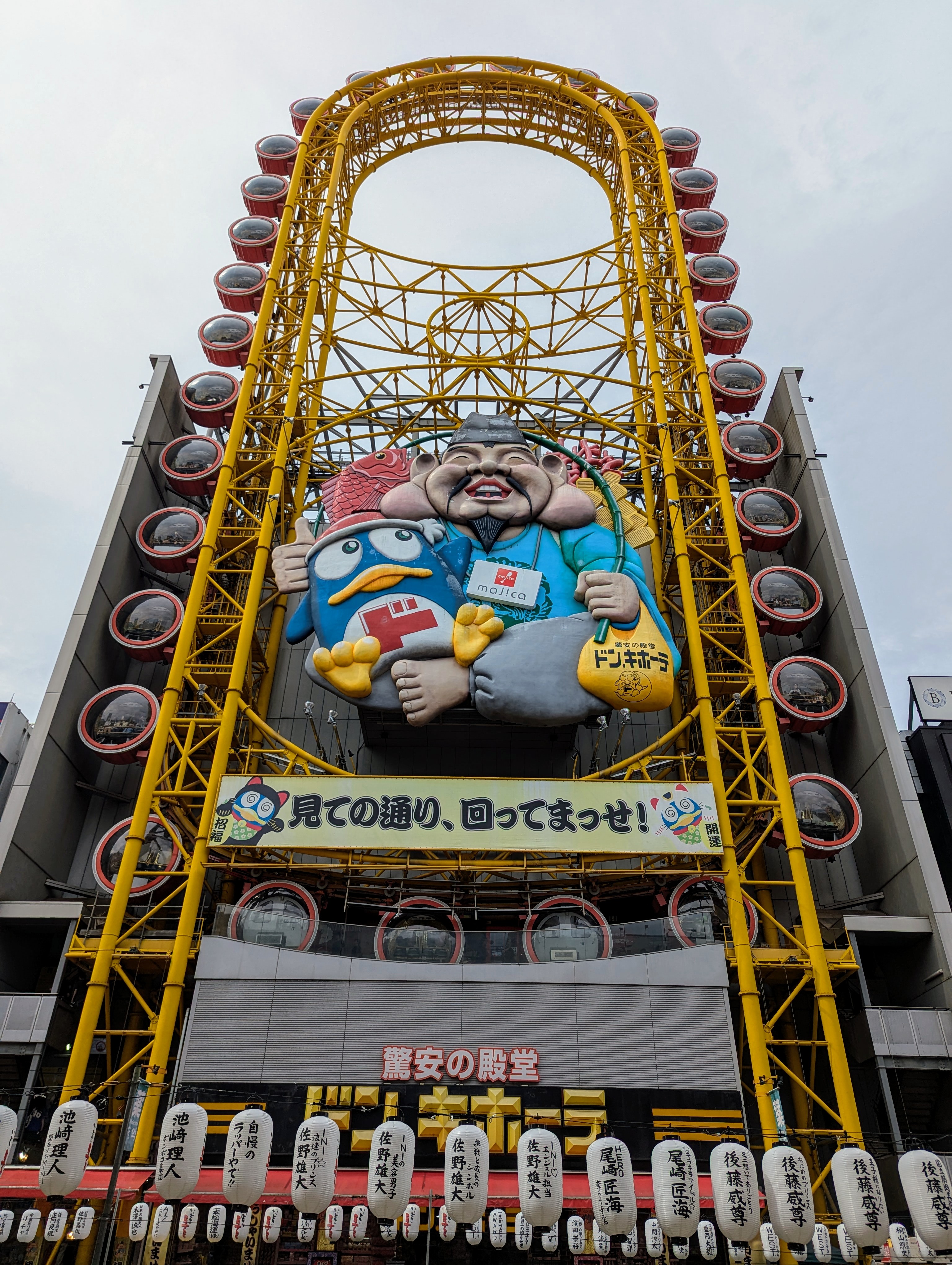
We decided to spend our last full day in Japan in Osaka. Pro tip: pronounced “OH-suh-kuh”, not “oh-SAW-kah”. We hopped on a slow local train out of Kyoto Station and enjoyed the views on the journey. Once in the city we transferred to the subway to get to Dotonbori.
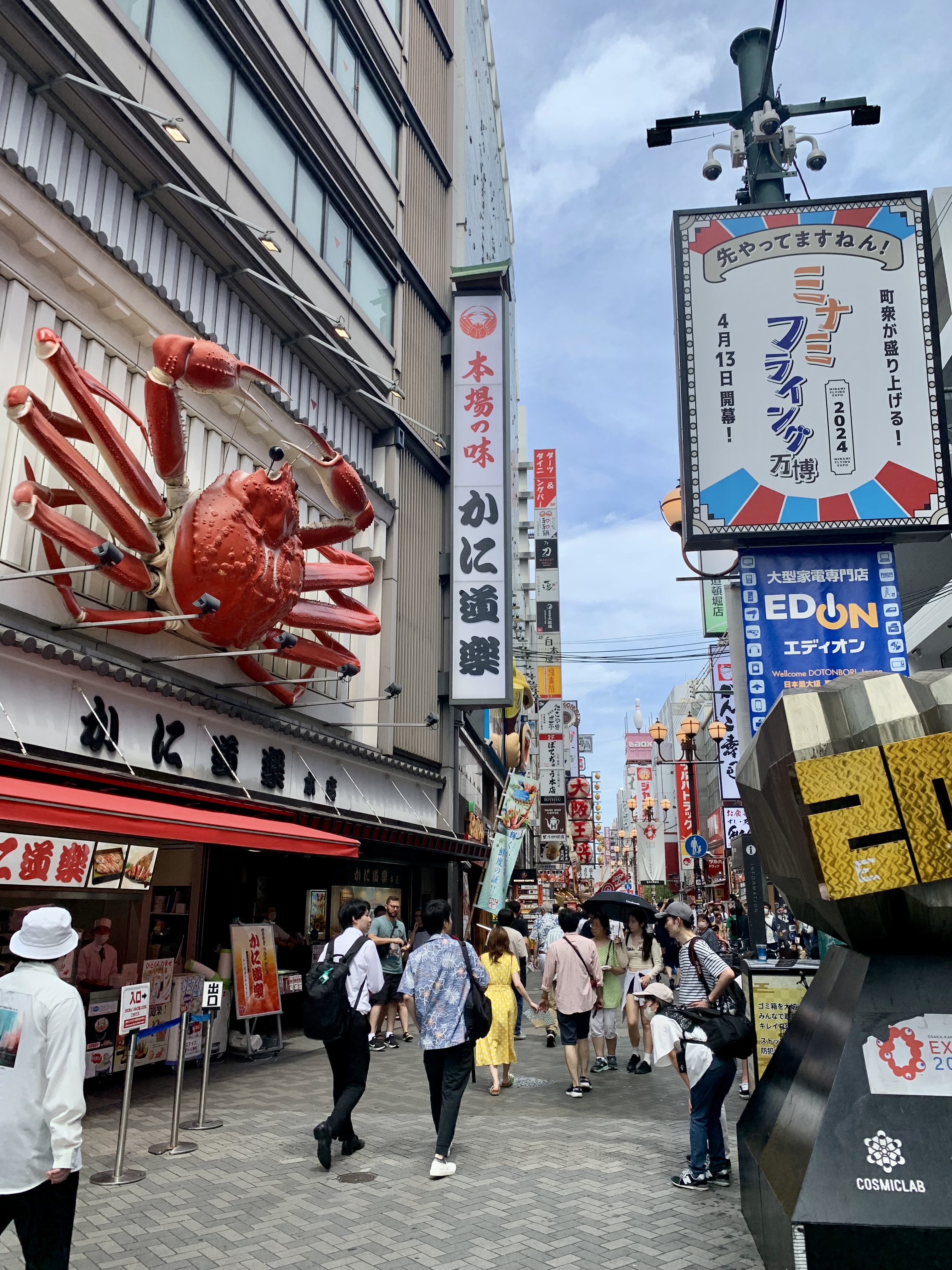
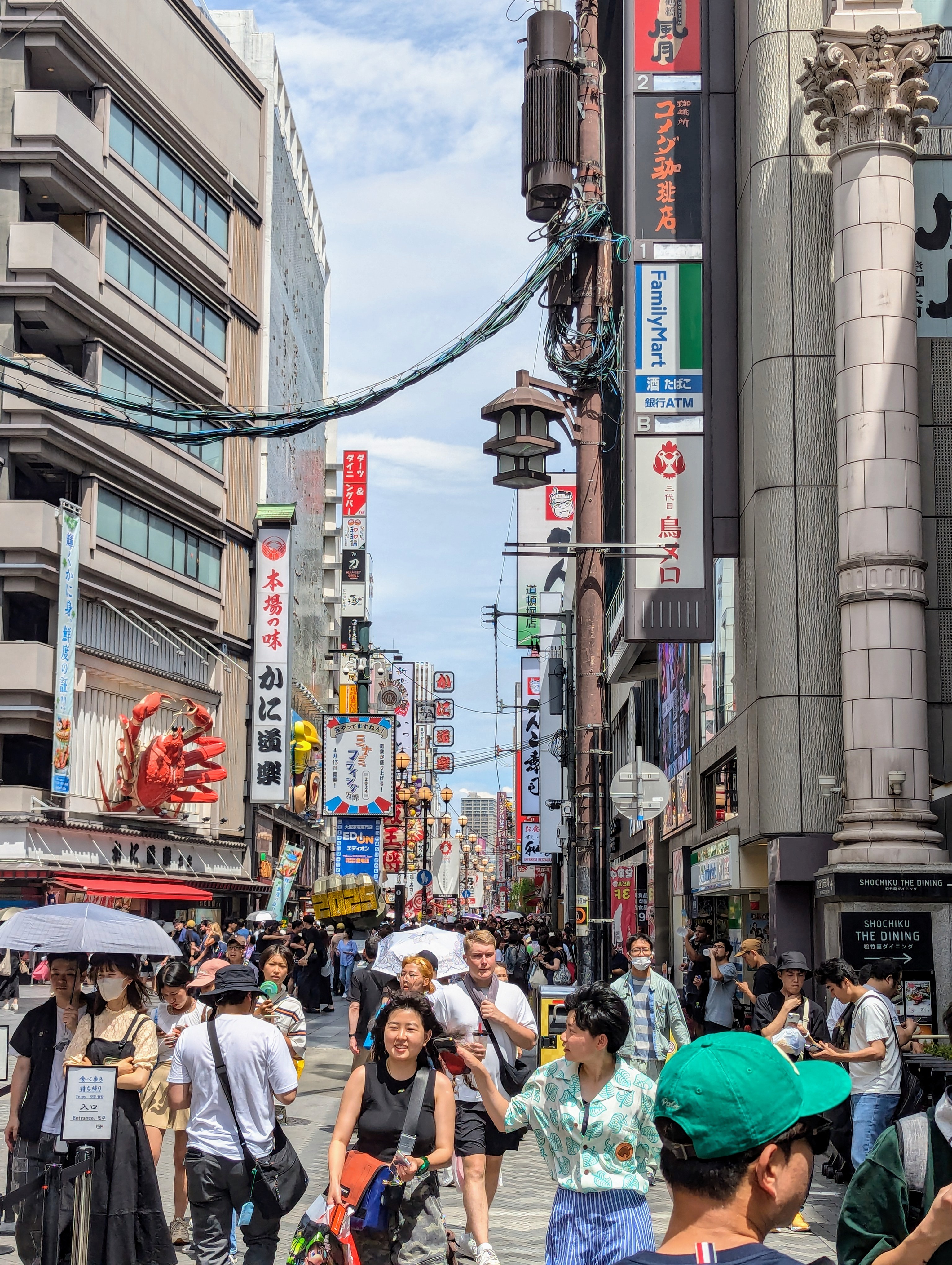
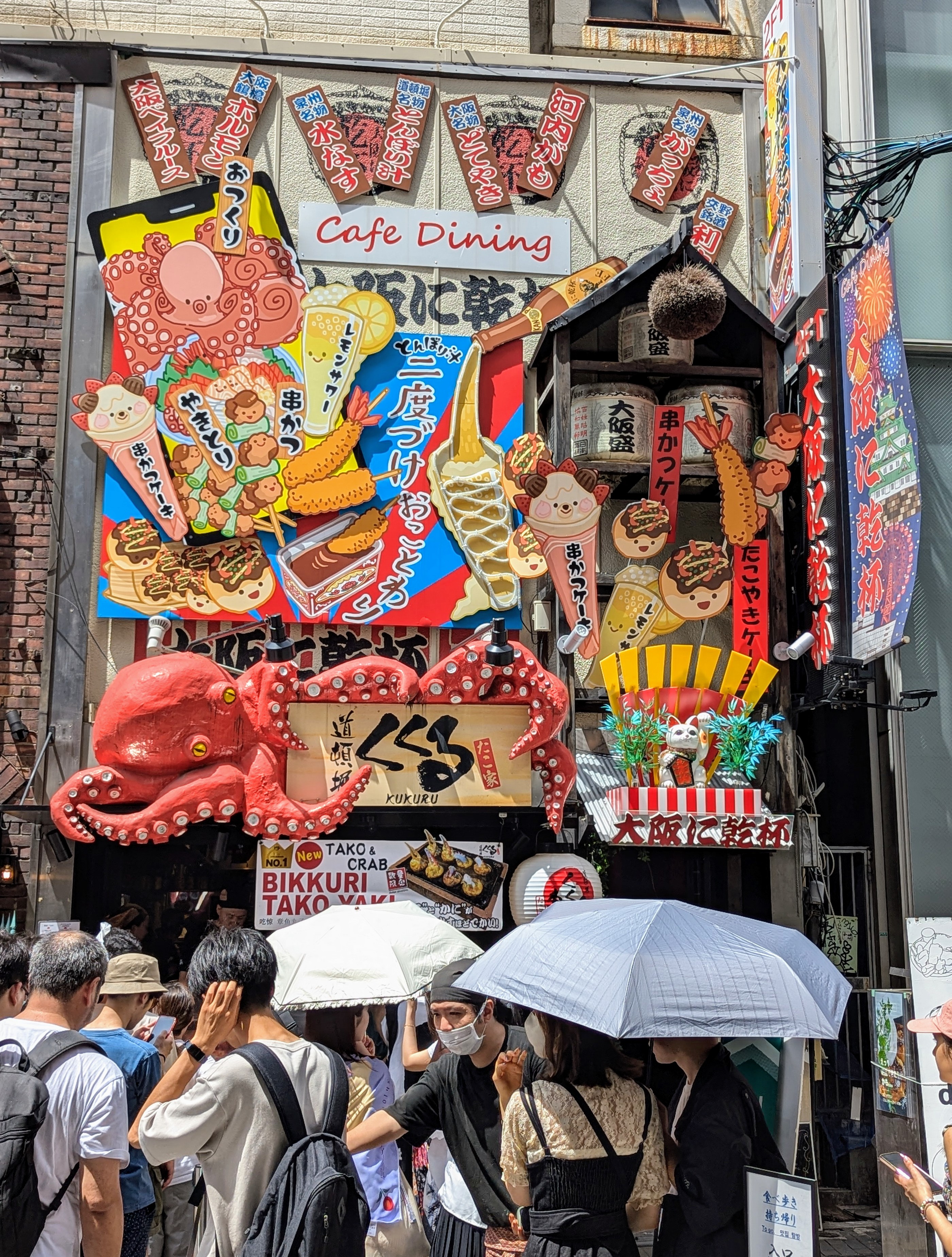
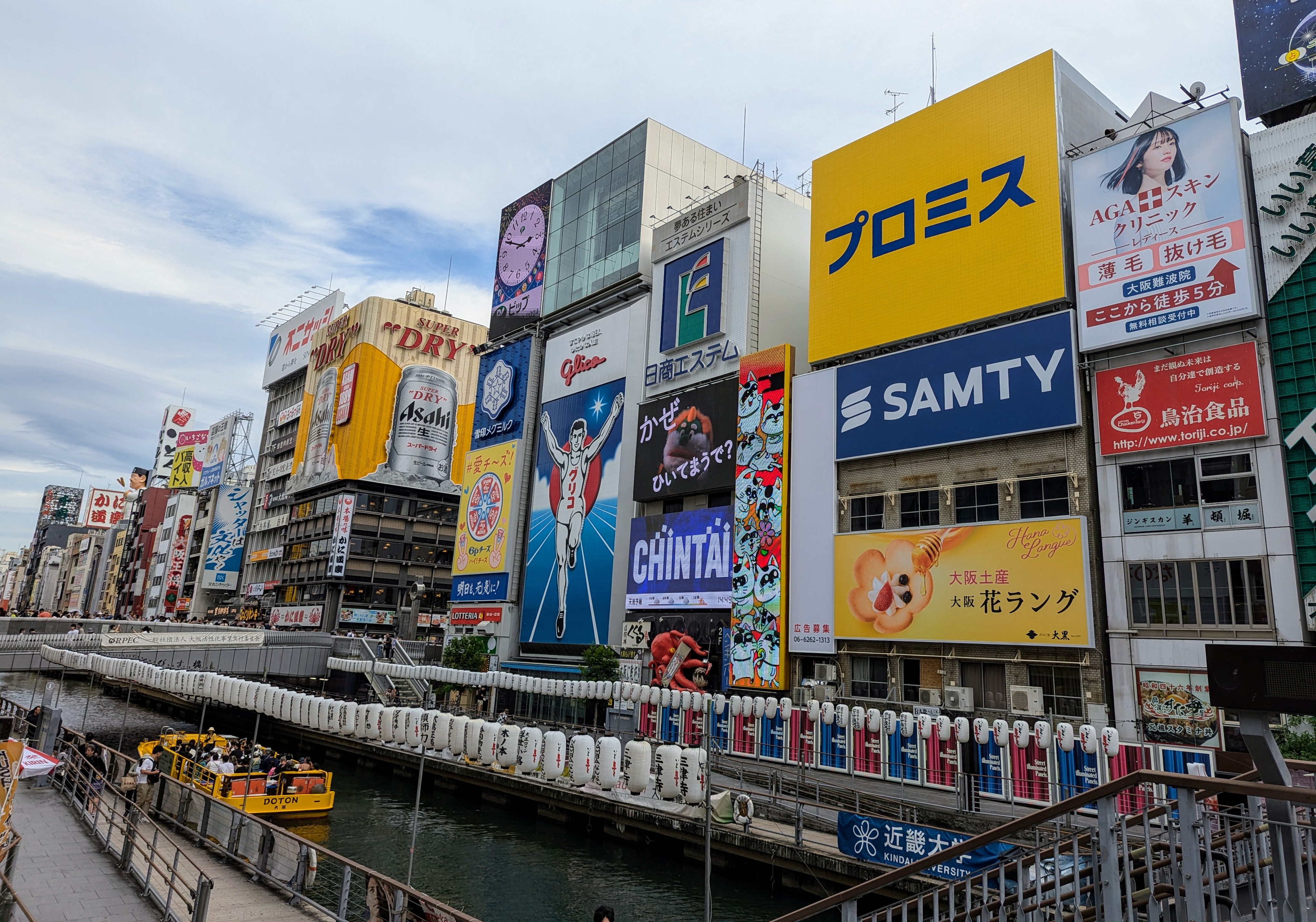
I didn’t do much research on Osaka, but for some reason thought Dotonbori was just a street when in actuality it’s an entire district. The main streets popular for tourists on and near the river were a visual delight with a lot of fun signs and people watching.
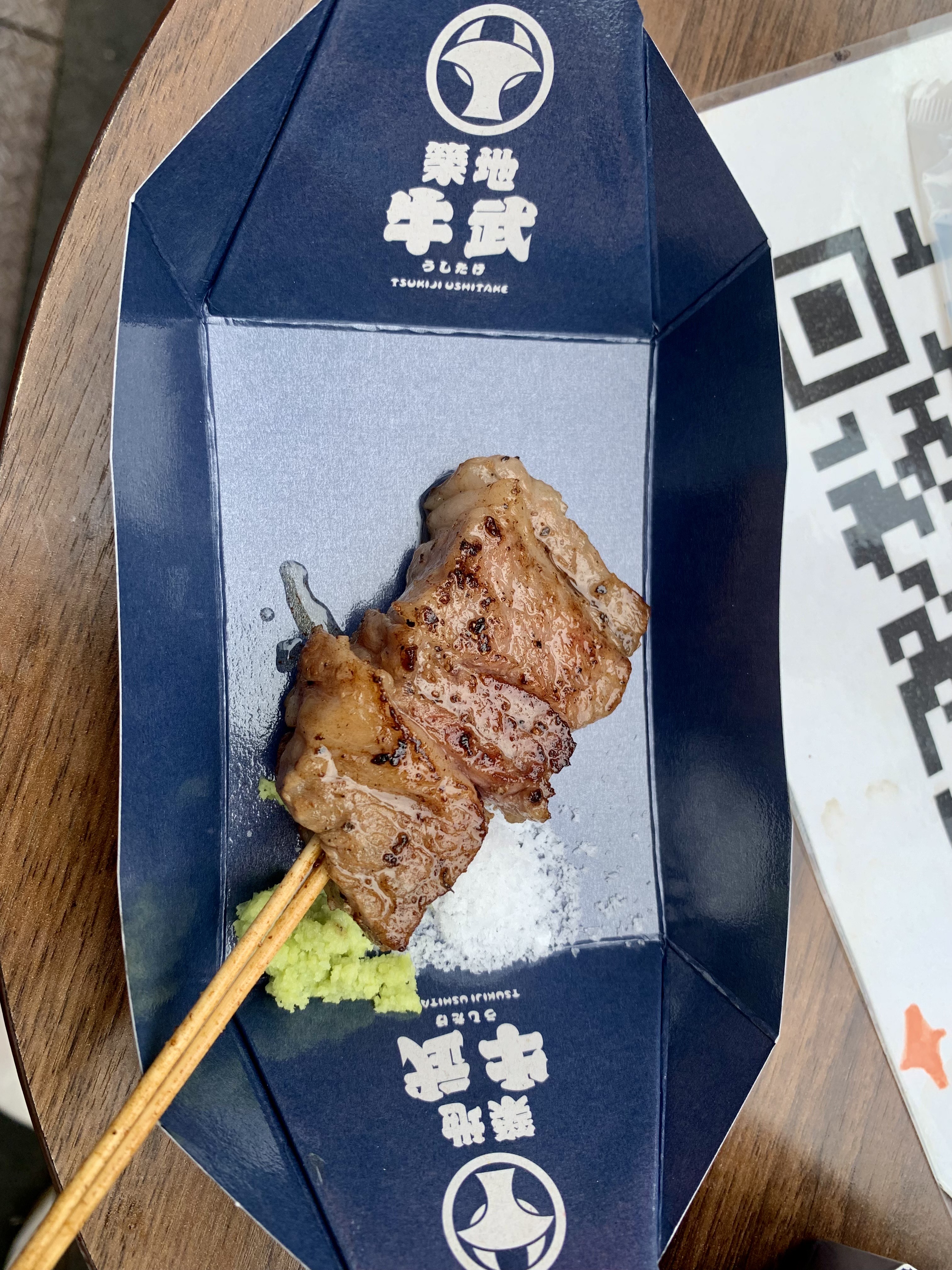
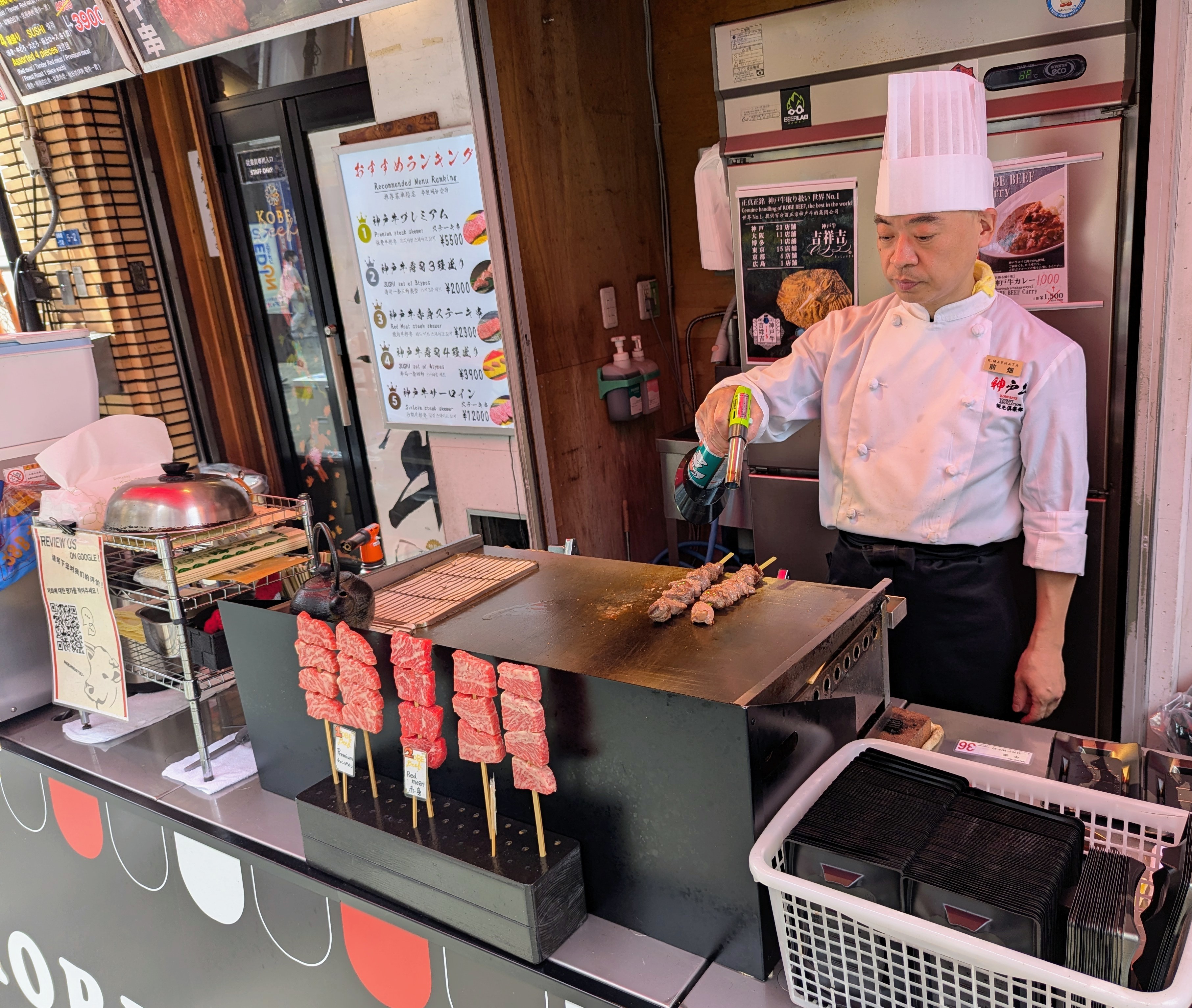
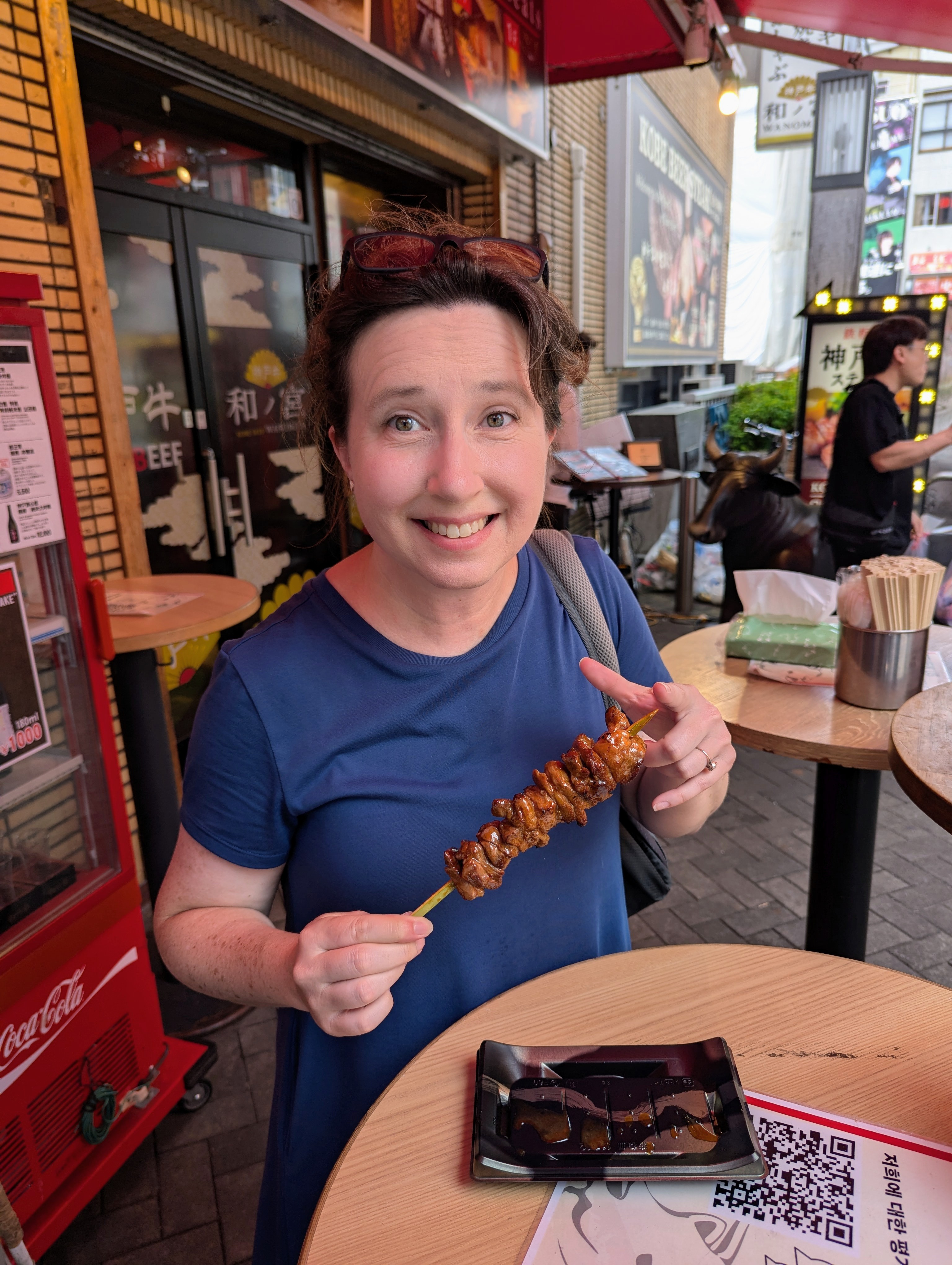
The street food was plentiful and we enjoyed steak skewers and fruit skewers (both fresh & candied).
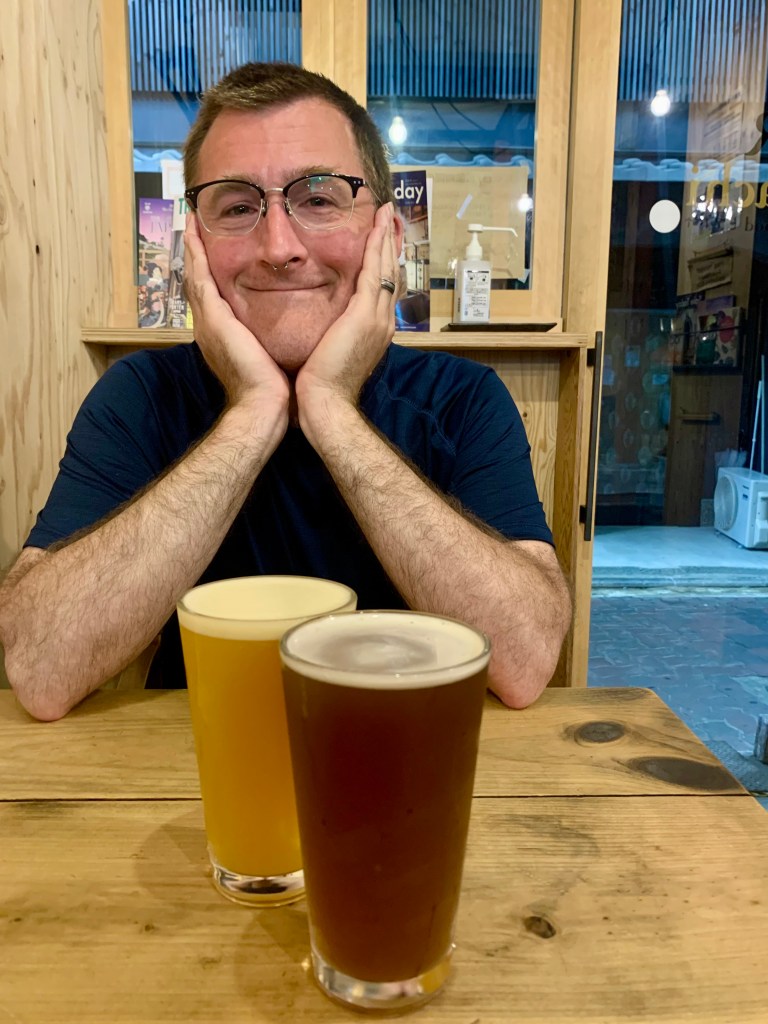
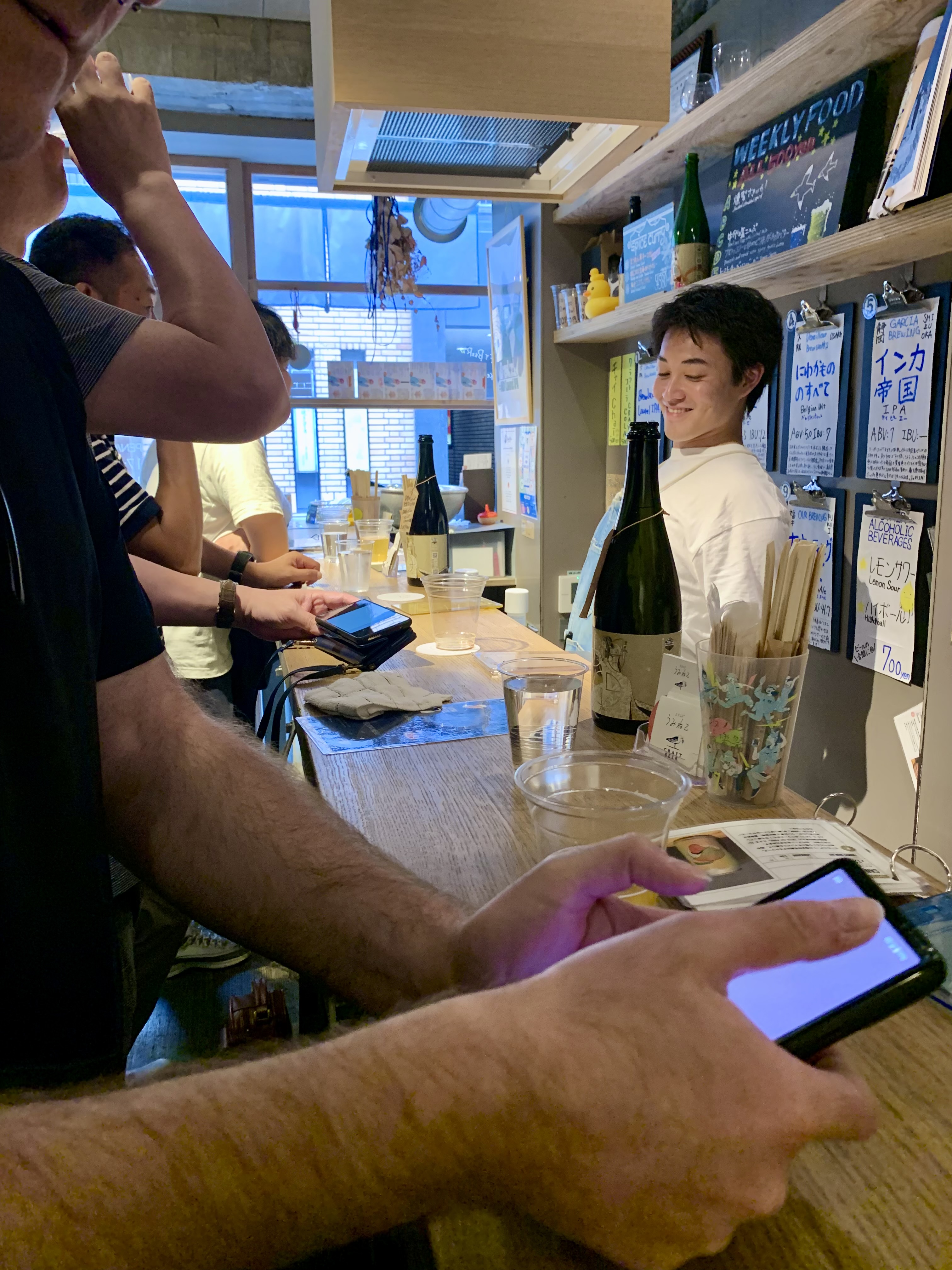
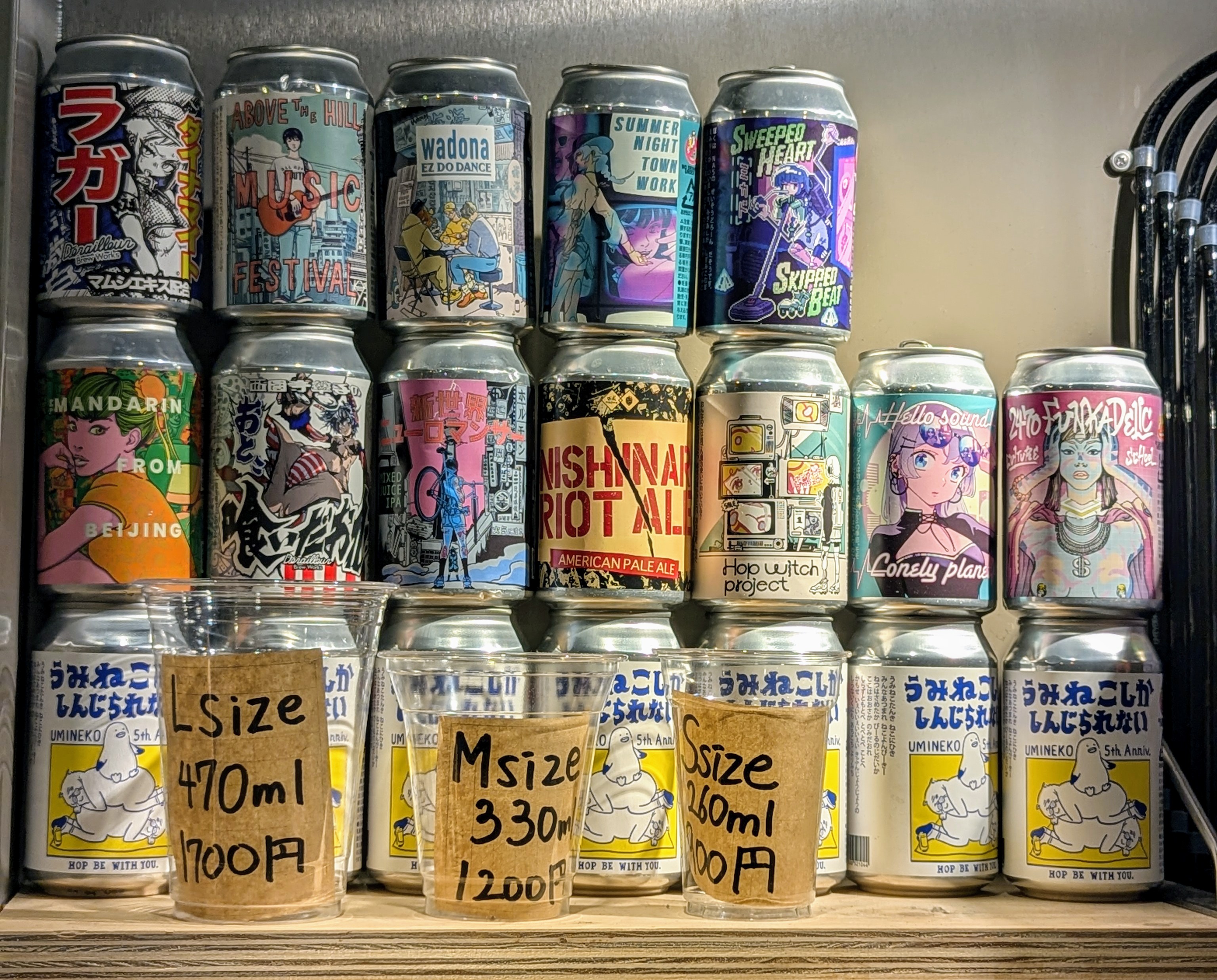
Around 2:thirsty (hey Brian & Carrie!) we conducted a Google search for craft beer and headed to Stand Umineko, which ended up being one of the highlights of our entire Japan trip, honestly. It was that quintessential small, narrow Japanese space, standing room only for maybe 5 people if you’re from Seattle, 8 people if you’re from NYC. The young guy working there was fun to chat with and when he noticed us looking up steak restaurants for later he enlisted two other local patrons for recommendations. We ended up having 3-4 beers of varying sizes each, with my favorite as the saison from Vector Brewing. Full pints were about $11 which is pricey even by Seattle standards (and certainly by Japanese standards), and we ended up spending about $50 USD here. There is some savings in the fact that tipping is absolutely not a thing in Japan. Overall 100% worth it in our opinion.
After the fantastic craft beer experience we set out to find wagyu for our last dinner in Japan. The recommendations given to us at Umineko didn’t pan out for a variety of reasons – already booked, dress code, prefix menus with items unappealing to Scott, etc. – so we were left to our own devices.
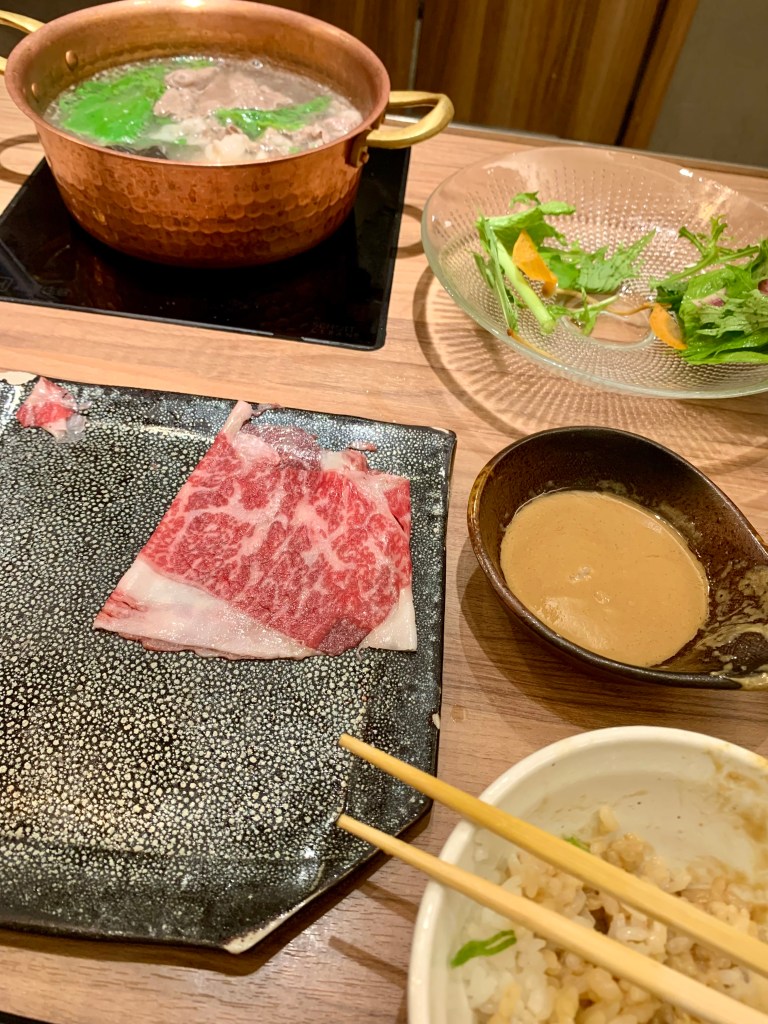
Unfortunately we ended up making a poor decision. I’ll blame fatigue and a failure to preplan. We ended up at a restaurant serving hot pot. Our only hot pot experiences have been Chinese-style in Seattle and we have loved them. They are the only exception to my rule that I don’t pay to cook my own food in a restaurant (i.e., I don’t go to Korean BBQ spots). But this hot pot experience just wasn’t as good, I think because they provide boiling water and the expectation is that you do all your own broth flavoring? In our Chinese hot pot experiences the broth base is already well flavored, so I’m not sure if the plain water is typical for Japanese hot pot or what? Regardless, I did not have the skill nor motivation to make great broth from scratch. So in the end we were mostly just eating boiled thin-sliced steak and vegetables. Yeah, it was about as tasty as that sounds.
The most unappetizing moment came as we were walking away from the restaurant and Scott mentioned that we had paid $200 USD for that experience. OMG.
I’m not naming the restaurant here for a couple of reasons. One, I didn’t take the time to capture the name and I can’t easily identify it using Google Maps. Also, the restaurant was full with locals that looked happy so I’m assuming the tasteless food was entirely our fault. Finally, the prices were posted clearly on the menu so what we agreed to pay was definitely and entirely our fault.
I consider eating meh food while traveling a travesty, so I really need to do a better job of planning restaurant destinations for our trips. Especially those first and last meals that become strong memories of a place.
We caught an express train to Kyoto and headed back to our hotel to get packed up for an early departure towards home the next morning.
We had a bit of a lie in and then caught a long 45-minute city bus to Arashiyama with a plan to catch several attractions in the popular area. I found this article with a recommended order for visiting sites, but did not expect us to get through all of it.
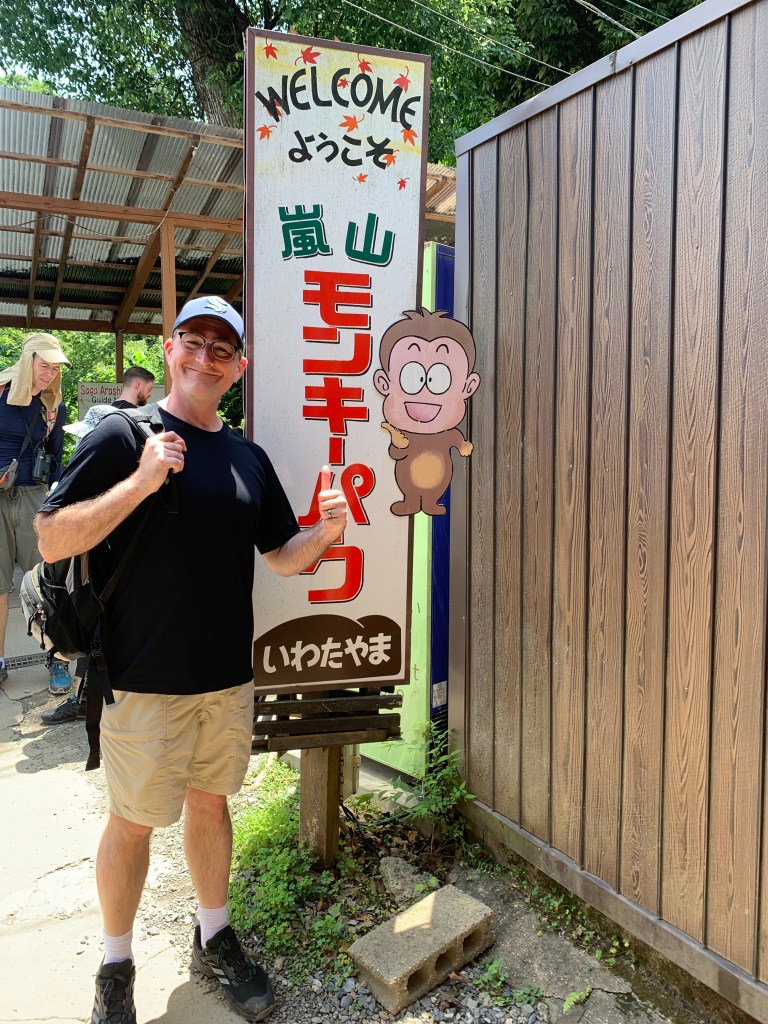
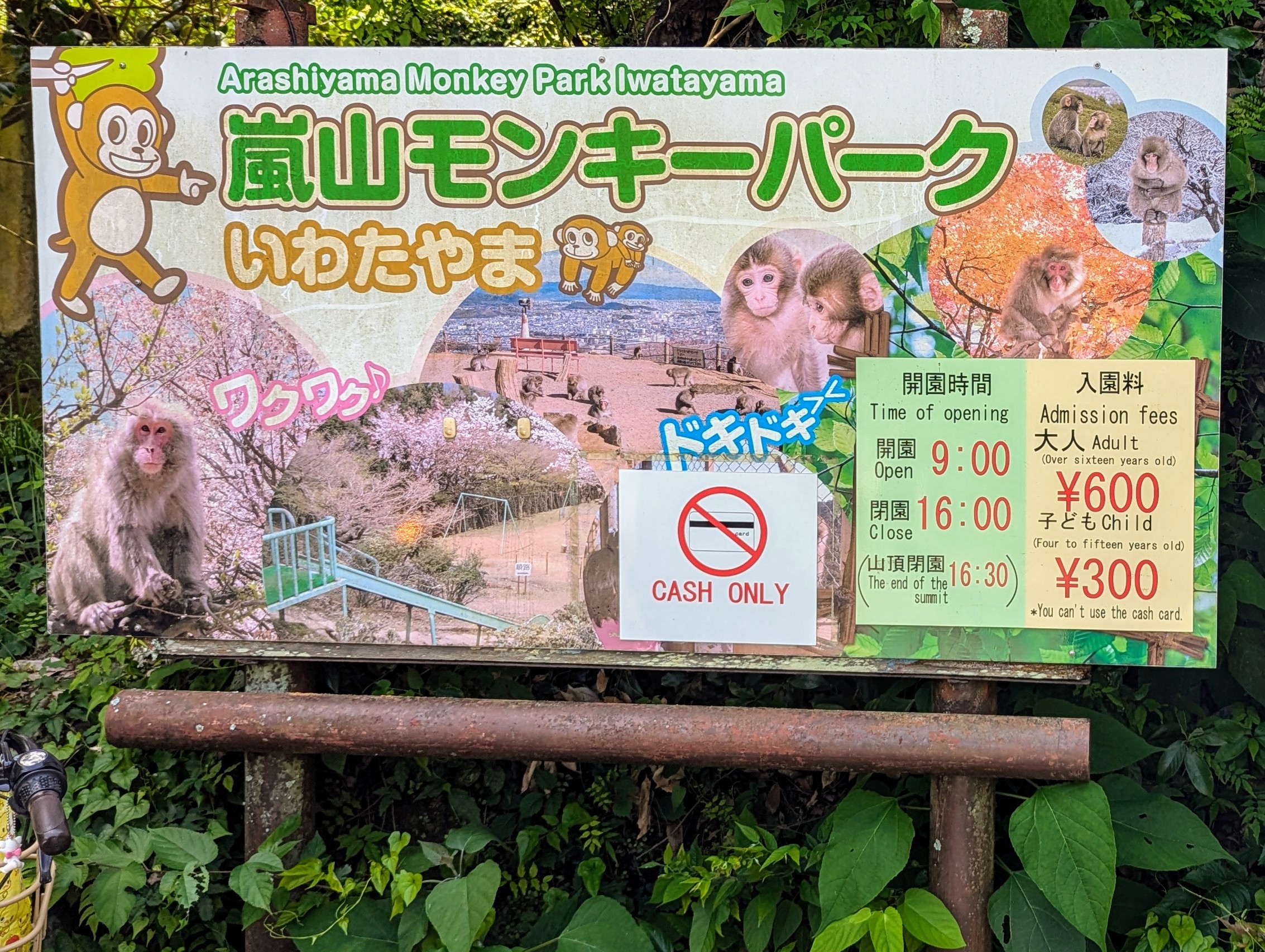
The first stop on the suggested itinerary was the Monkey Park. Most animal-themed travel activities are unethical, and wild monkeys are assholes based on my past experiences in places like Costa Rica and Gibraltar. But since this is Japan and they’re better than most people, I went ahead and did a little online research, liked what I read, and decided it was worth a shot.
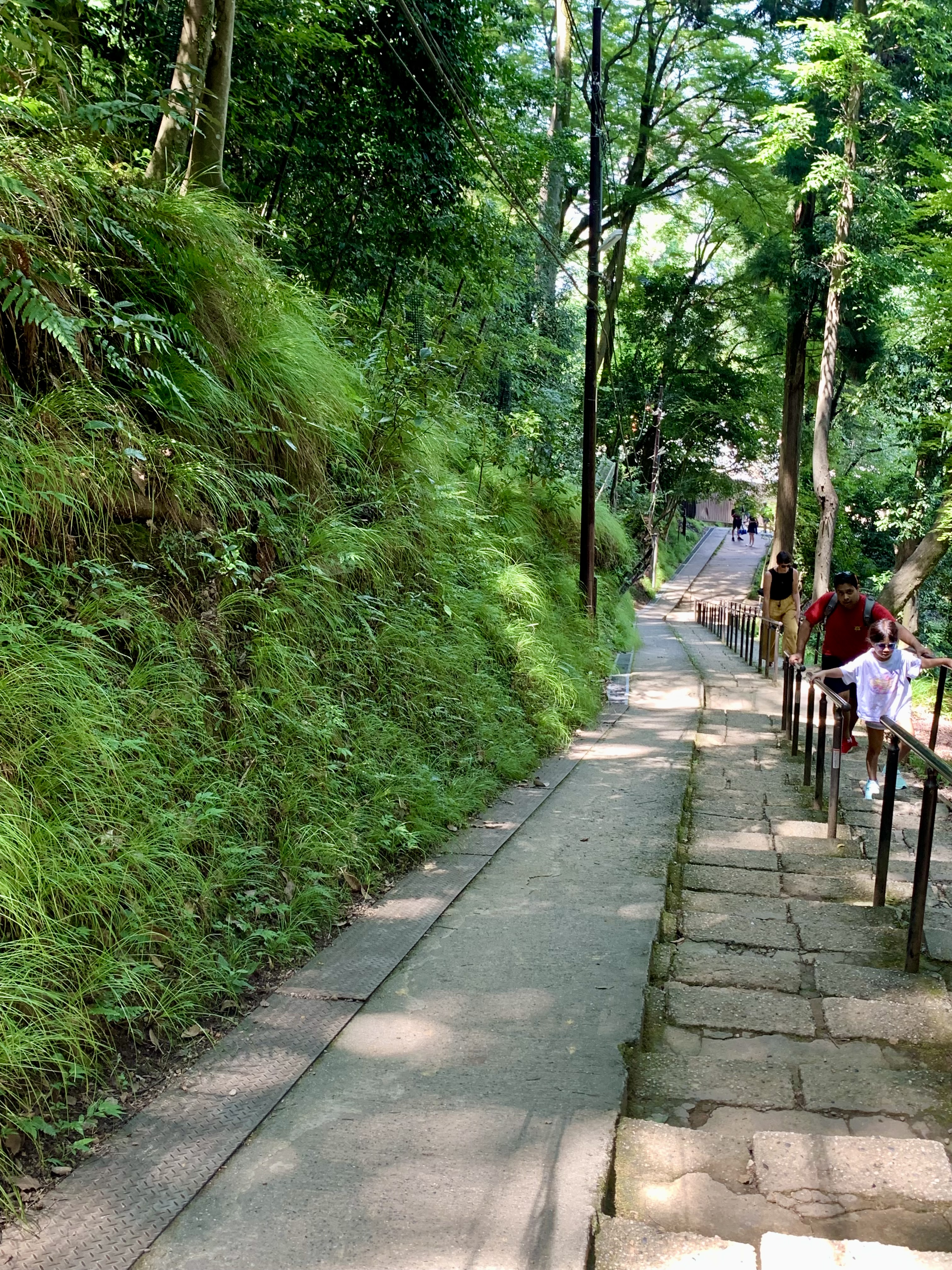
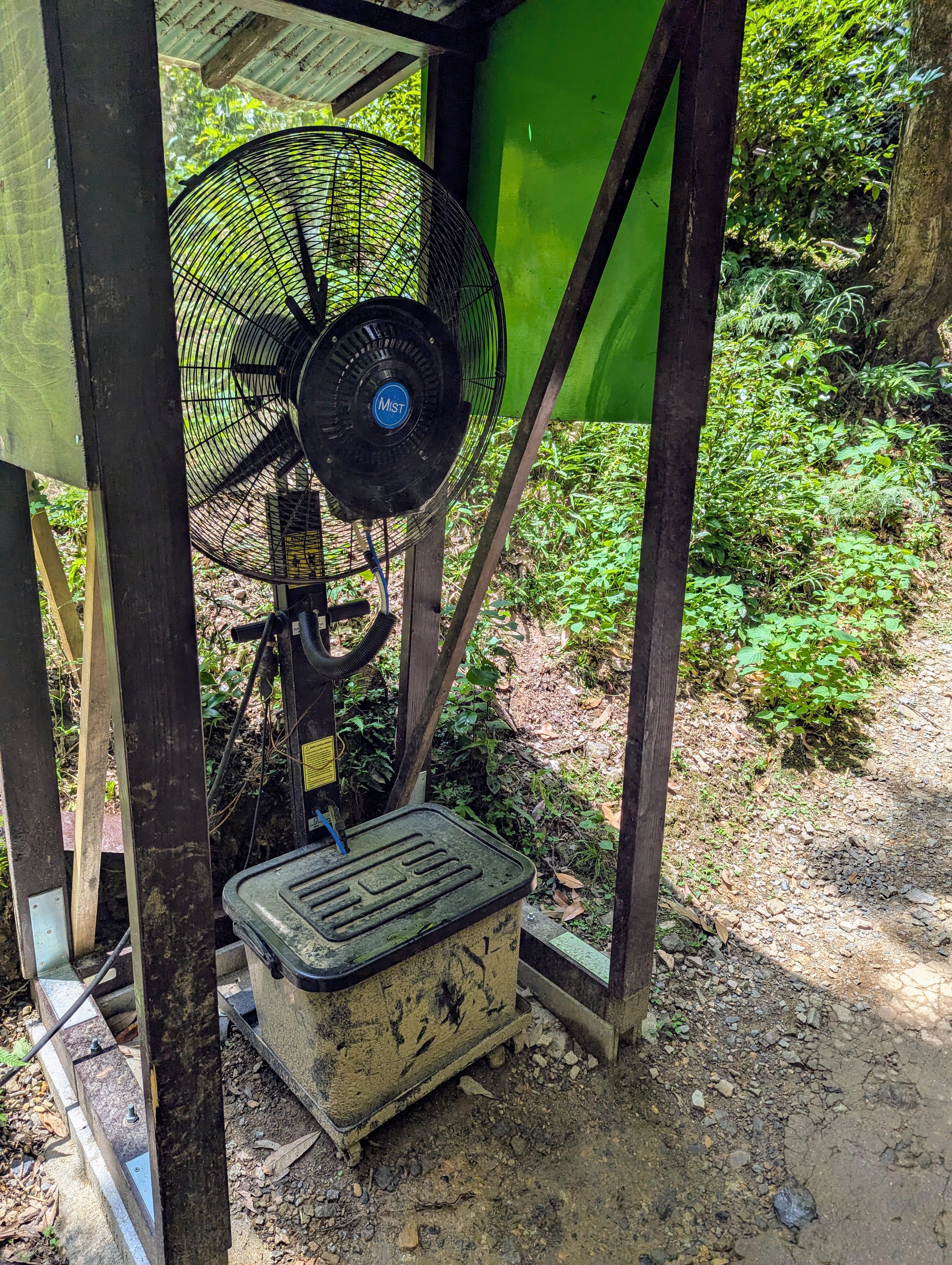
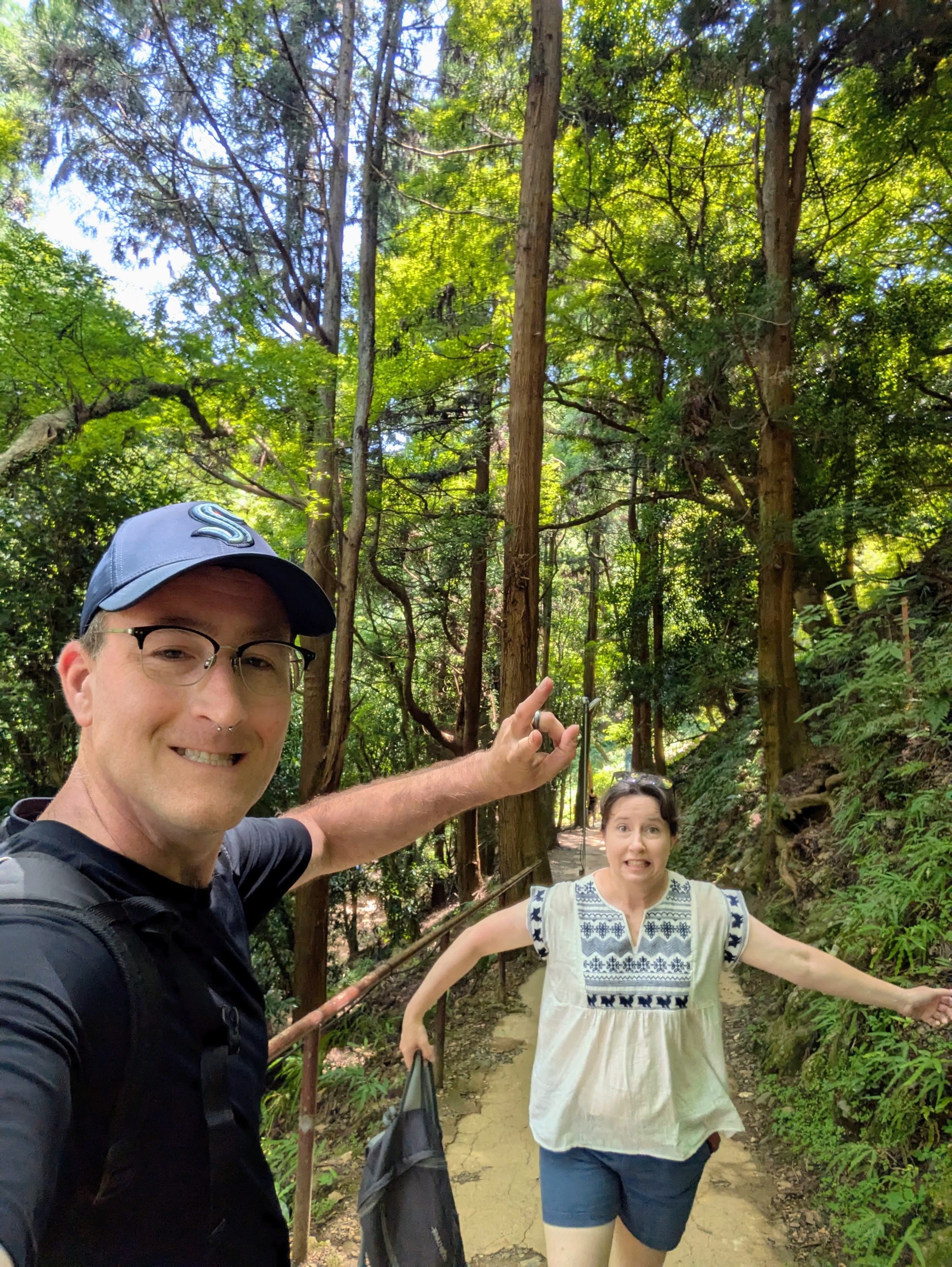
One of the things I read online was that after you pay your admission (600 yen/$4 USD per person) there’s a bit of a hike up to the top of the mountain hill where the monkeys live. They were not lying. Well, if the weather had been more temperate it might not have seemed like a big deal. But, alas, it was Japan in July and I ALMOST DIED. Luckily there was a fair amount of shade and a couple of rest areas with big fans that saved my life.
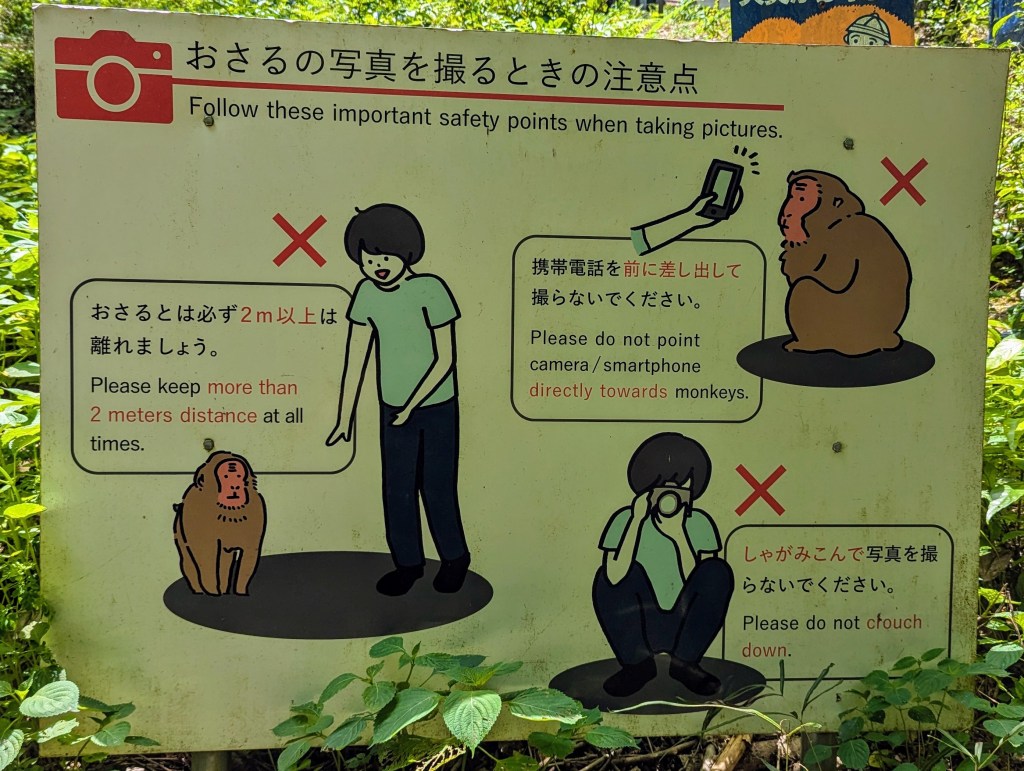
Along the route up the mountain were intermittent signs educating people on the rules of the park. These were increasing my confidence that this was going to be a good experience.
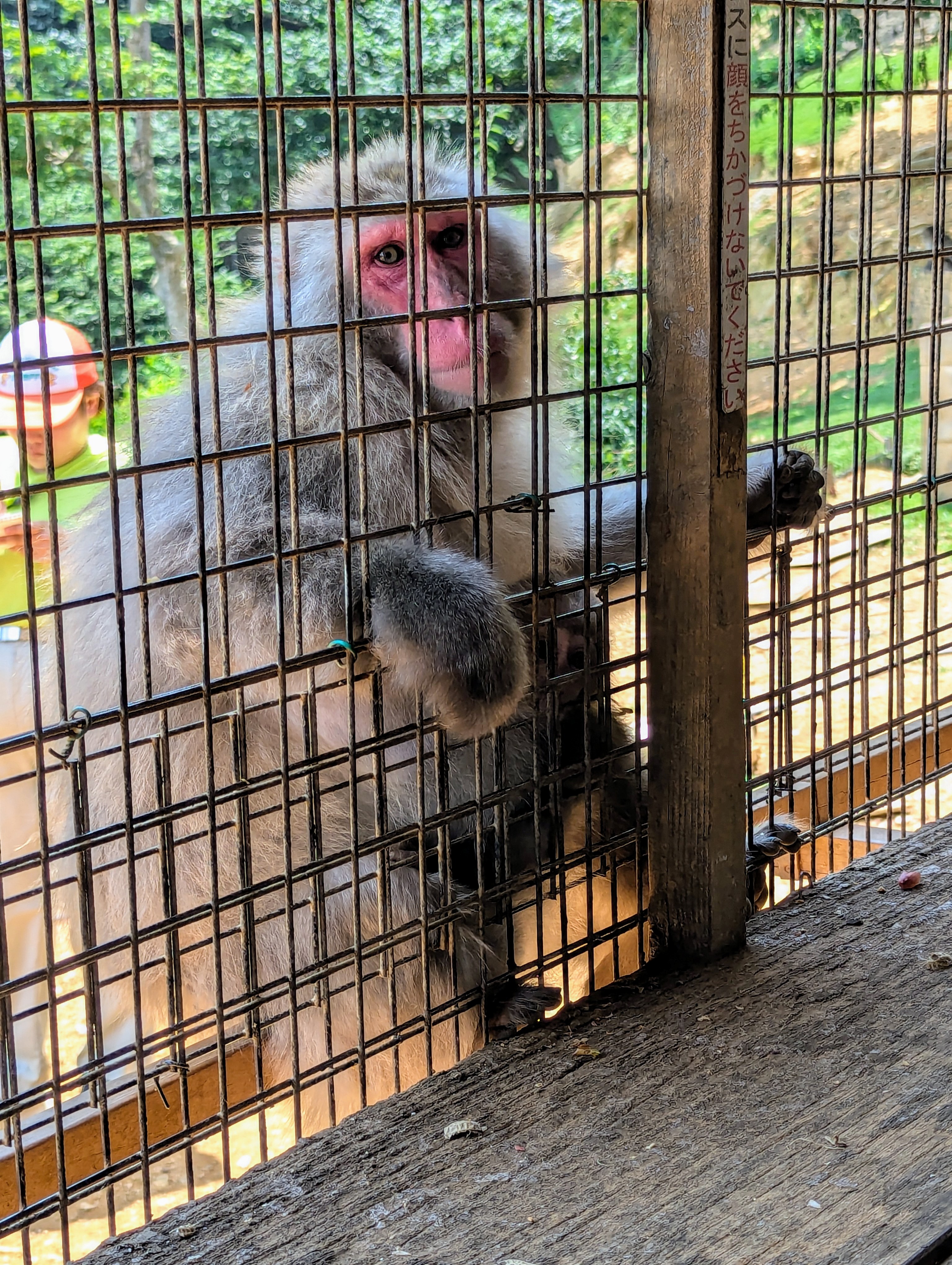
Humans were contained within roped off areas, and most of the hilltop was monkey-only zones. The humans were told repeatedly and supervised to make sure they respected the monkeys and didn’t feed them unauthorized food. There was a small one-room building that humans went in to buy the authorized food and feed it out through windows to the interested monkeys. The monkeys did not act desperate for the food, and seemed to understand that the building was the only place to get food from humans as they did not intentionally approach humans outside of the building. This was easily the best wild-ish monkey experience I’ve ever had.
The Monkey Park also had the added bonus of a nice view with a mildly cooler temperature.
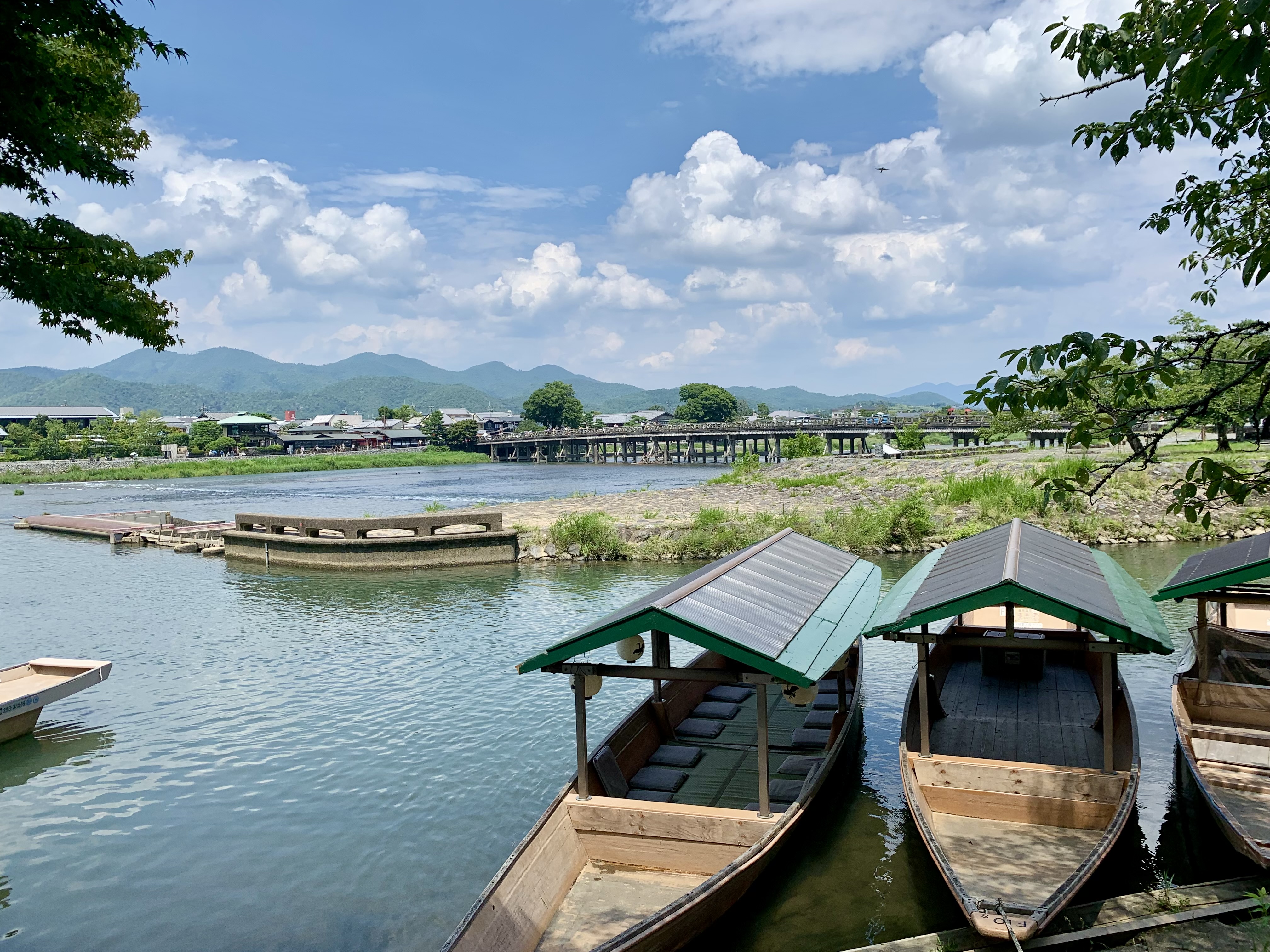
Togetsukyo Bridge was next on the suggested itinerary, which was a short walk from the Monkey Park exit. It apparently has a 400+ year history, but mostly we cared about the pretty walk.
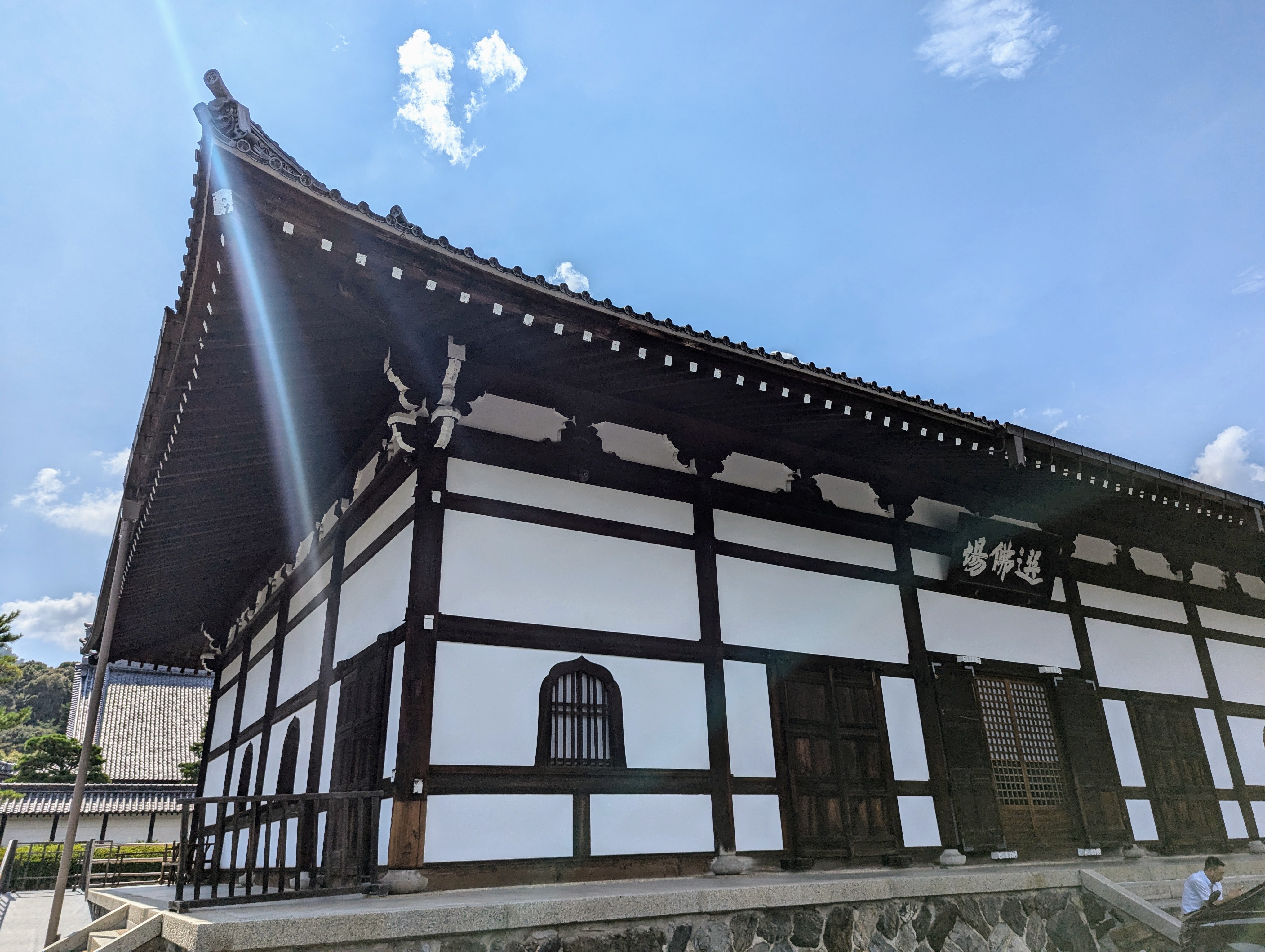
The next agenda item on that suggested itinerary was Tenryuji Temple but we felt “templed out” at this point in the trip. But we did want to check out the famous local bamboo grove and when the itinerary said “Leave Tenryuji through the back entrance” as the route, it didn’t occur to us that you had to pay to get into the Temple area where that back entrance was. So we ended up walking a ways into the temple grounds before we discovered the payment barrier, and had to backtrack a bit and use Google Maps to find our way to the grove. The free parts of the temple grounds did have some lovely spots that we grabbed quite a few photos of… maybe we weren’t totally templed out after all.
And after maybe 15 minutes we were done. Scott’s phone said it was 97 degrees F. And the tourists were obnoxious. And we could still remember our peaceful tourist-free walk through the bamboo during our atypical Fushimi Inari visit. Time to cut our losses and get back on a bus toward our hotel. There were several other stops on the Arashiyama itinerary that were of interest, but we know we will be back to Kyoto again in the future.
Once we got back to “our” neighborhood we stopped for dinner and G&Ts at HUB, a British-style pub that was populated almost entirely by Japanese locals. Food was pretty good. Yuzu gin was pretty great.
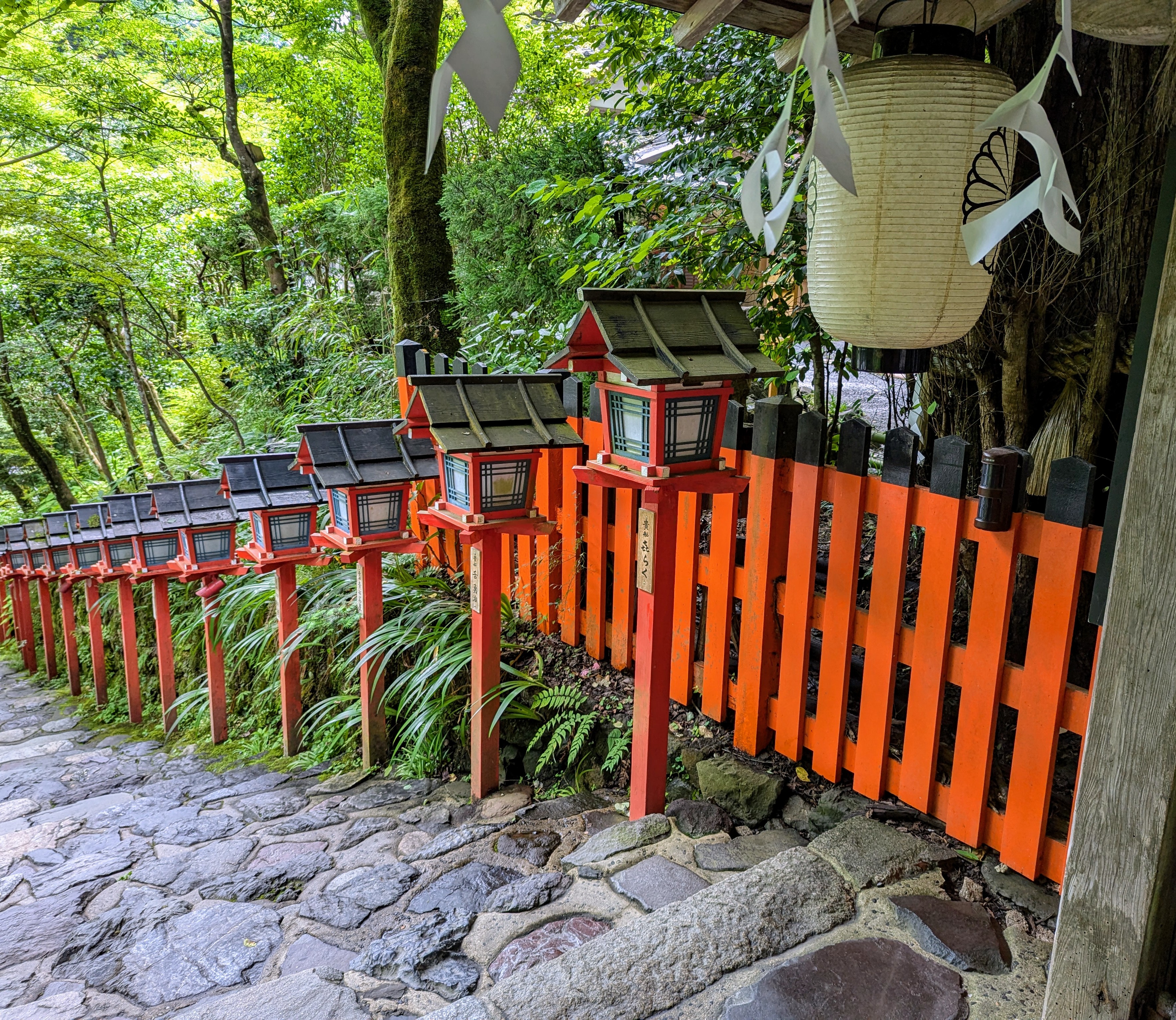
Today was for a walk in the mountains, a hike between two villages: Kibune and Kurama. The route includes many points of interest tucked into idyllic nature, and came up as a day trip idea during our pre-trip research. I had asked our Kyoto Free Walking Tour guide about it back on the 13th and he endorsed it. Most people walk from Kurama to Kibune, but I came across recommendations online to do the opposite direction for less overlap with other people, and a more gradual upward slope at the start so that’s what we did.
Google Maps helped us navigate to Kibuneguchi Station via a city bus and the Eizan Kurama line. We encountered this sign when we got off at Kibuneguchi Station and it gives a good overview of the situation. The hiking route we were taking was between Kifune-jinja Shrine and Kurama Station (the dotted line, top to bottom), but our arrival point was the station at the bottom left of this sign with the red triangle.
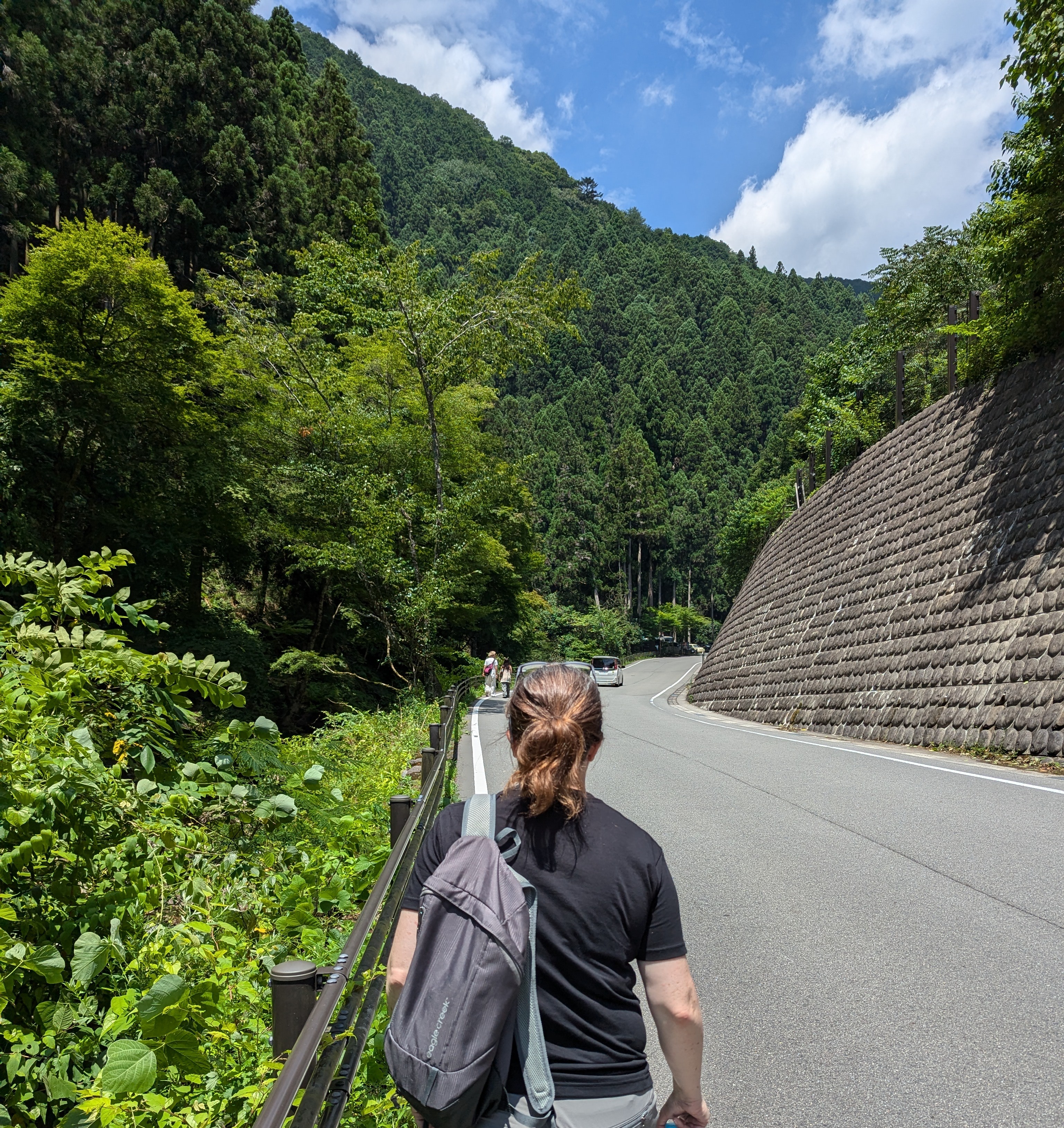
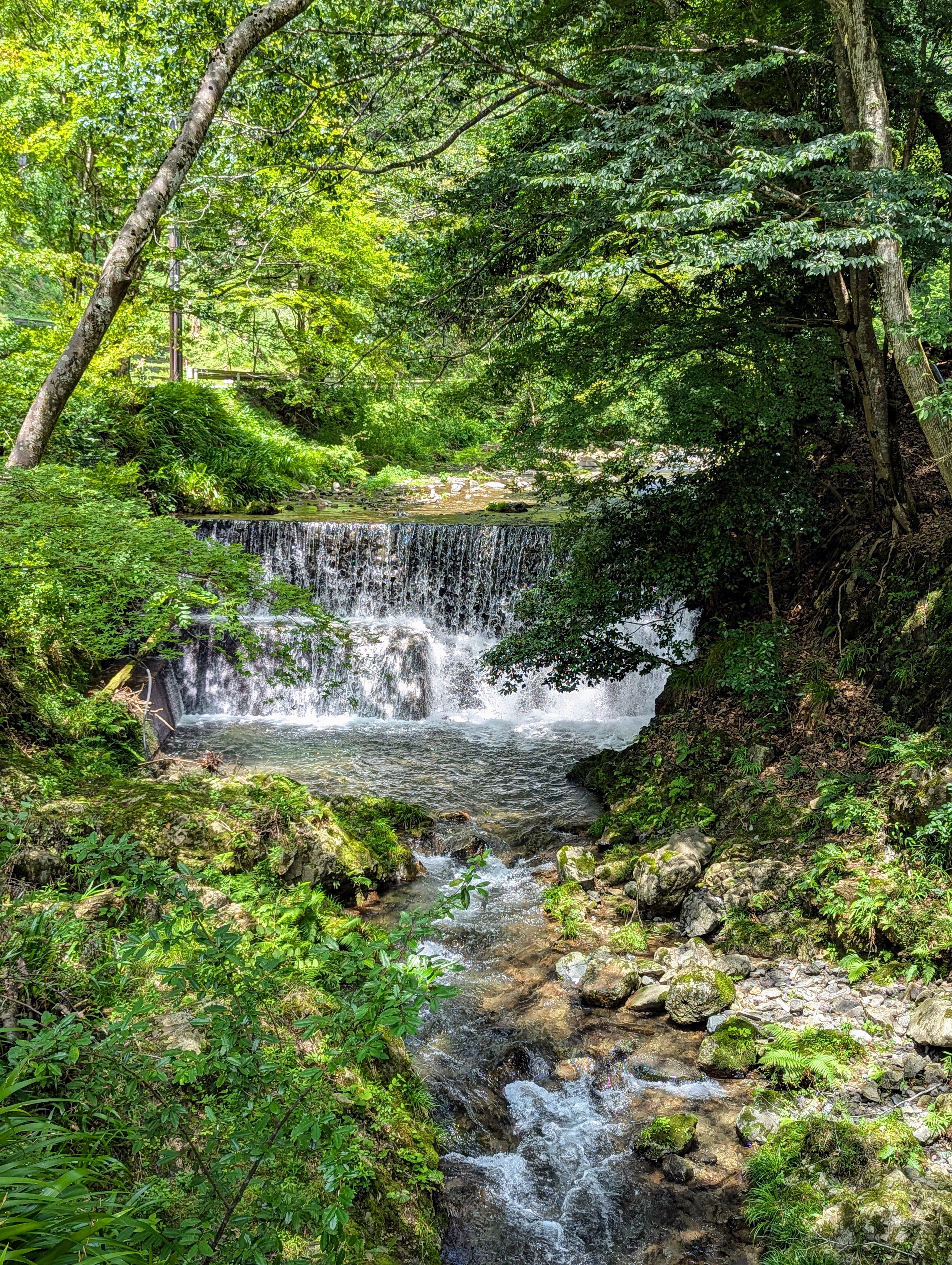
There was a bus up to the village/Kifune Shrine where the trail starts, but we elected to walk the 1.2 miles along the road instead. It was along a very narrow shoulder, but a few others were doing it as well so we felt safe. Along the way we had lovely views of a river with the occasional waterfall.
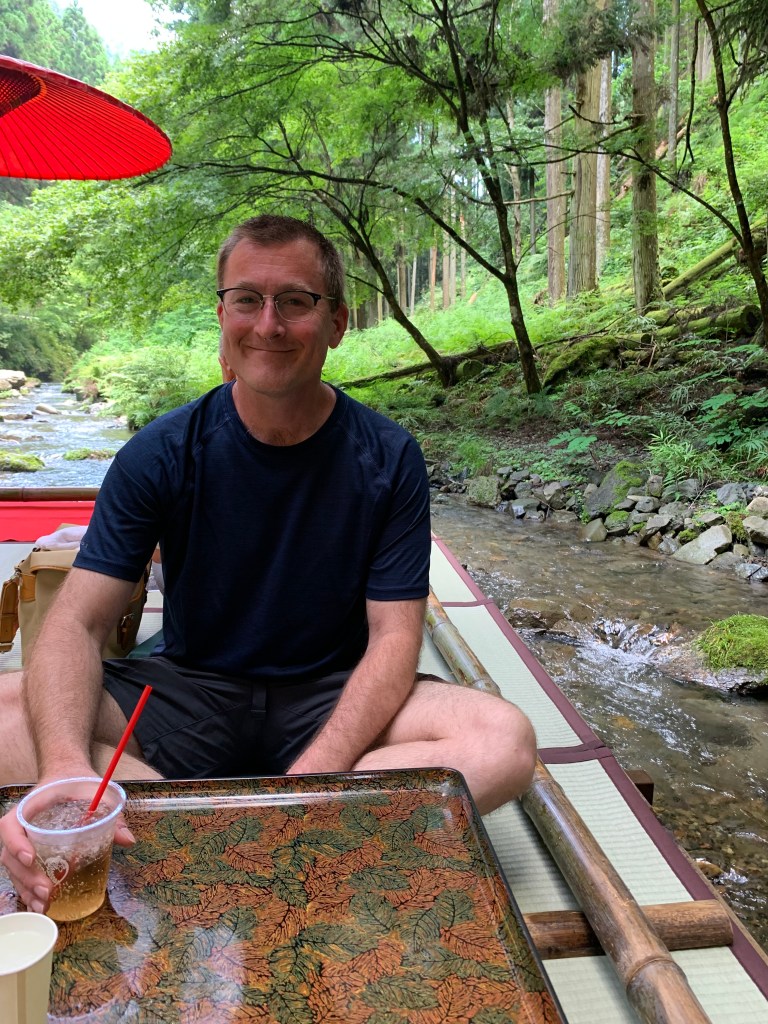
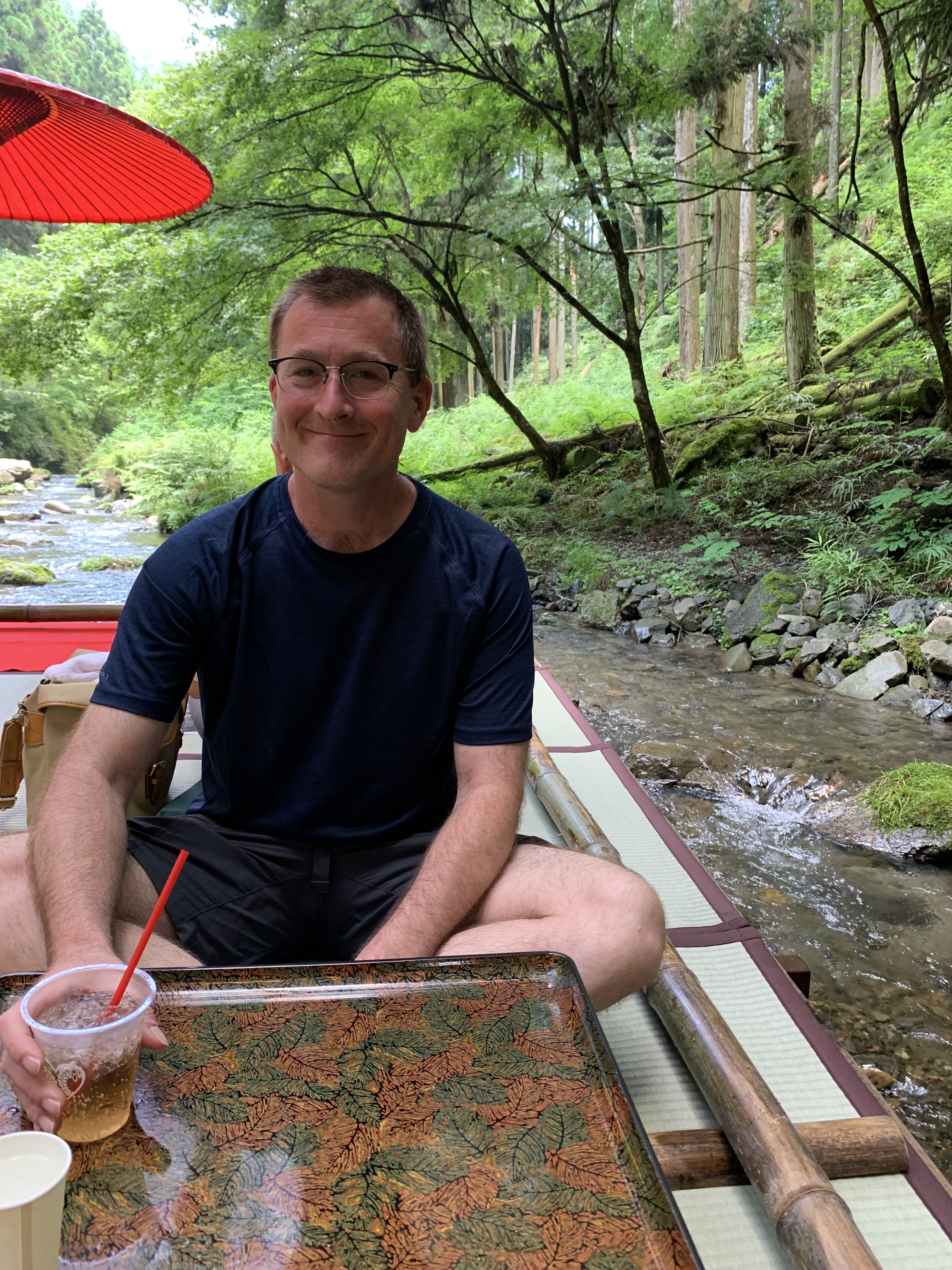
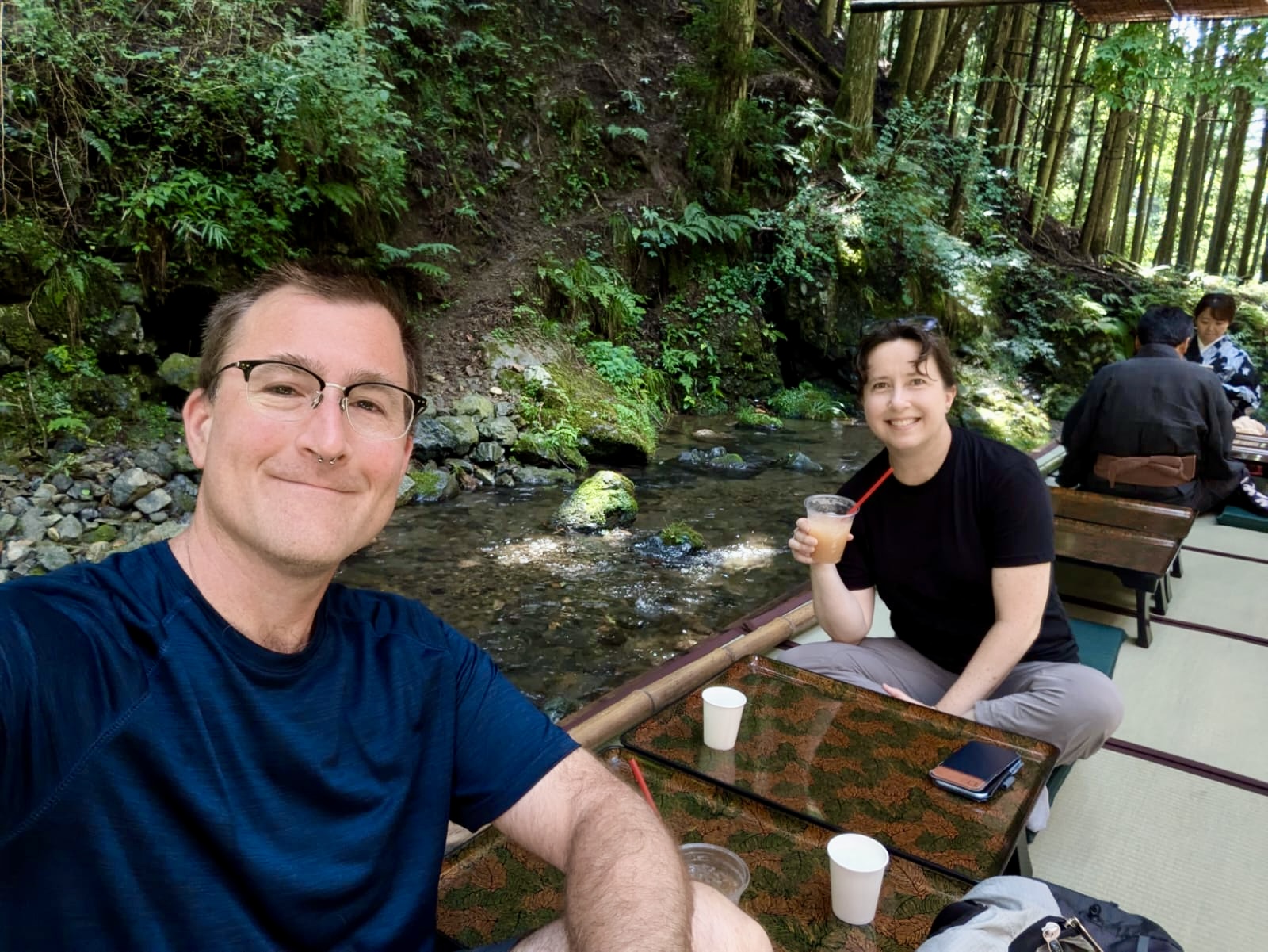
About halfway to Kifune Shrine we stopped for cold drinks at Kokon Fujiya and paid the extra ~$6 to sit on the tatami mats on the platform next to the river. It was lovely and worth every penny. One of us was a bit slow getting down and back up again.
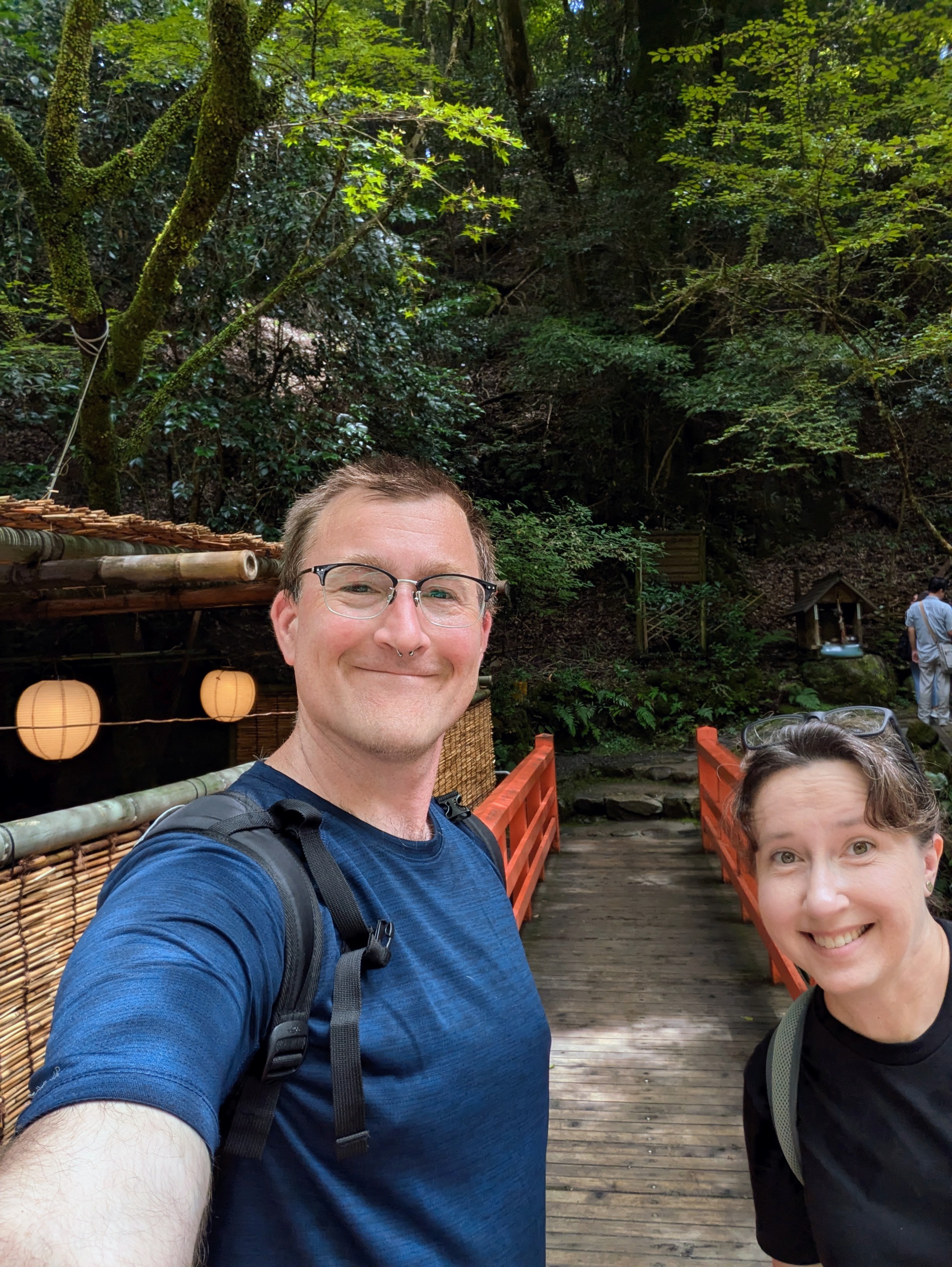
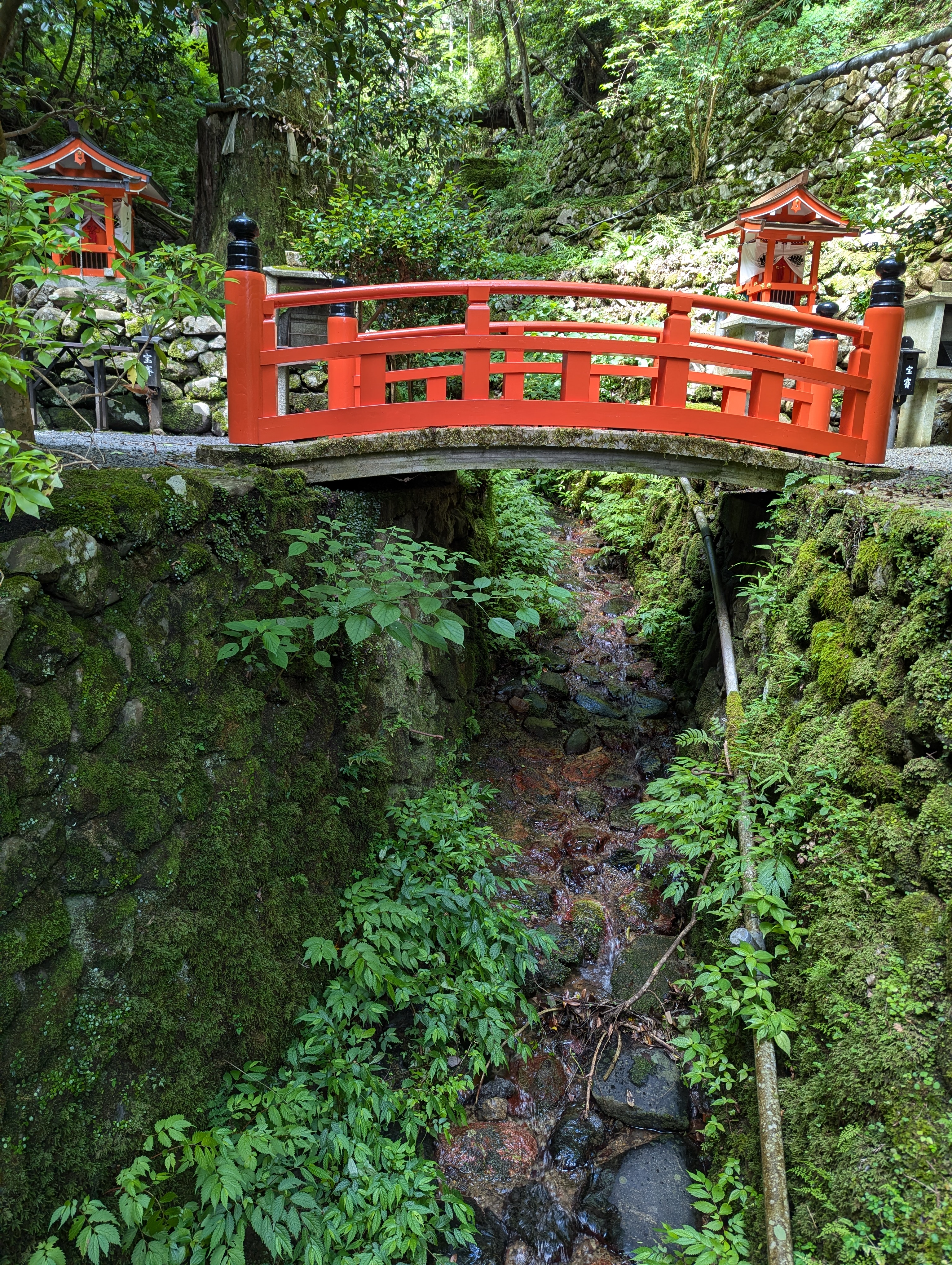
We walked around Kifune Shrine, then crossed the red bridge to pay our entry fee of 500 yen per person (around $3.30 USD each) at the booth. The fee included an English language brochure of the route that detailed the numbered sites that we would see, and help me answer the age old question “ARE WE THERE YET???” along the way when I was sweating my ass off.
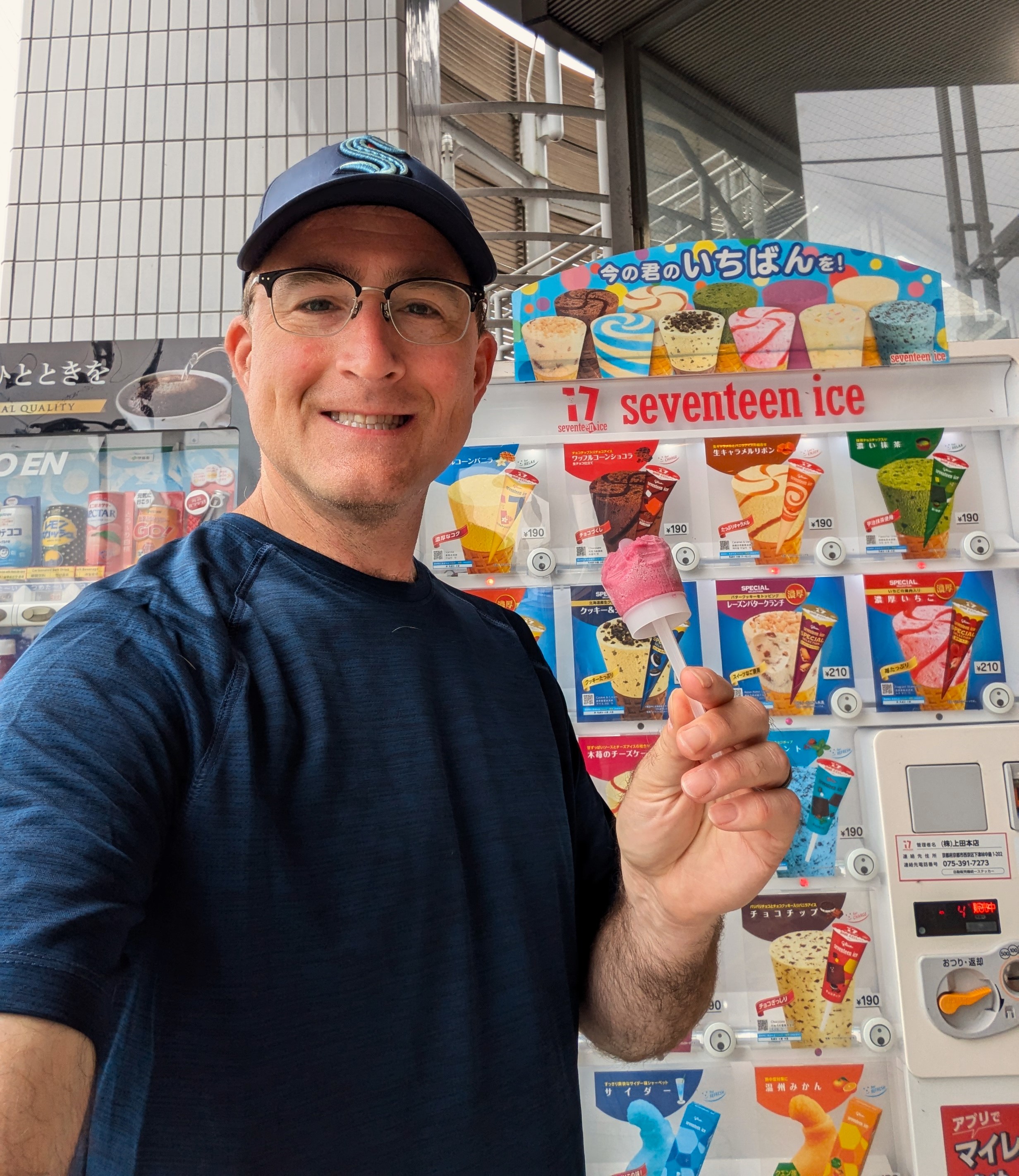
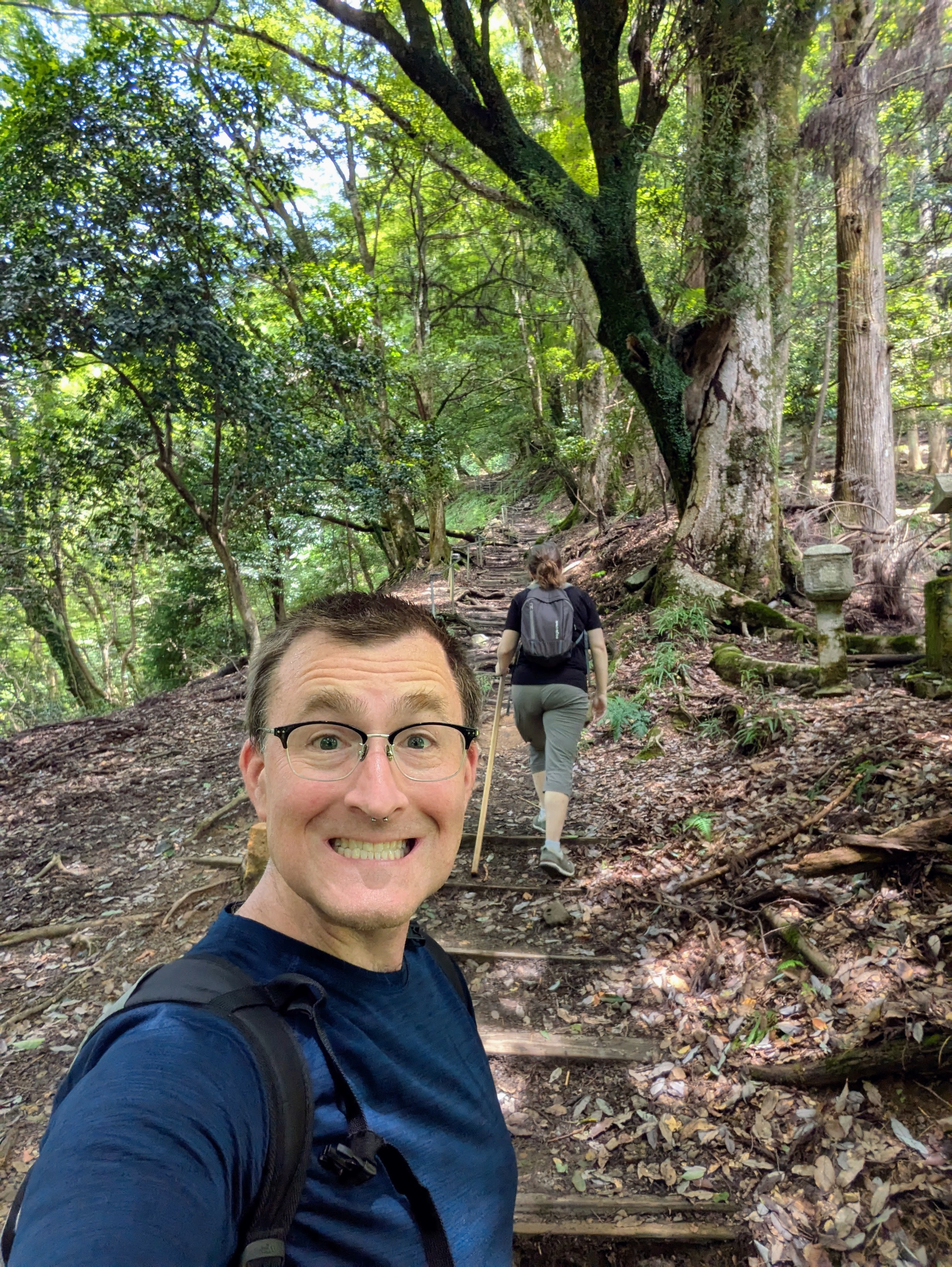
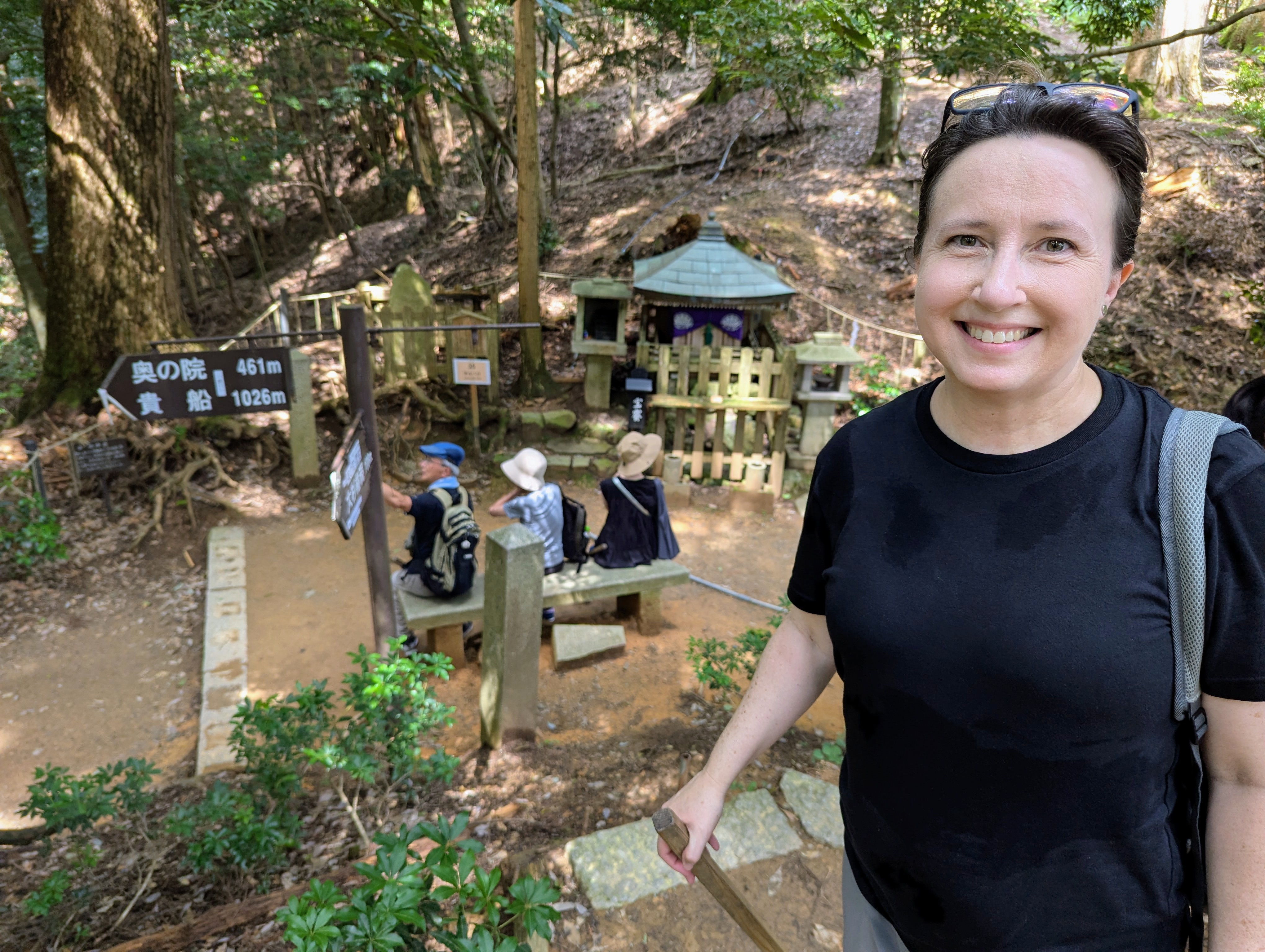
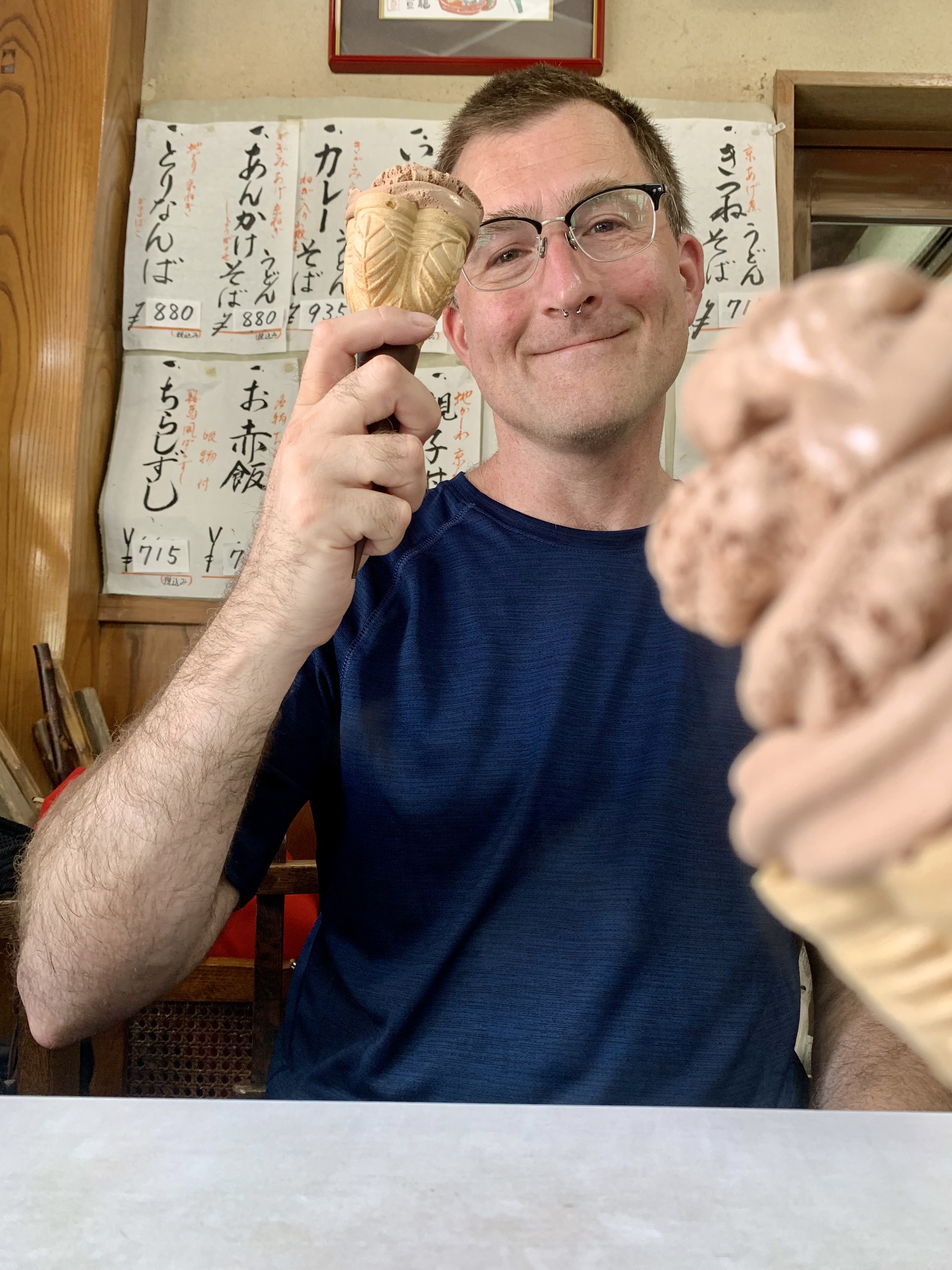
There were also loaner walking sticks on offer at the entry booth. I hesitated to grab one but a domestic traveler who was just ending their hike recommended it so I went for it. Very good advice! As you can see, the stick doubles as a way to demand an end-of-hike ice cream from your partner to keep your motivation up.
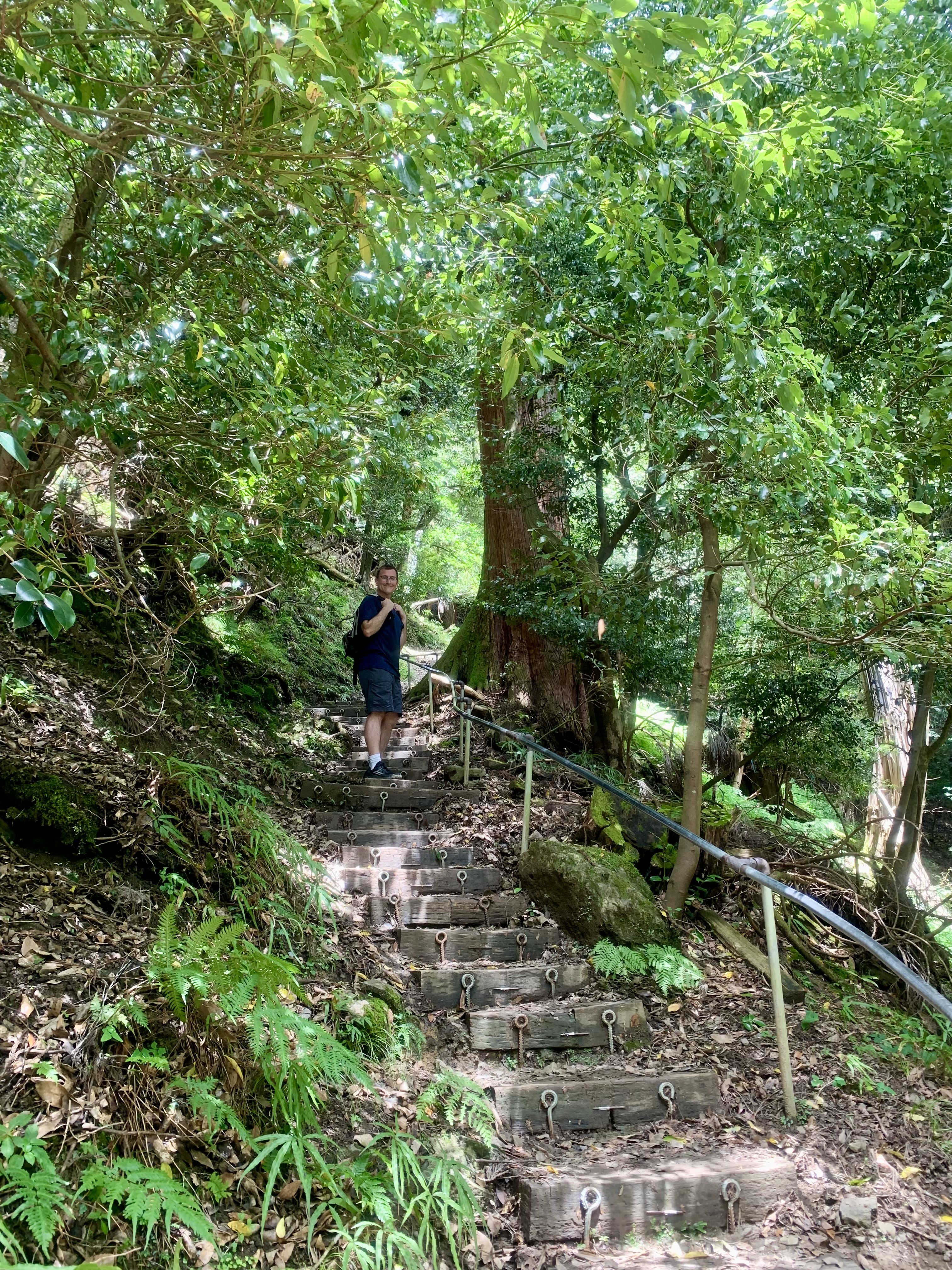
The route started with a nearly consistent uphill climb of 573 m on a forest trail. It was very sweaty, although not as sweaty as our Fushimi Inari experience. Less mozzies, too.
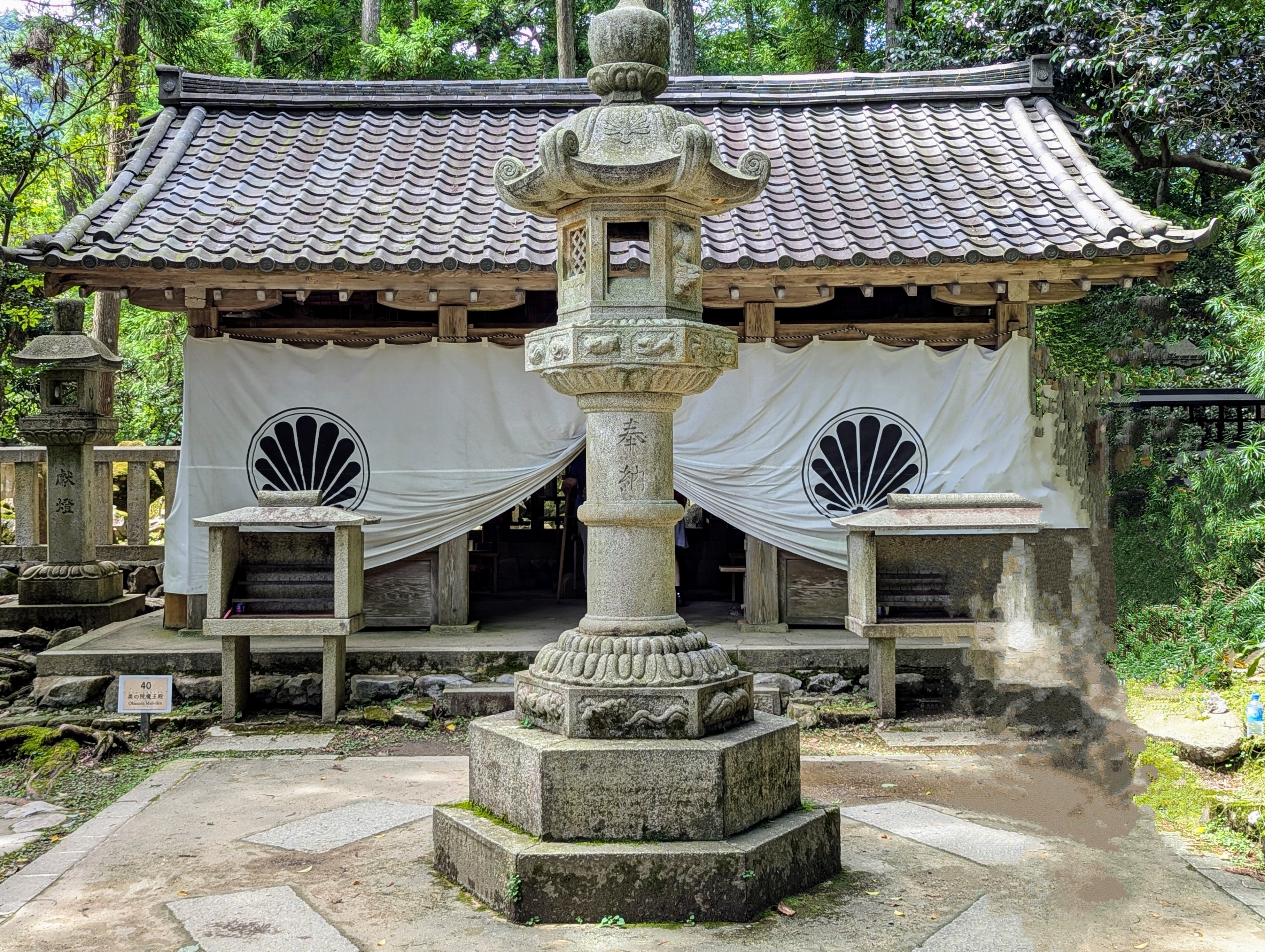
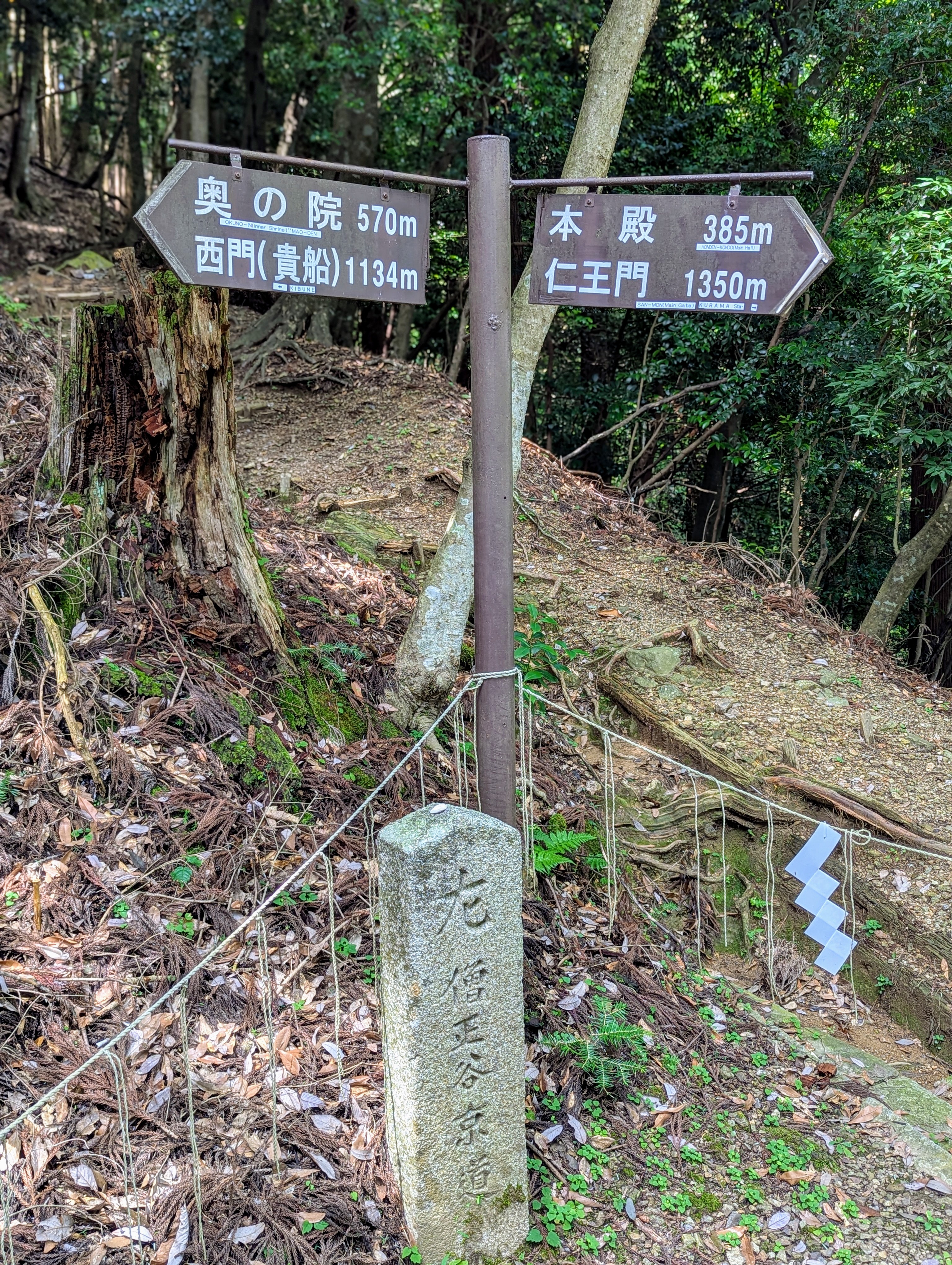
At the Nishi-mon/Western Gate (site #40) we were able to sit for a break on a bench. The hike felt like much less of a slog after that since the climb was much more gradual from there to the highest site (#35), and there were more sites for our entertainment between #40 and the end of the route. The downhill to Kurama felt like a breeze. There’s a cable car option for part of that final descent (or ascent if you begin in Kurama), but we were happy to walk.
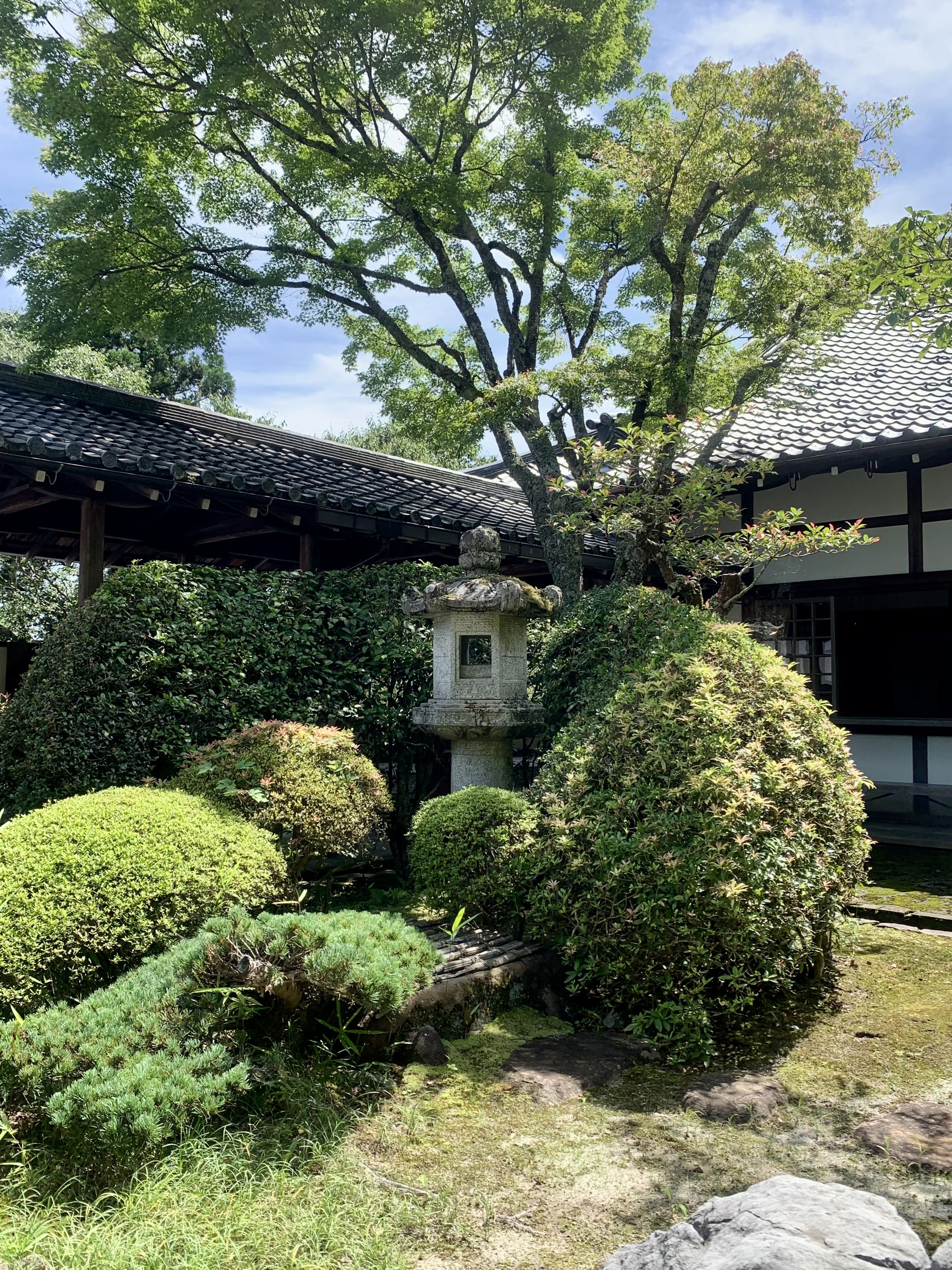
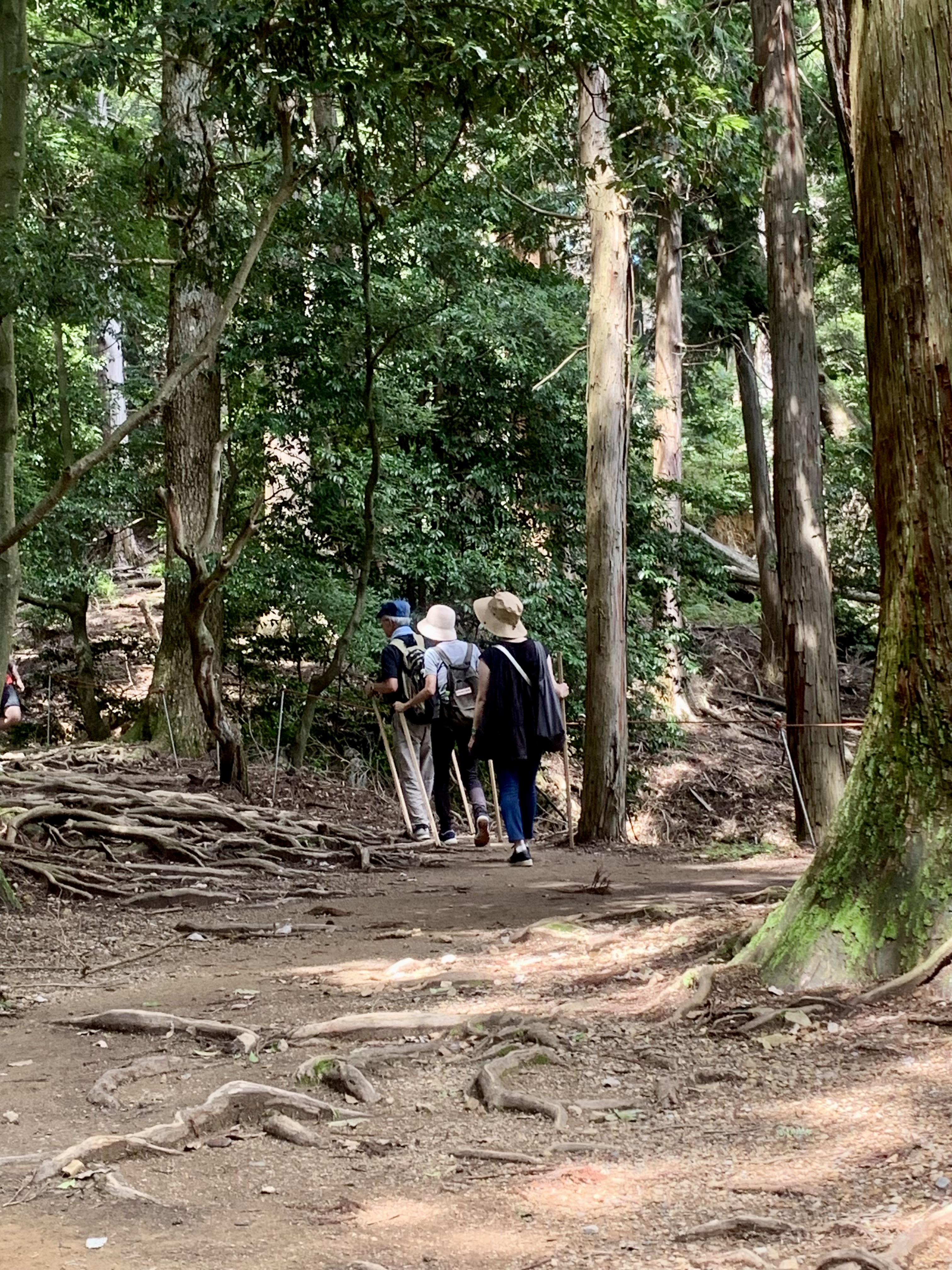
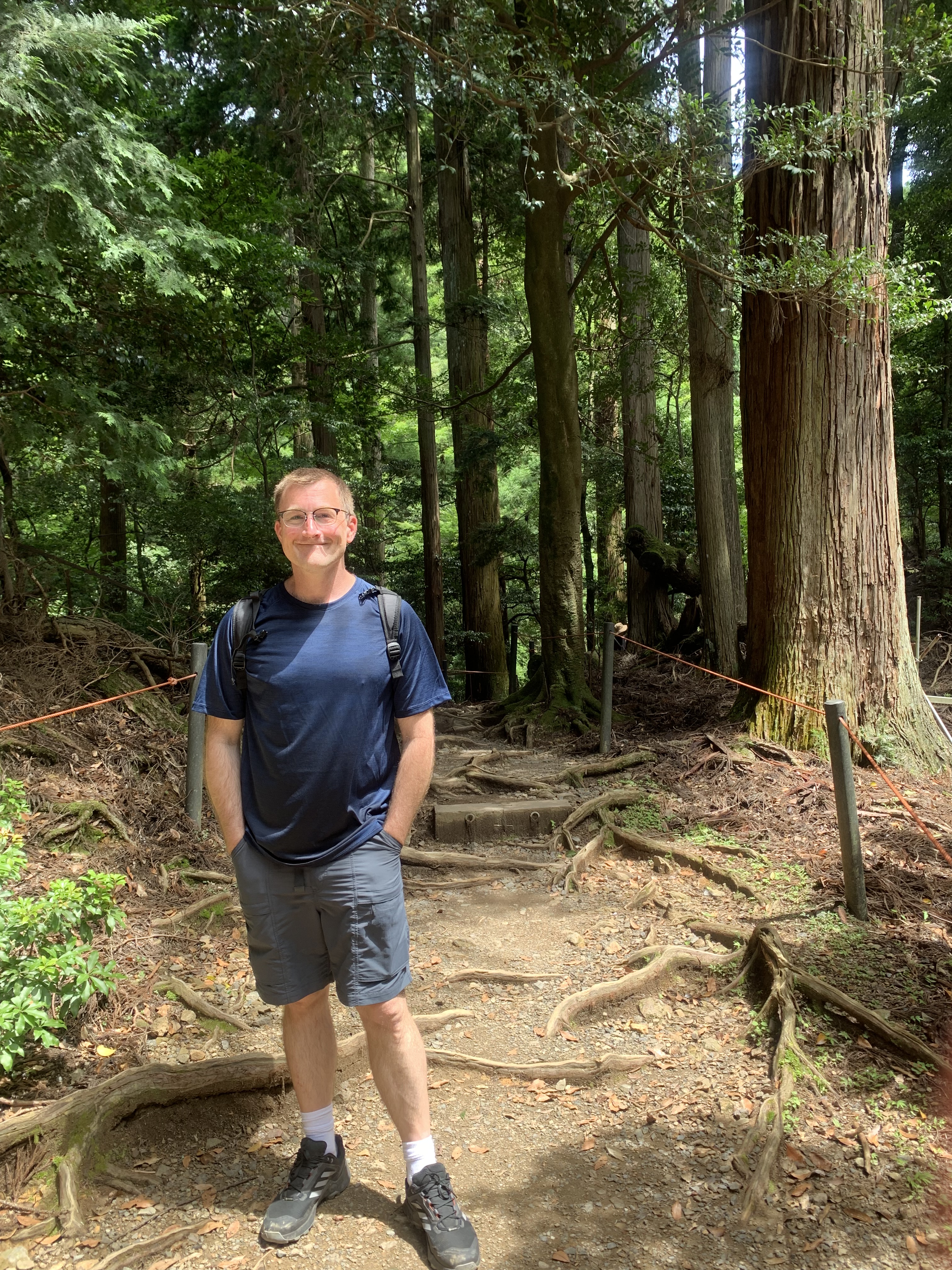
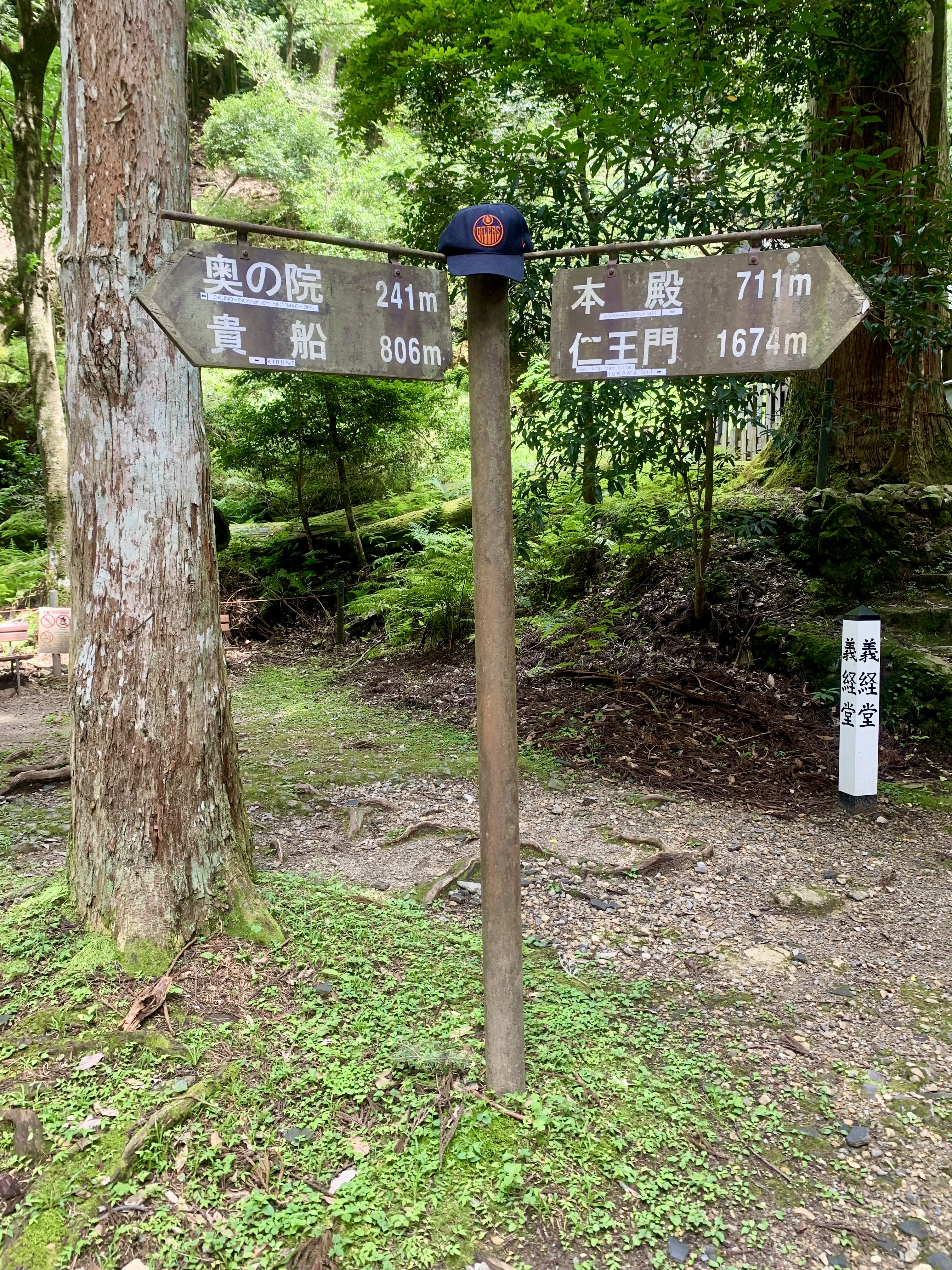
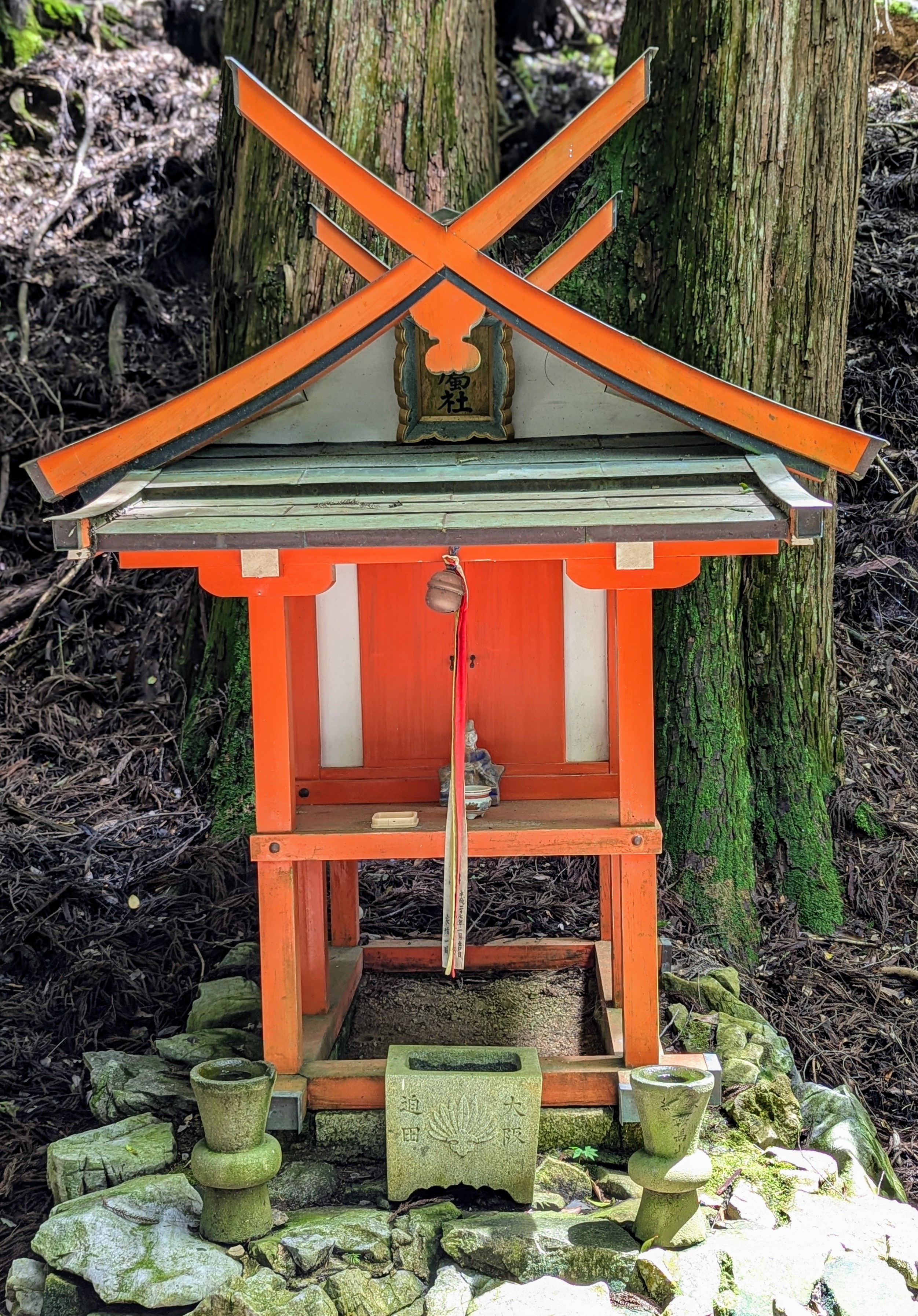
We really enjoyed this experience. Scott said it was his favorite part of our Kyoto trip thus far and I agreed. Here’s a massive photo dump of our hike. These are not in order… like, at all. I think they give a great idea of how much variety there is along this trail.
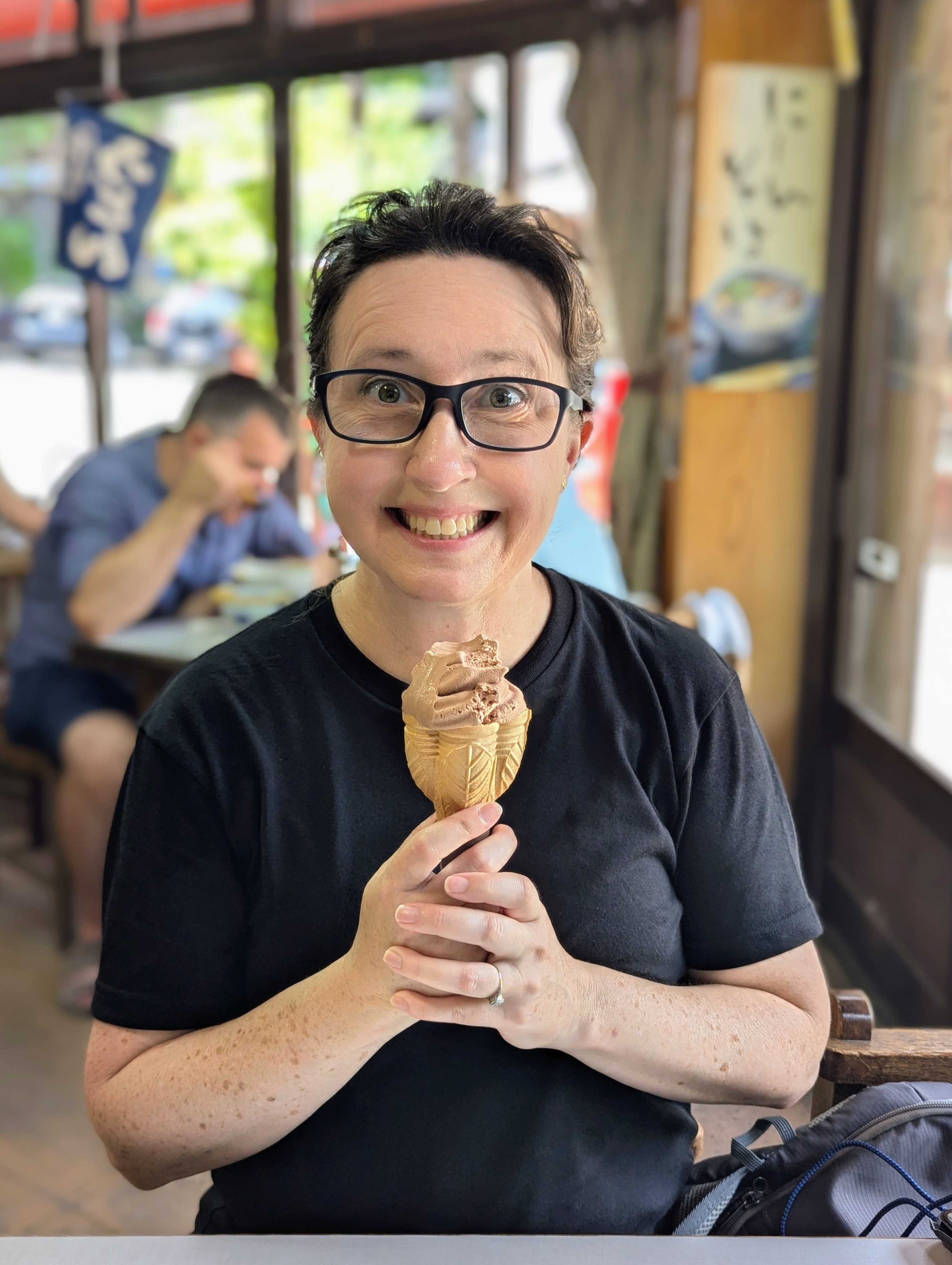
Kurama village was largely devoid of tourists when we arrived. We got that post-hike ice cream that always tastes so amazing.
Then we found this famous Tengu fellow at the Kurama train station before heading back to central Kyoto. My nose naturally veers left, so I tried his upward slope on for size.
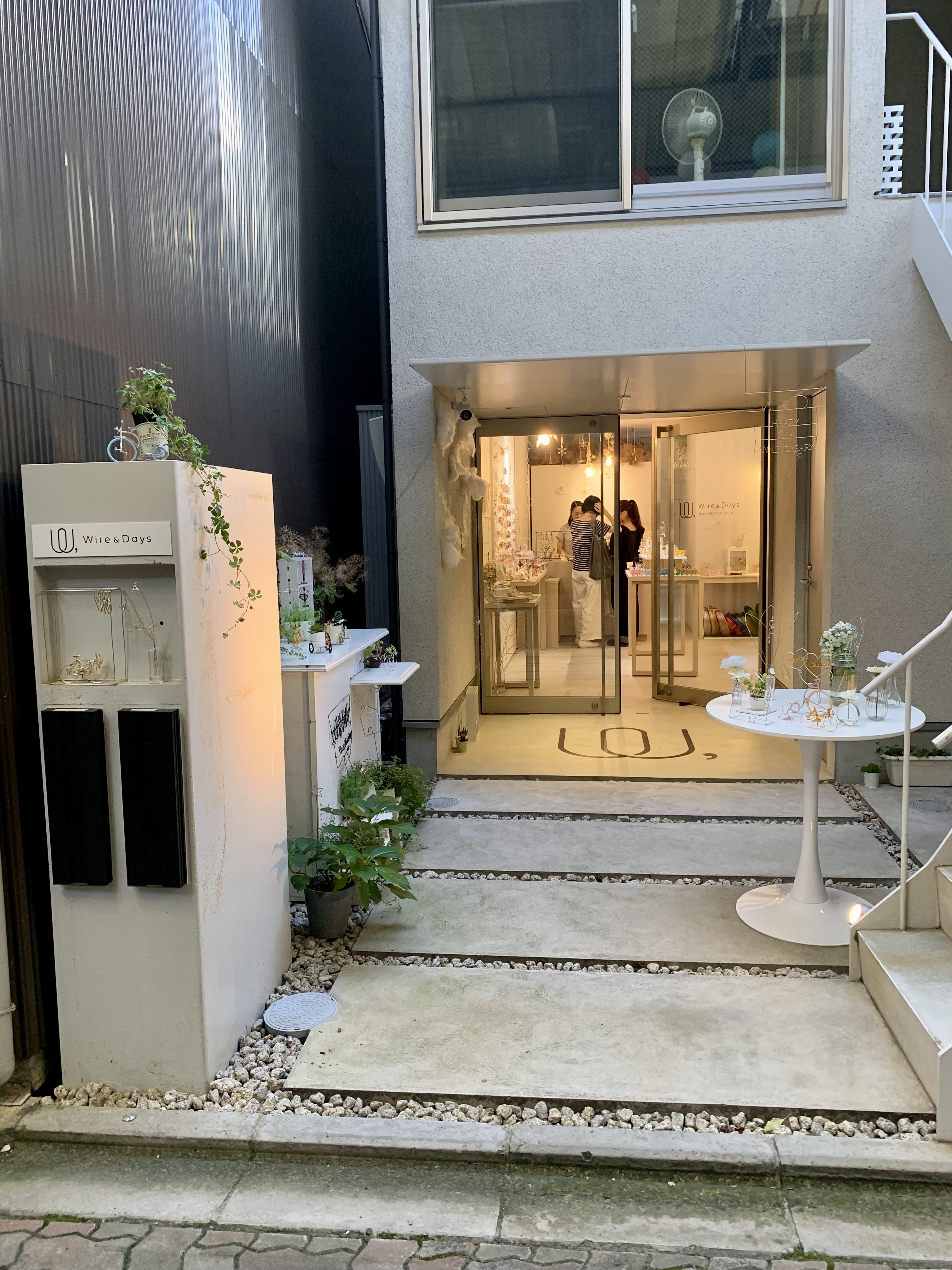
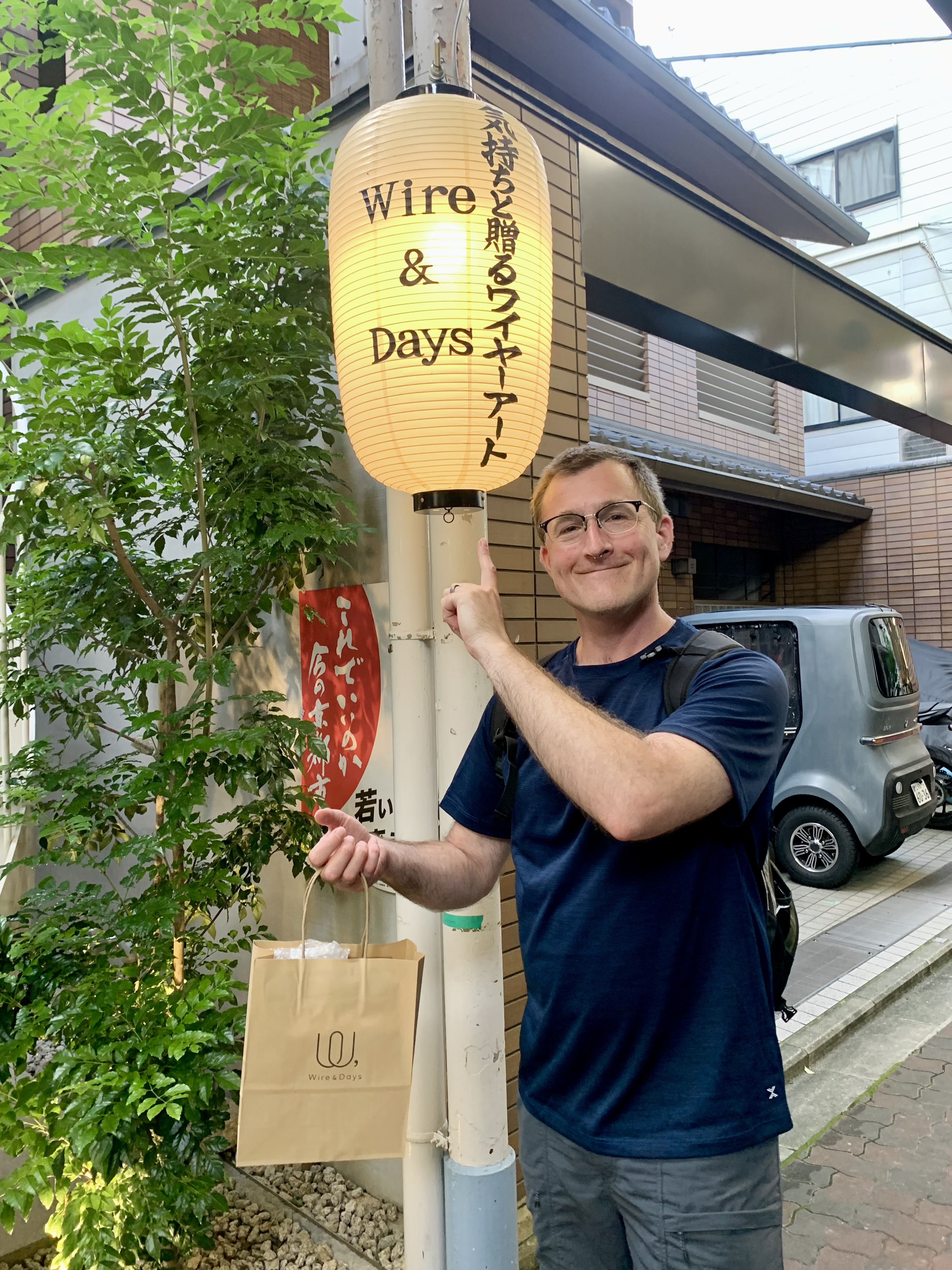
Back in Kyoto we headed to the Furukawacho Shopping Street because it housed a restaurant recommendation from our Free Walking Tour guide. While we waited for the restaurant to open we wandered nearby and encountered Wire & Days just two doors down – a little boutique shop of handmade wire tchotchkes. We found a cute thank you gift for our friend/petsitter back home, and also purchased a “WELCOME” sign for ourselves. Lovely shop, and I’m a sucker for souvenirs that you can actually see being made at the same time! I learned later (due to unfortunate circumstances) that their shipping rates to the US are very reasonable, so I would even recommend purchasing online if you see something you like!
Alas the restaurant opened and we discovered yet again that our Free Walking Tour guide gives great recommendations. His favorite ramen spot: Gion Shirokawa Ramen. It was super tasty, and we got several items for about $18 USD.
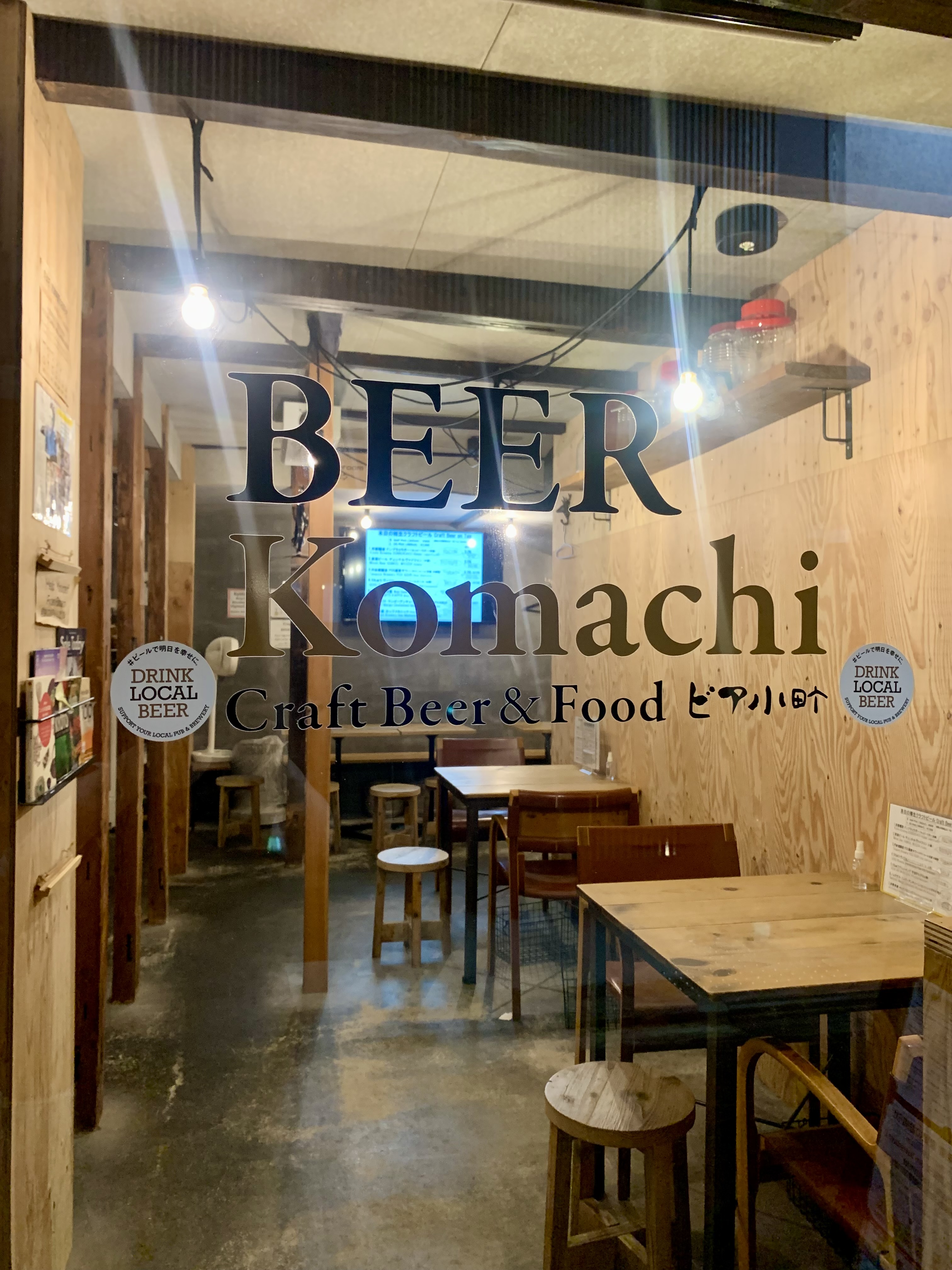
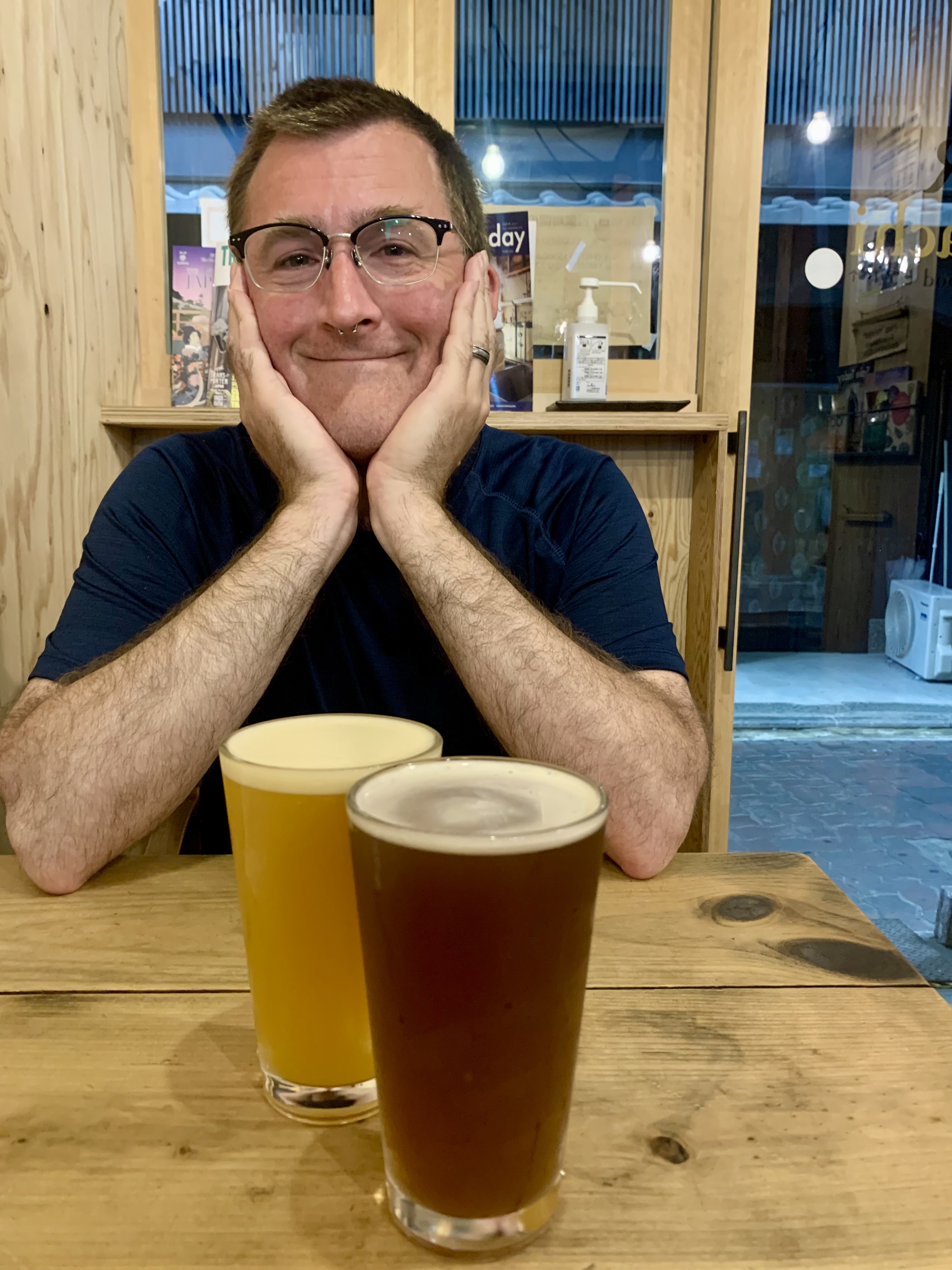
We finished our evening a couple of blocks down at Beer Komachi with tasty pints in an all too familiar craft beer environment.
This was one of those perfect slow travel days. If we had only done the 2-3 nights in Kyoto like a lot of standard 2-week itineraries recommend, we would have missed out on this particularly awesome day.
We had two goals for today: attend the Gion Matsuri parade and pick up my new prescription glasses.
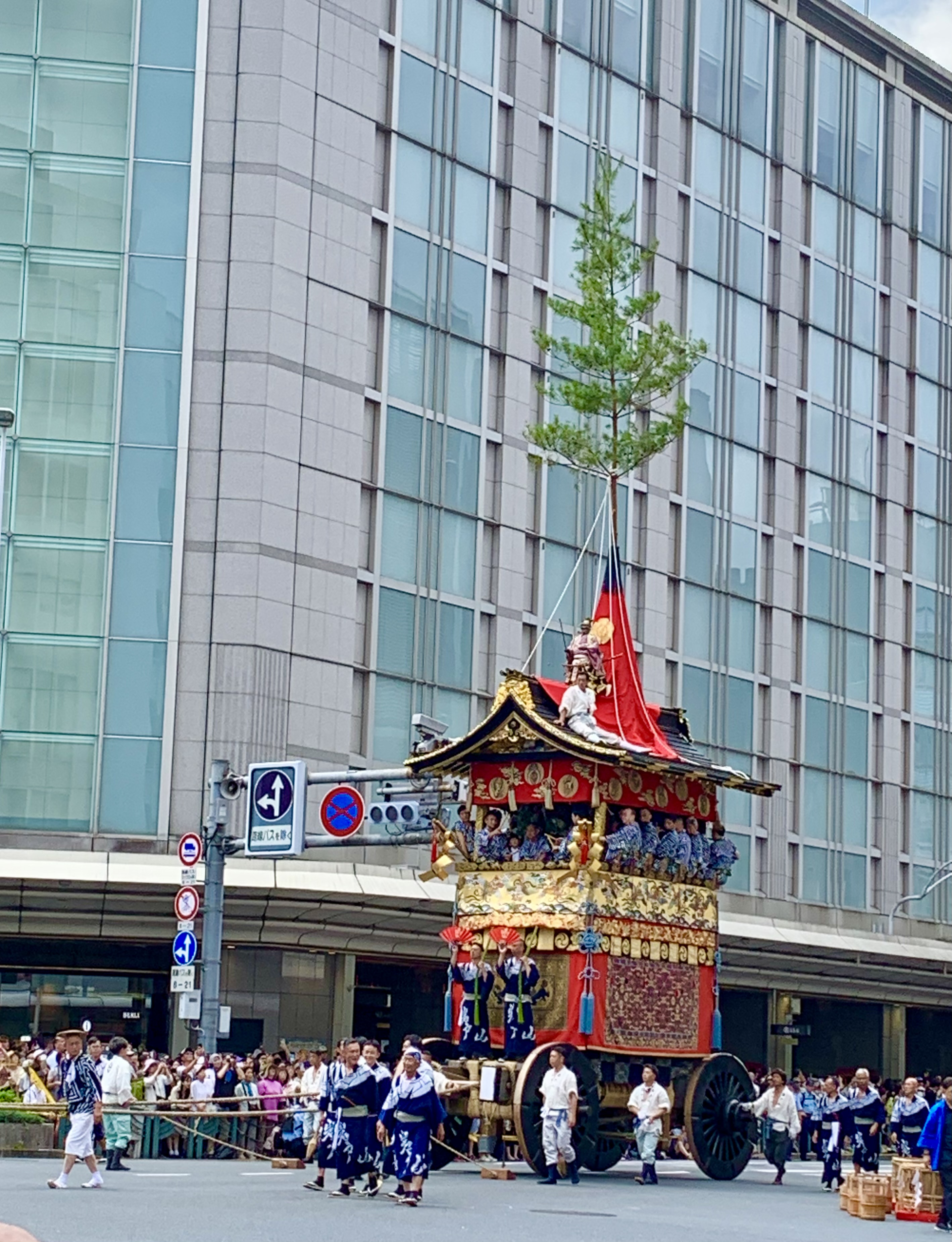
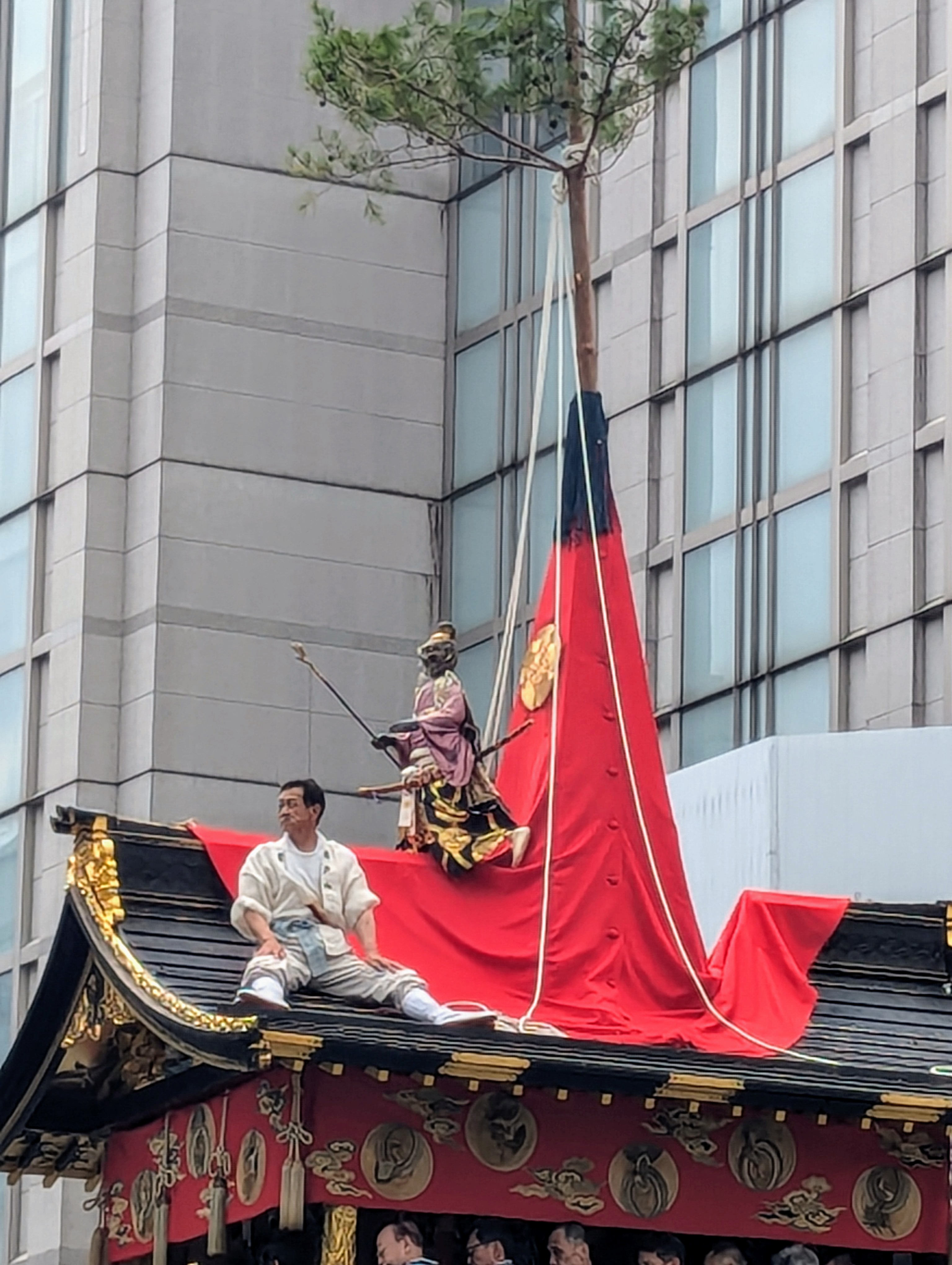
Gion Matsuri is a large annual festival that takes place over the entire month of July. We learned from our Free Walking Tour guide that this festival originated as a way to pray to the gods to ease the suffering from a plague, and ironically it was not held in 2020. Aside from a civil war in the late 15th/early 16th centuries and COVID, this festival has been an annual event since at least 1000 CE.
One of the largest events of the festival – the parade of 34 yamaboko floats – was happening today from 9AM-1PM. We dragged our butts out of the hotel about 11AM and caught a bus to get close to the route. Luckily we found a decent viewing spot despite our tardiness – on a corner where the floats turned, about 4 people deep from the curb. I saw a fair amount and Scott was able to get decent photos and videos. It was fascinating to watch the teams of men pull these very tall floats with nothing but their own strength. And when they got to the corner to make their turn they had a routine using wood planks and impressive teamwork to make it happen despite the restrictive construction of the historic floats.
As fun as it was we were done after watching two floats make this turn. It was crowded and hot, and we were ready for a snack.
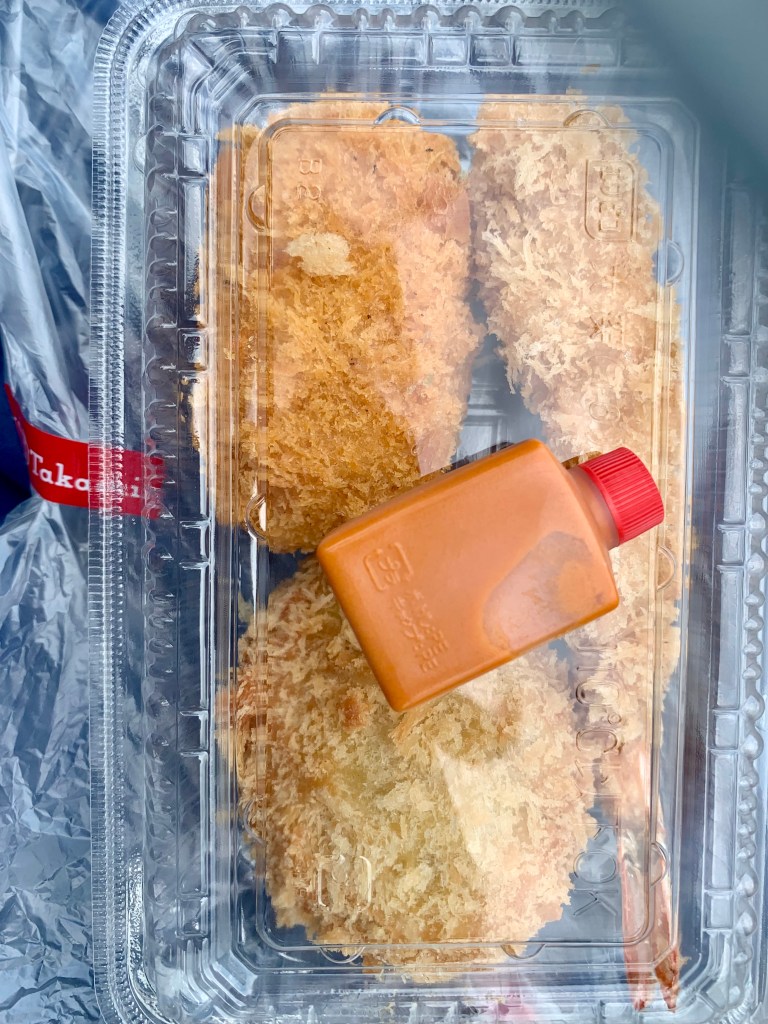
We used the underground train station to find our way into the Takashimaya Department Store that was kitty corner from our parade viewing location. On the basement level there were many displays of food for takeaway. We failed to get a photo but here’s one from the internet to give an idea. Imagine around two dozen of these with a wide variety of options.
But this is Japan and they like to make eating outside of your home or a restaurant awkward, so of course there were no seating options in what in America we would consider a fancy food court. We made our way over to the banks of the Kamo River to eat our spoils on a bench. I had some tempura and croquettes – tasty and recommended!
Afterward we decided we wanted more snacks some A/C so we did the thing where you go into a McDonalds to see how it’s different in a foreign country. We tried a sugary melon drink and some macrons. Meh. Of course it was meh, it was McDonalds.
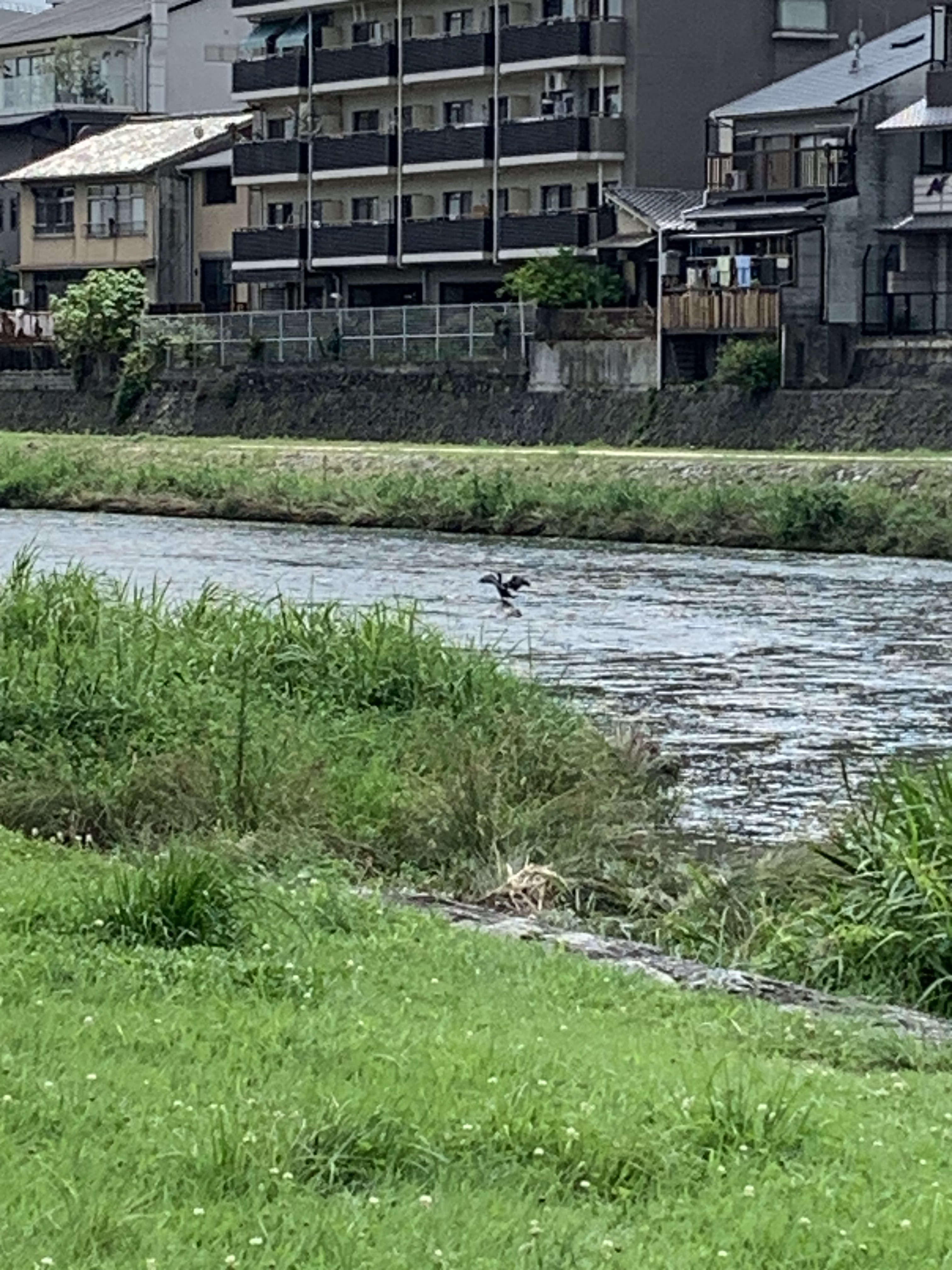
We decided to walk back towards our hotel along the Kamo to enjoy the view and the slight breeze off of the water. Look at that – almost no one and so peaceful.
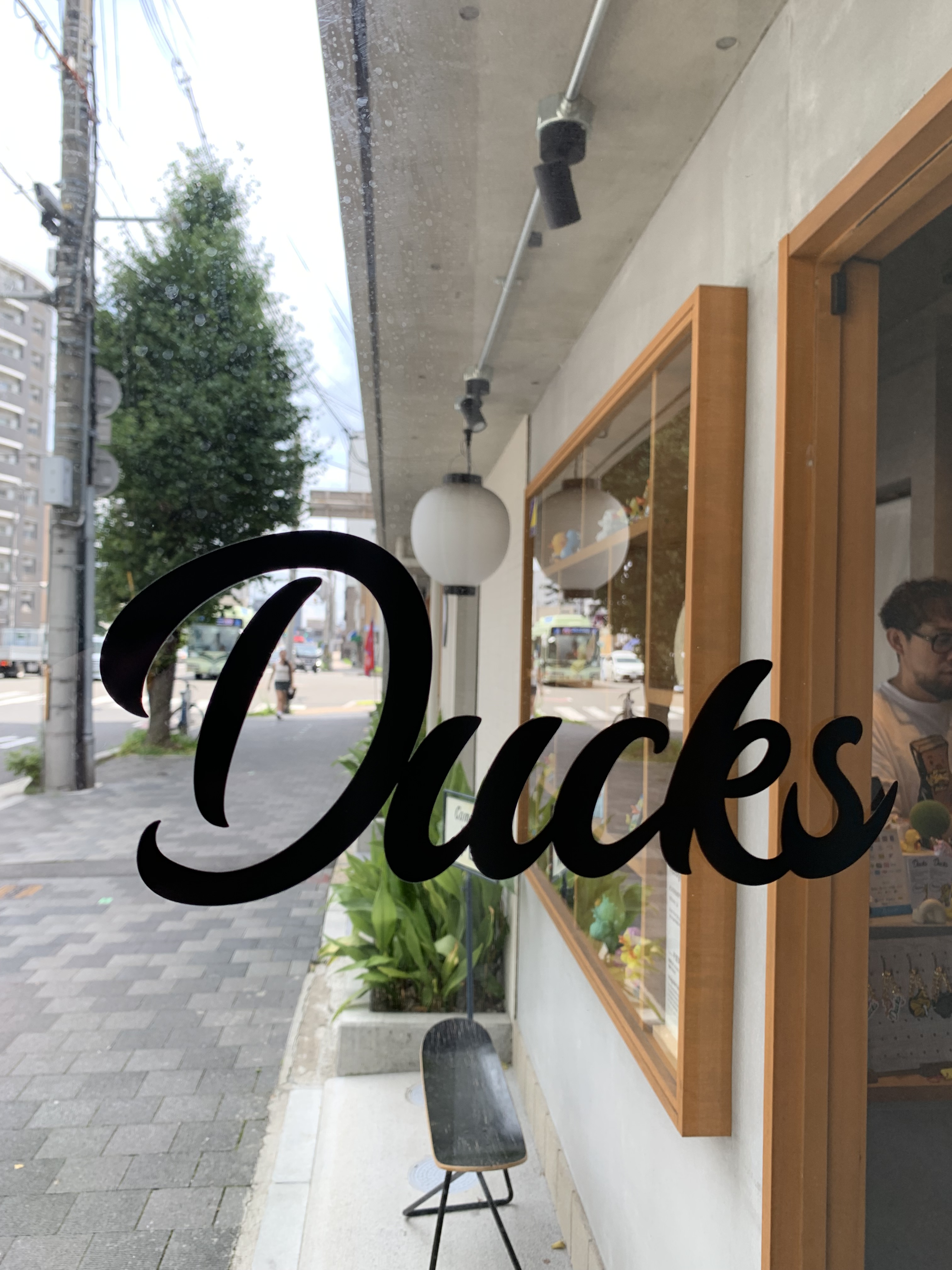
When we transitioned street-side we came across a fun shop dedicated to rubber ducks. Despite having two life reasons to buy ducks (#jeeplife and cruising), I controlled myself and just bought a commemorative sticker.
Next we went back to the JINS store to pick up my new eyeglasses that I had ordered on the 12th. We each got a pair at this store for $130 total and we love them.
We decided to call it early and chill back at the hotel. The next day we had a physically active day trip planned. Goodnight, Kyoto.
We got a bit of late start and headed out at 10:45 am to walk the 1.4 miles from our hotel to Nishiki Market. Along the way we stopped into a shop and found a cute baby shower card for a friend and a small art piece to commemorate the festival that we planned to enjoy the next day. The shopping temptations are around every single corner, I swear.
We arrived to The Market…
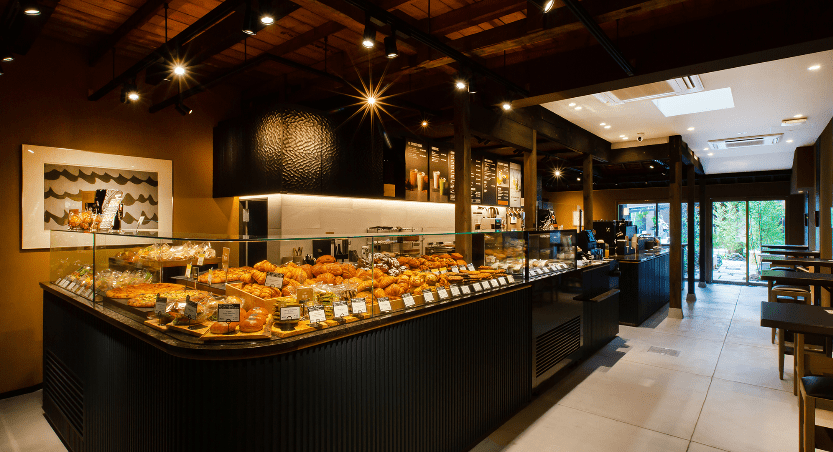
…and quickly ducked into City Bakery to fuel up on coffees and pastries. Easy and tasty. On a less hot day I would recommend going out the back door and sitting in the courtyard area. (Not our photo.)
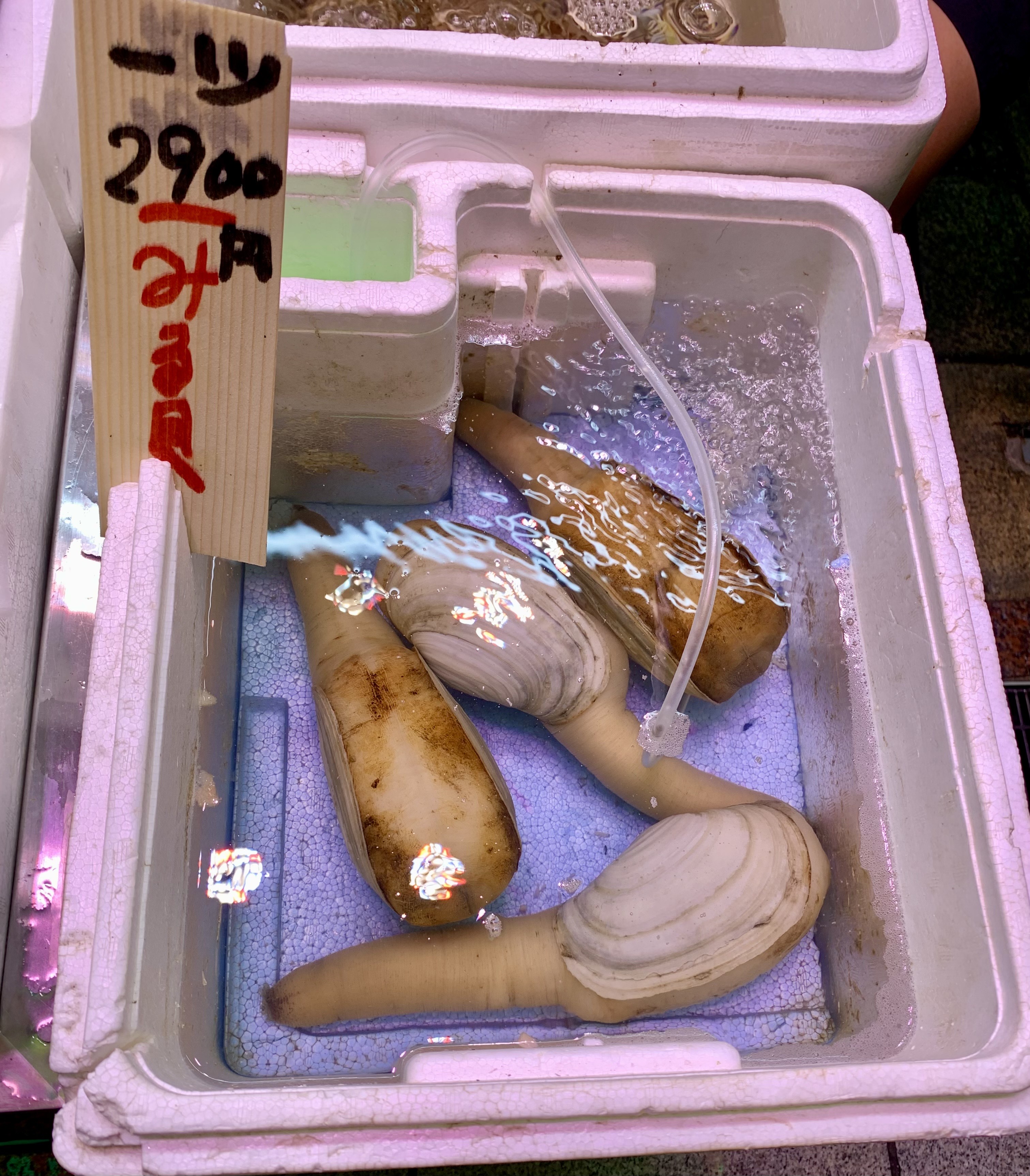
We enjoyed walking through the large and eclectic Market. In some ways it reminded me of our own famous market in Seattle.
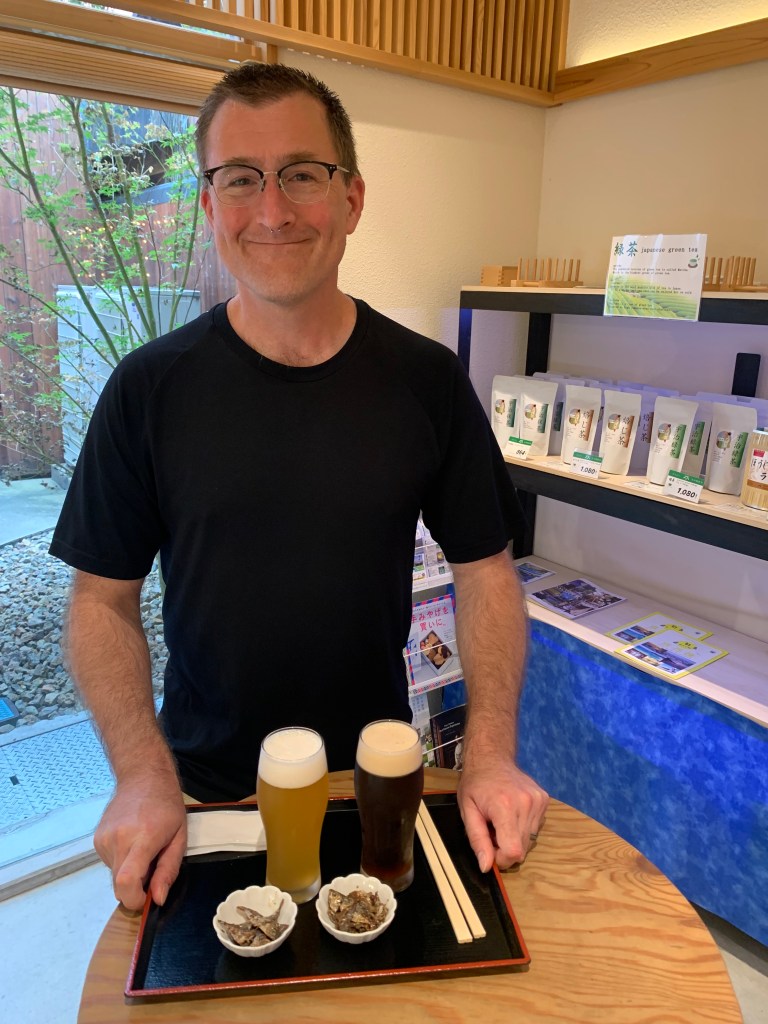
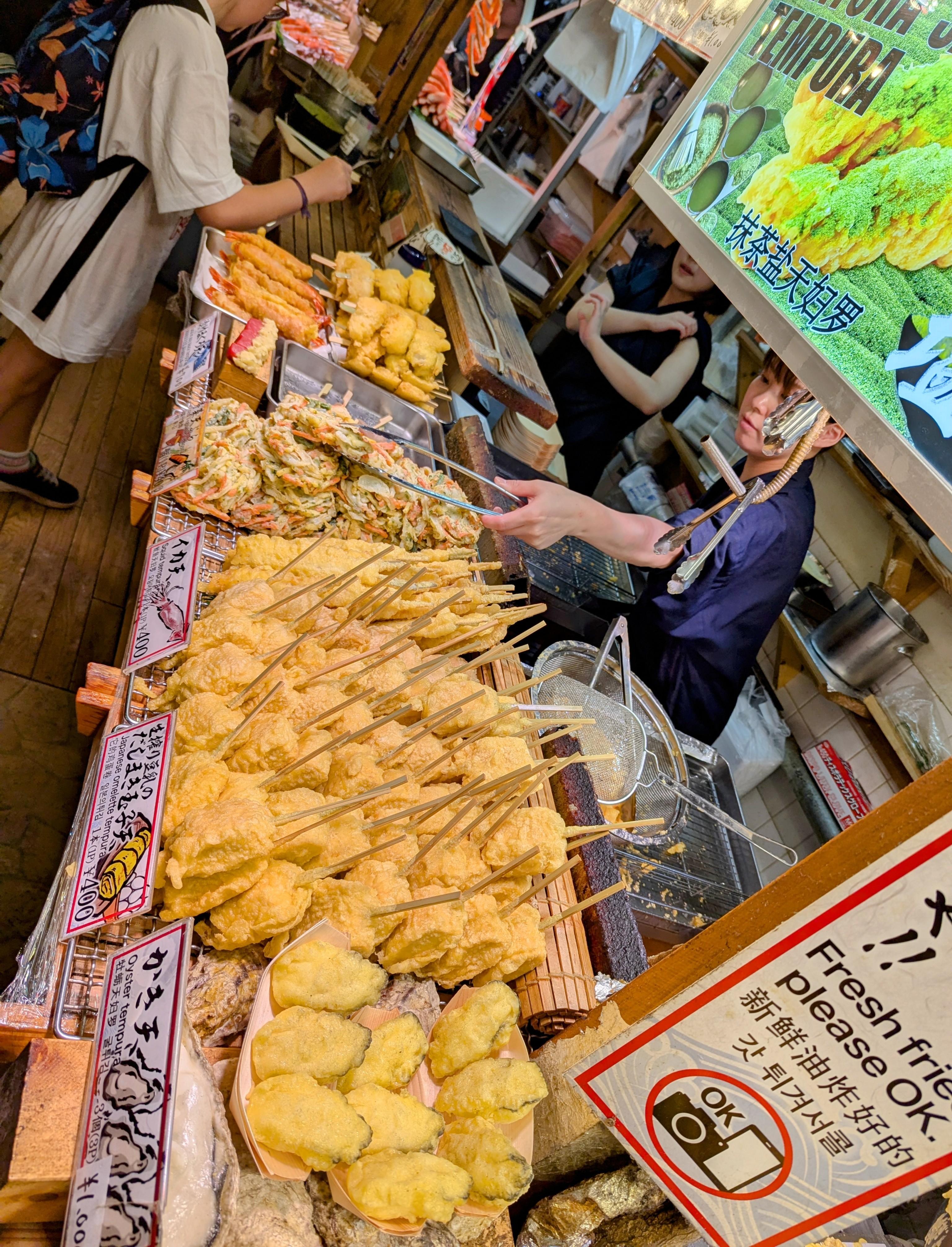
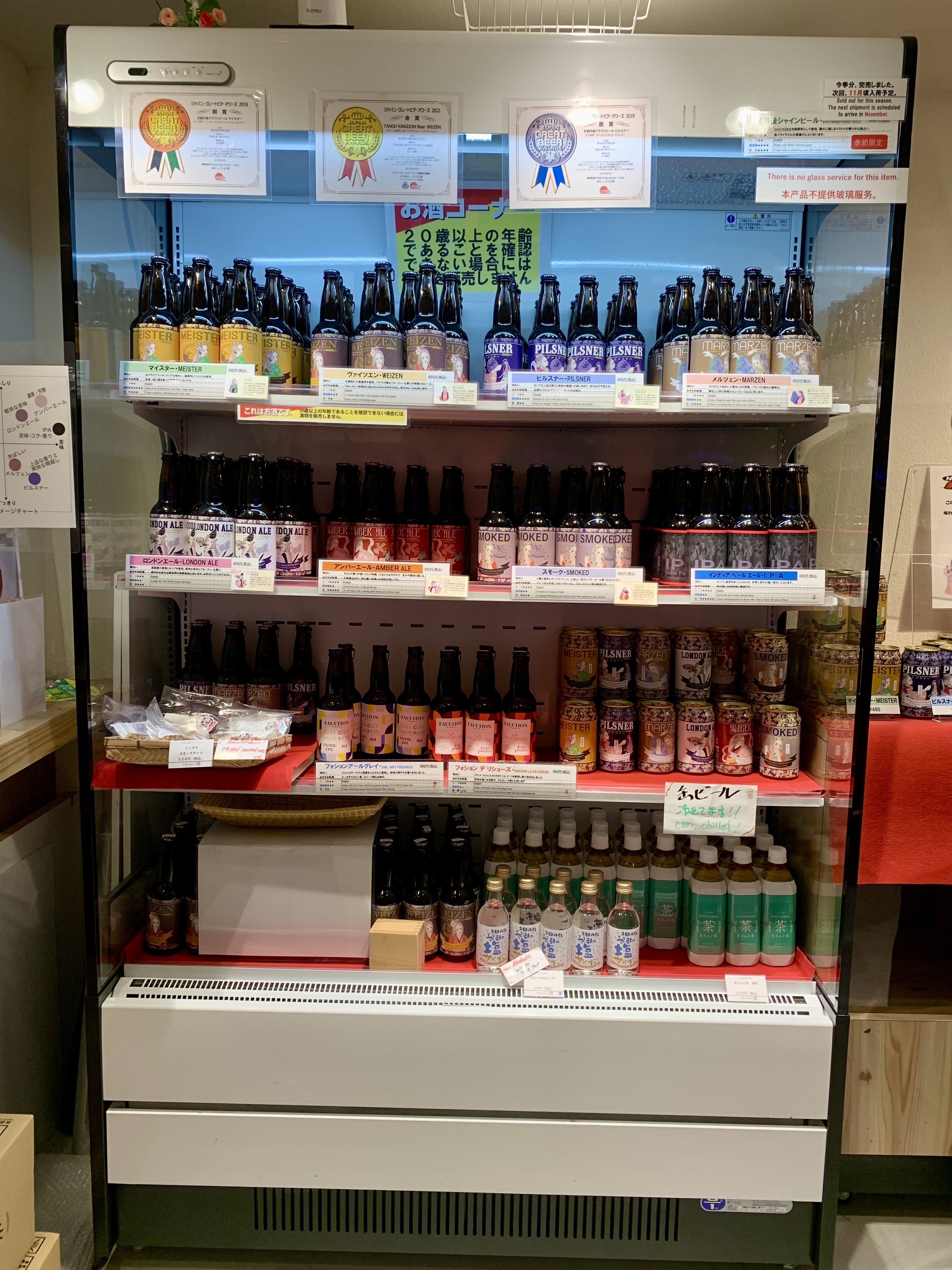
Amongst the plethora of offerings we had sake, tempura, and craft beer. The craft beer was from Tango Kingdom Brewery and we enjoyed it at the back of Tango Table. Along with our beers they gave us a snack of these super tasty little fishes that I scarfed down very quickly. Scott had a rare moment of bravery to eat one from his bowl and hated every minute of it. I caught this event on video and will include it in a Japan compilation video that is forthcoming…
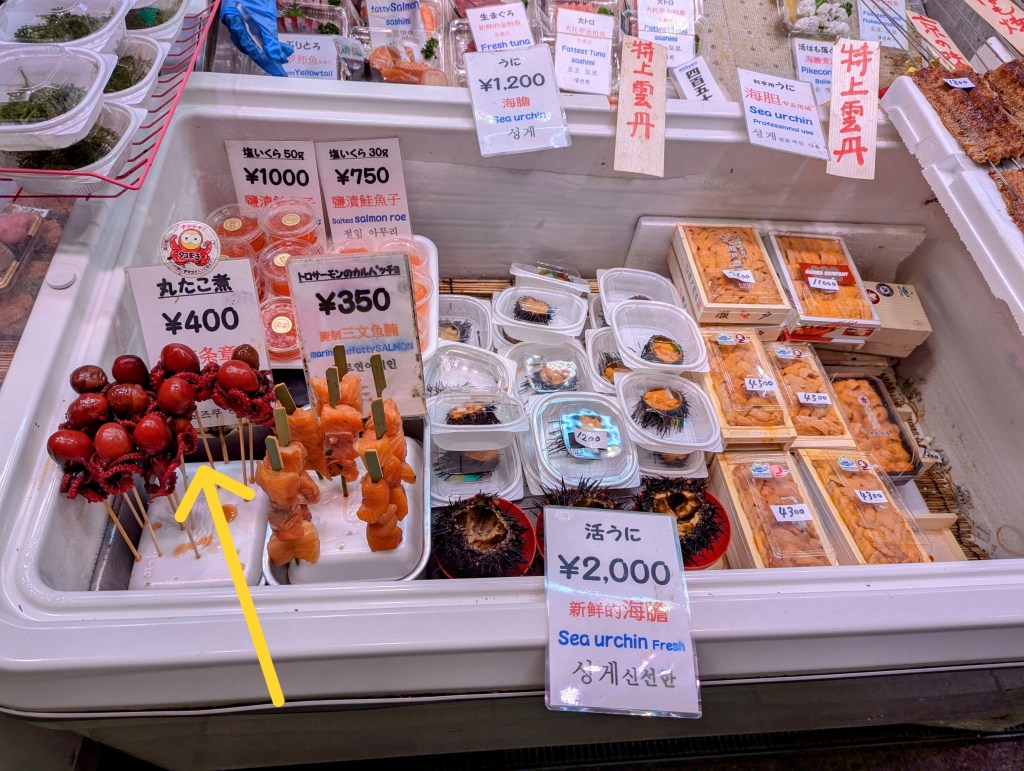
I had planned to sample many snacks today but for some reason I wasn’t particularly hungry. Maybe it was the heat. Leading up to the trip we watched several videos about this Market, and I thought I would be brave and eat one of the tiny octopus with a quail egg stuffed in its noggin. But during this trip I decided that I think I’m done eating octopus – not because they aren’t tasty, but because of my conscience (they’re too damn smart to be eaten by us stupid humans).
Exploring The Market also revealed the Nishiki Tenmangu Shrine where we each got amulets that we plan to attach to our packs during our pilgrimage trip next July. I selected Health and No Trouble. Very pragmatic.
My favorite stop in The Market (or maybe this little mall area isn’t considered part of The Market?) was B-Side Label – a sticker shop with hundreds (maybe thousands) of original designs by Japanese artists. There was a fun combo of stickers commemorating places we had/or would see on this trip along with some artistic and/or unhinged things. Here are a few of the ones I purchased as displayed in my journal.
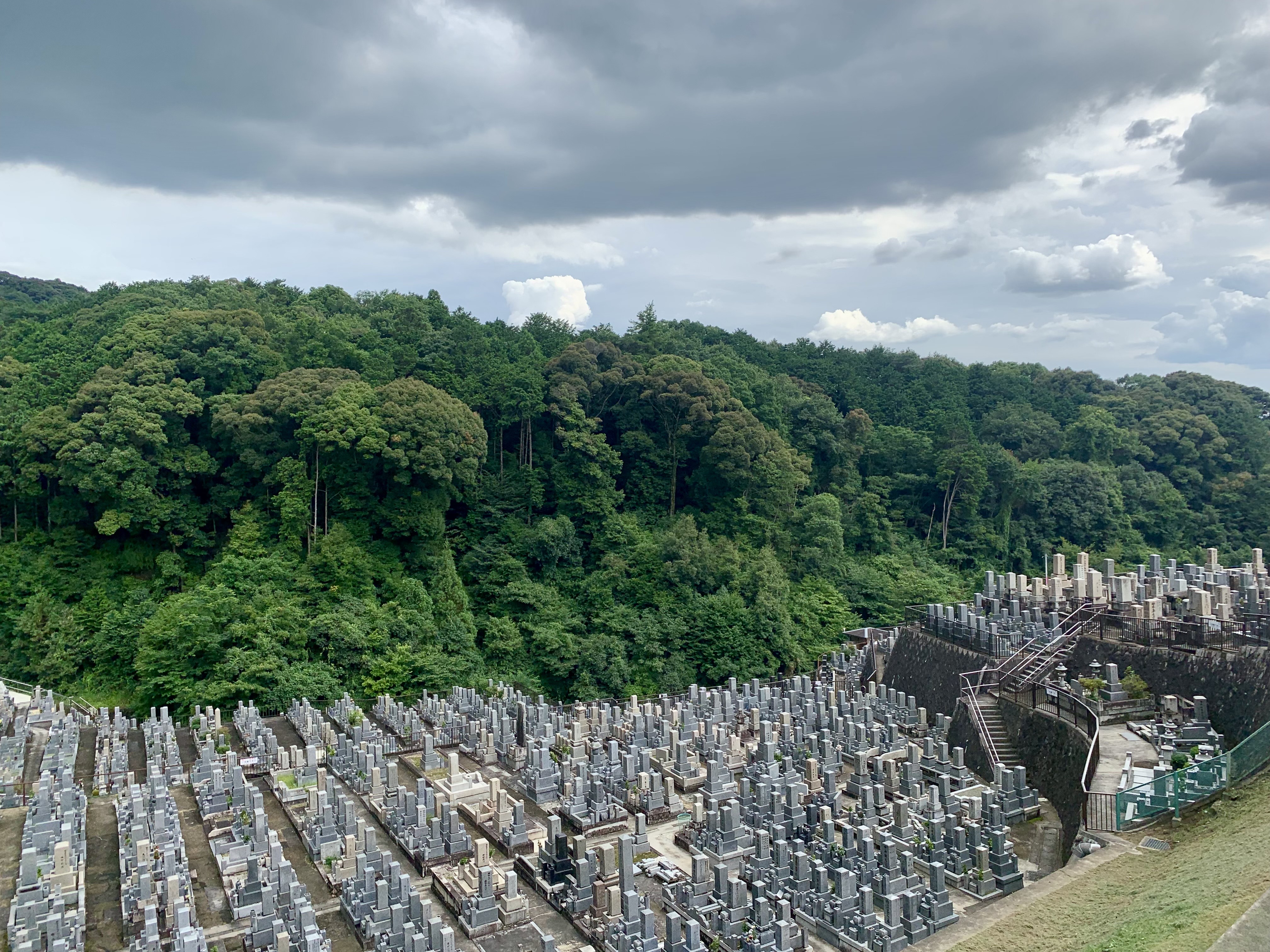
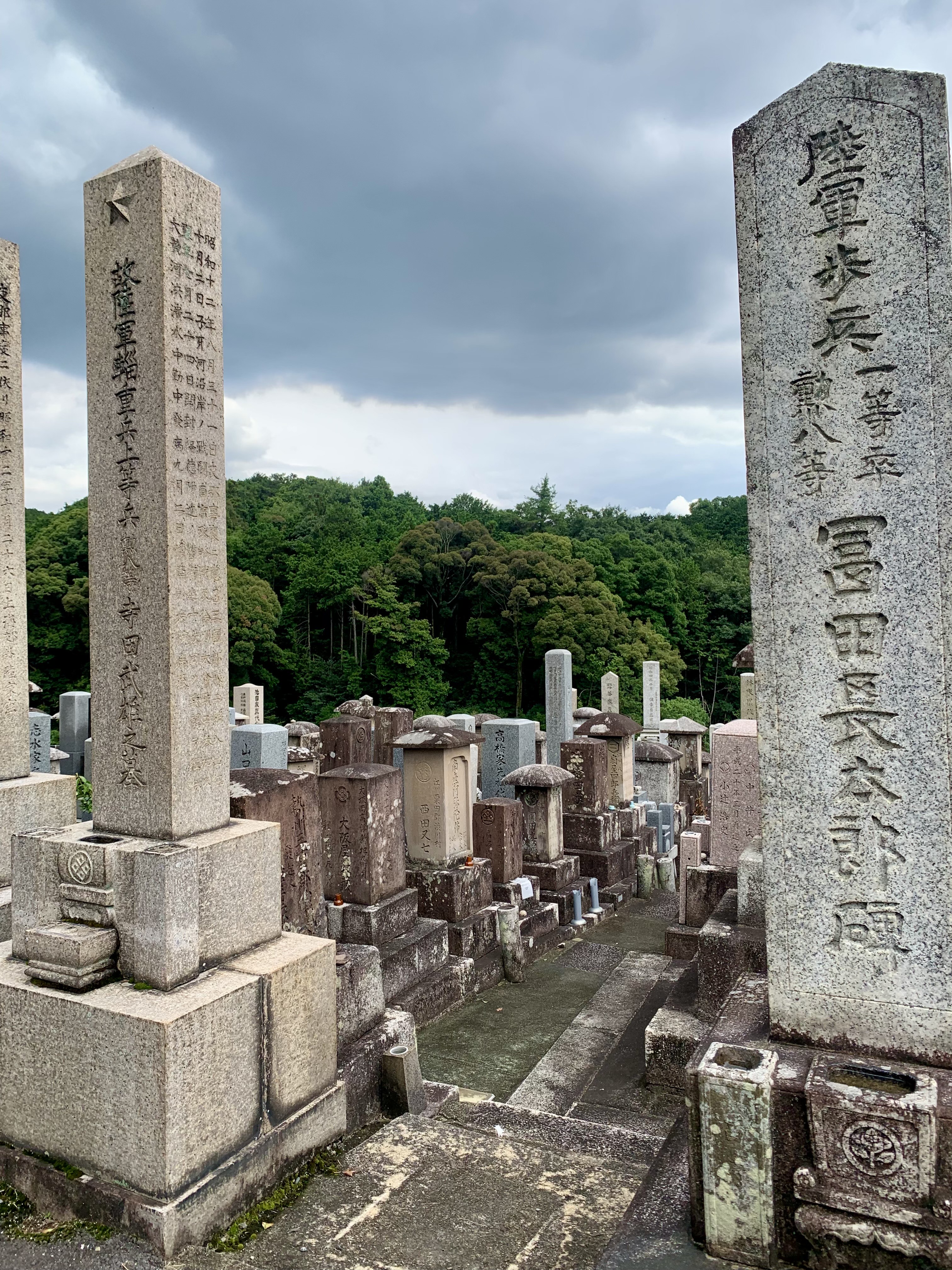
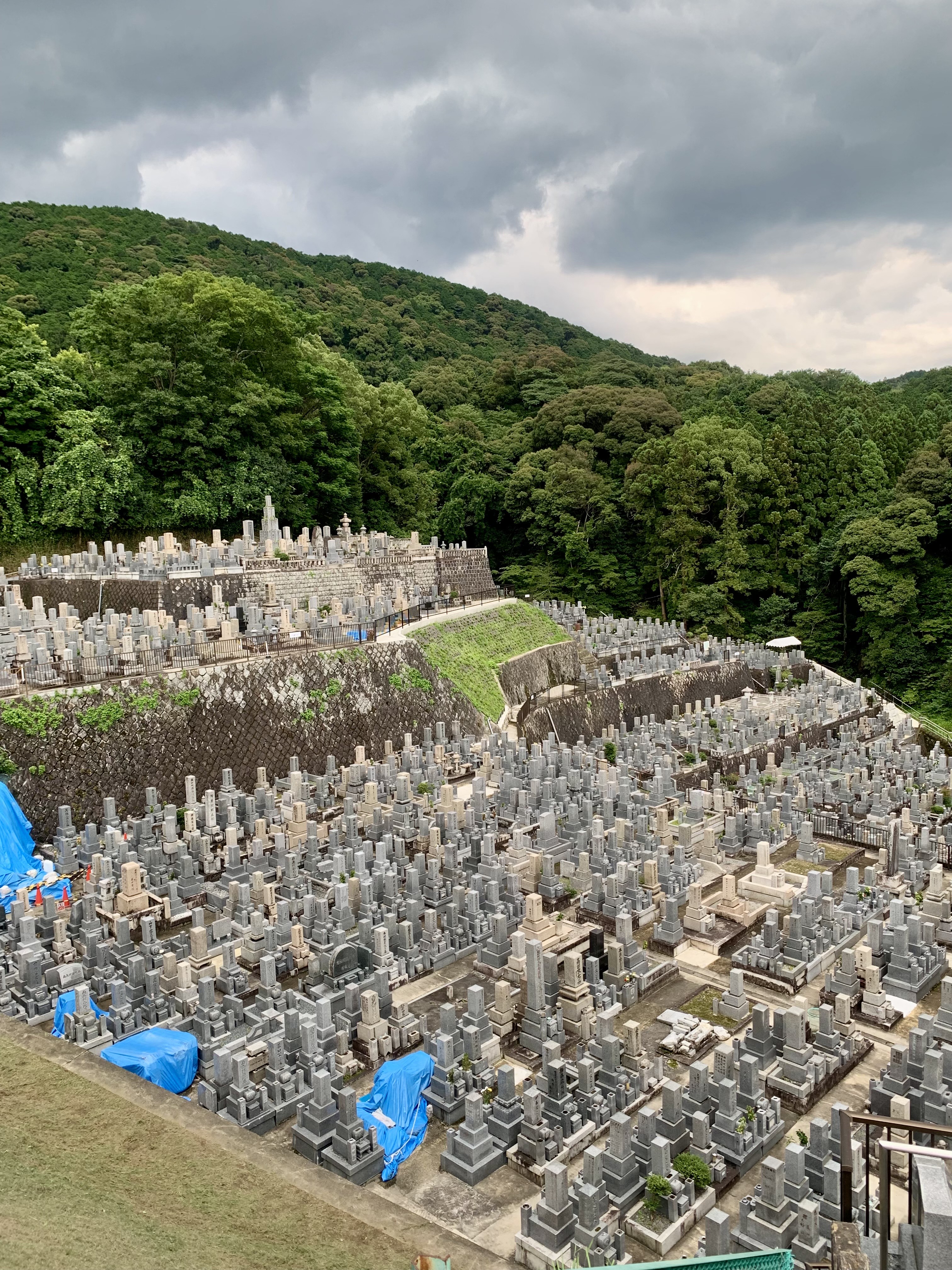
When we were shopped out we walked the 1.5 miles to the Higashi Otani Cemetery. We love cemeteries and had learned about this one during our trip research. This place was epic. It was quiet and peaceful. It dates to the 17th century and has more than 15,000 graves.
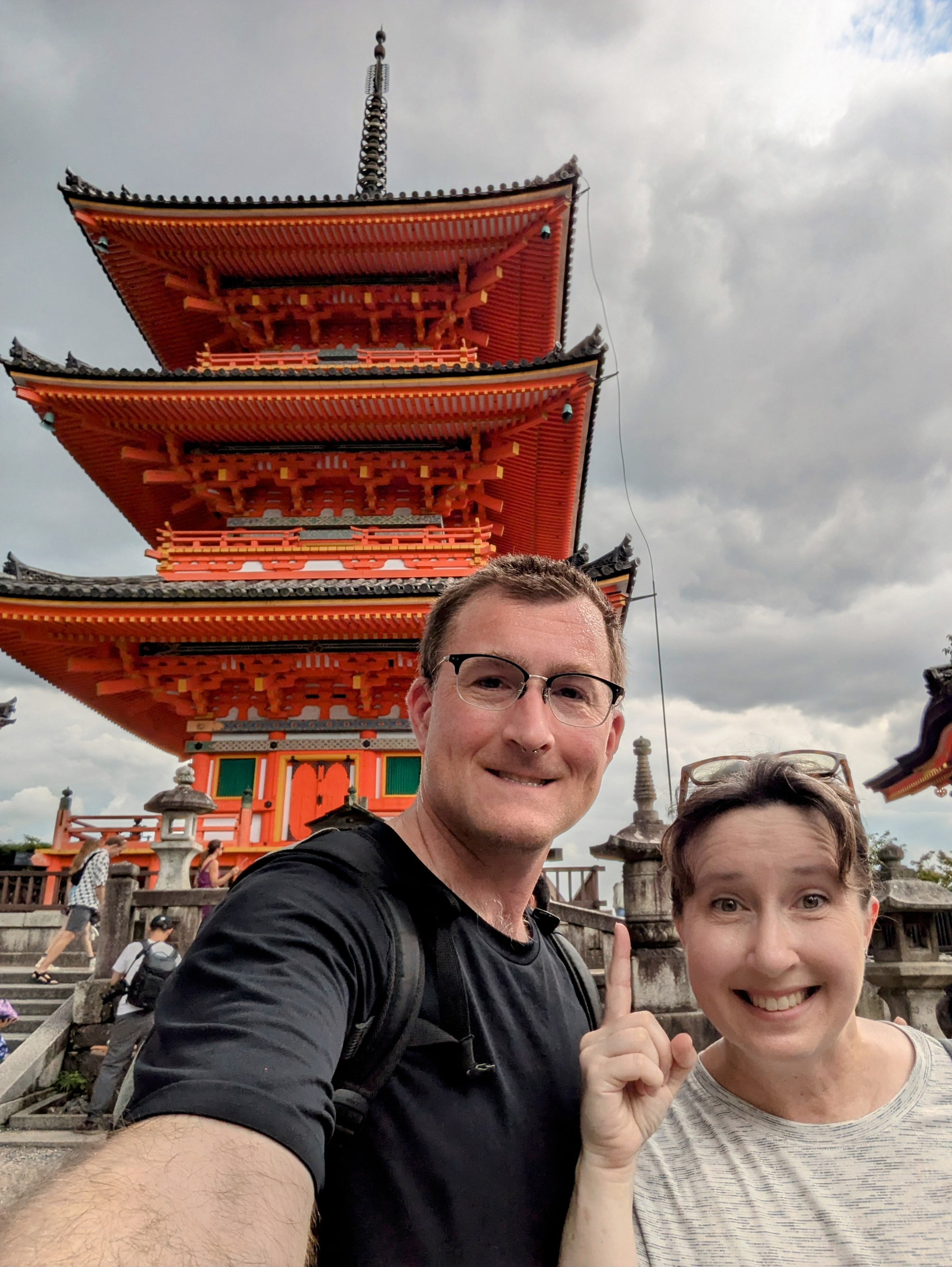
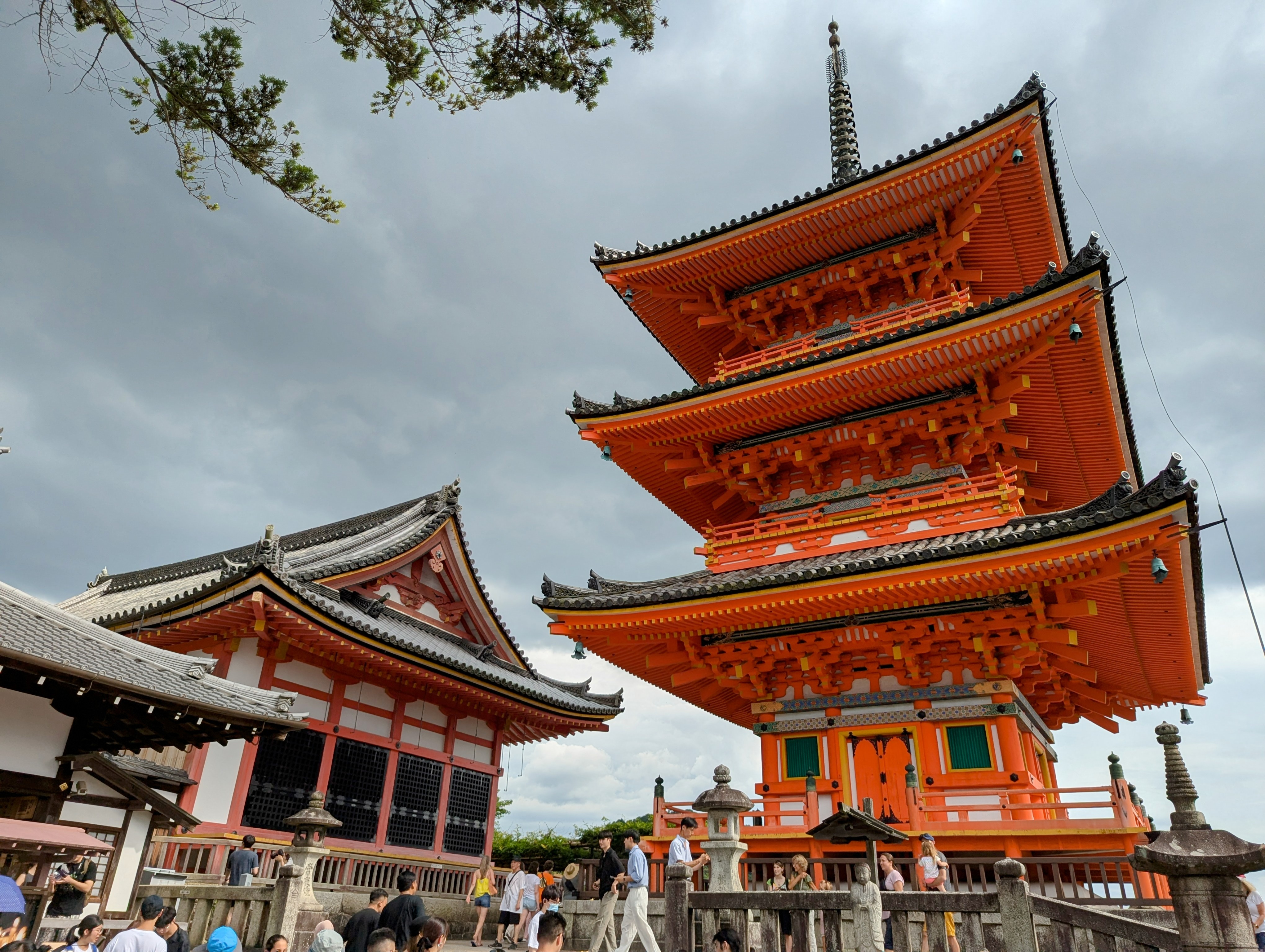
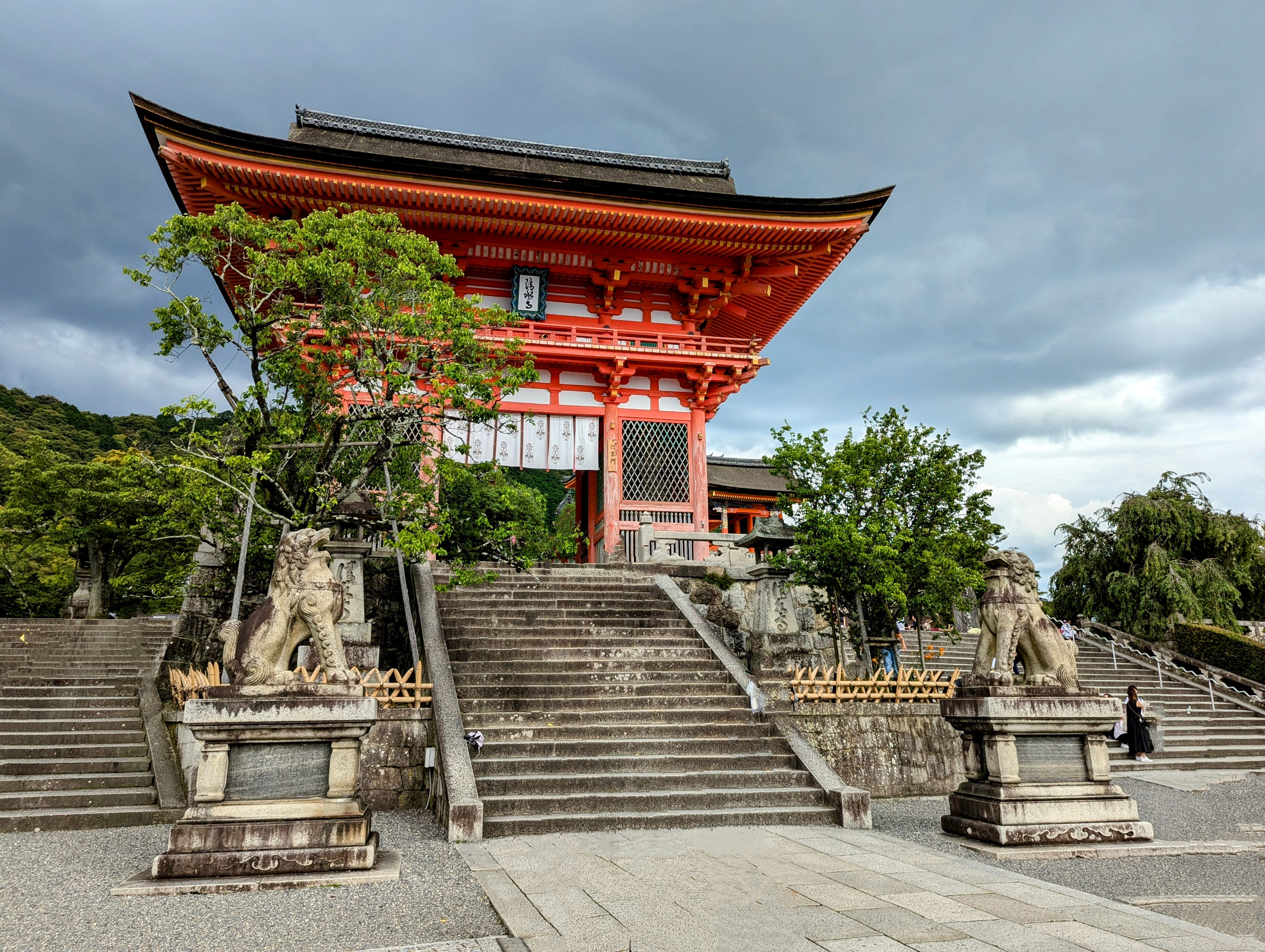
Just above the cemetery is Kiyomizu-dera, a Buddhist temple popular for tourists to visit and a stark contrast to the peace and quiet in the cemetery.
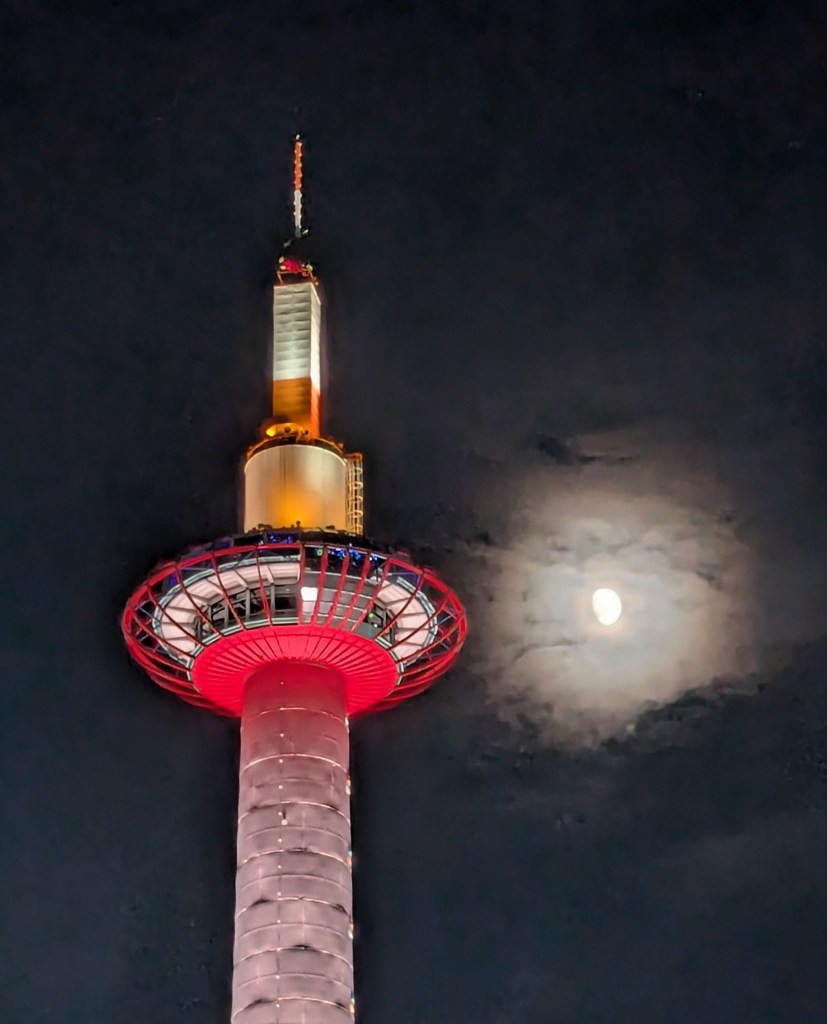
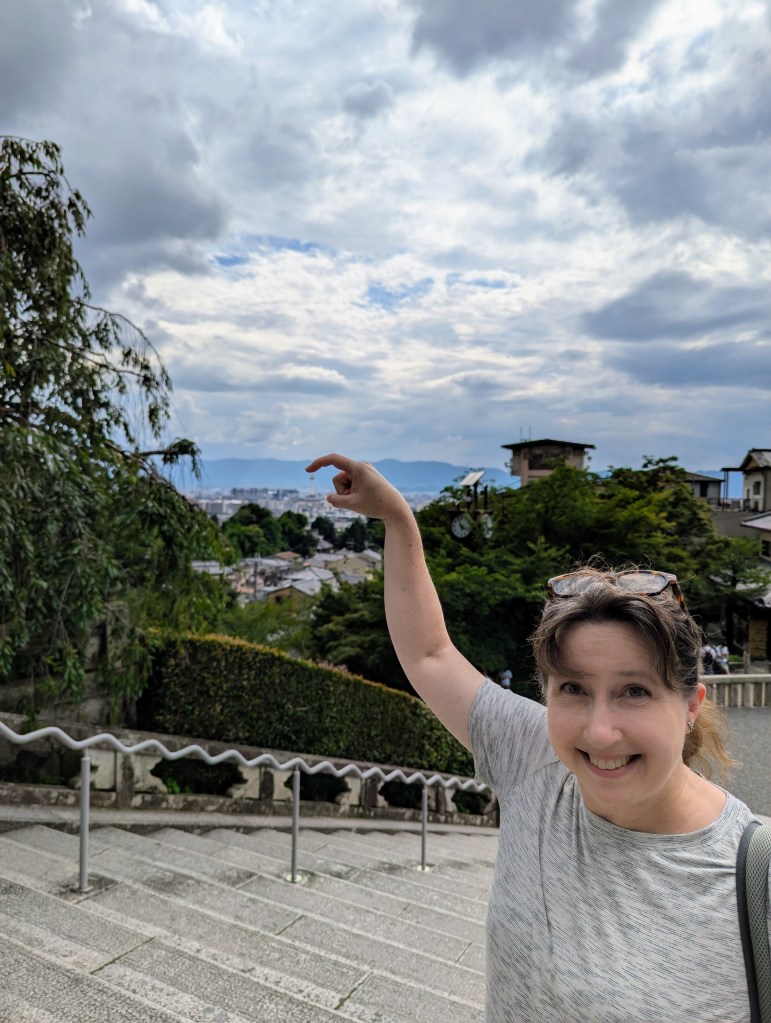
Look at me insisting on a classic HILARIOUS tourist pose with Kyoto Tower.
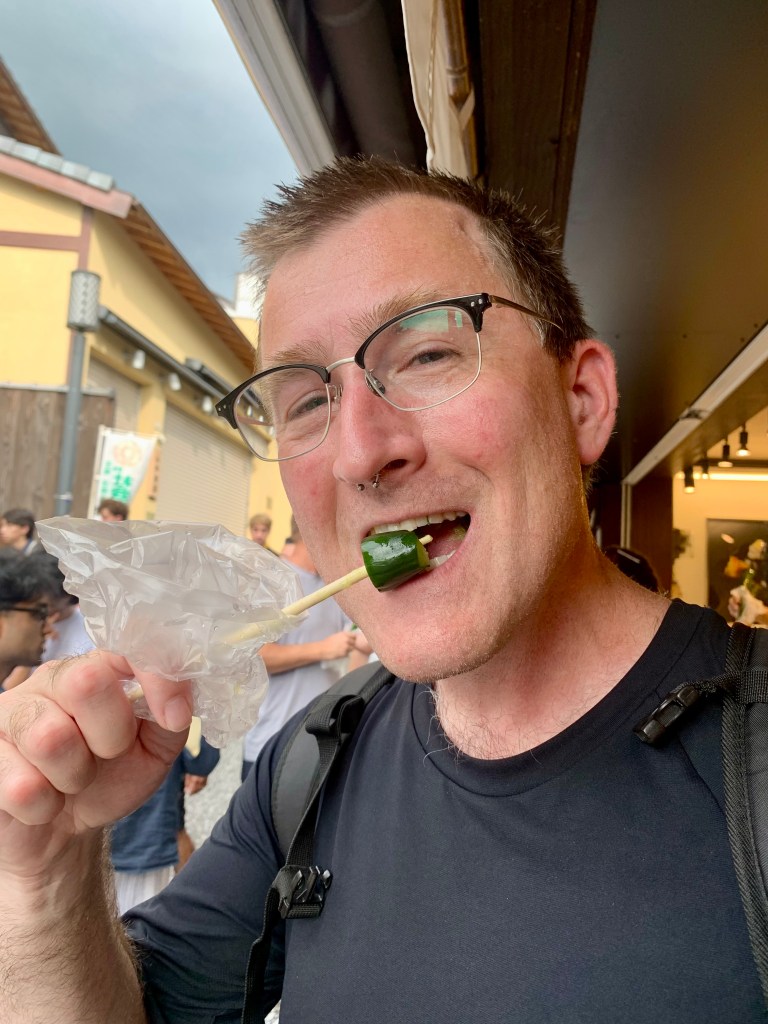
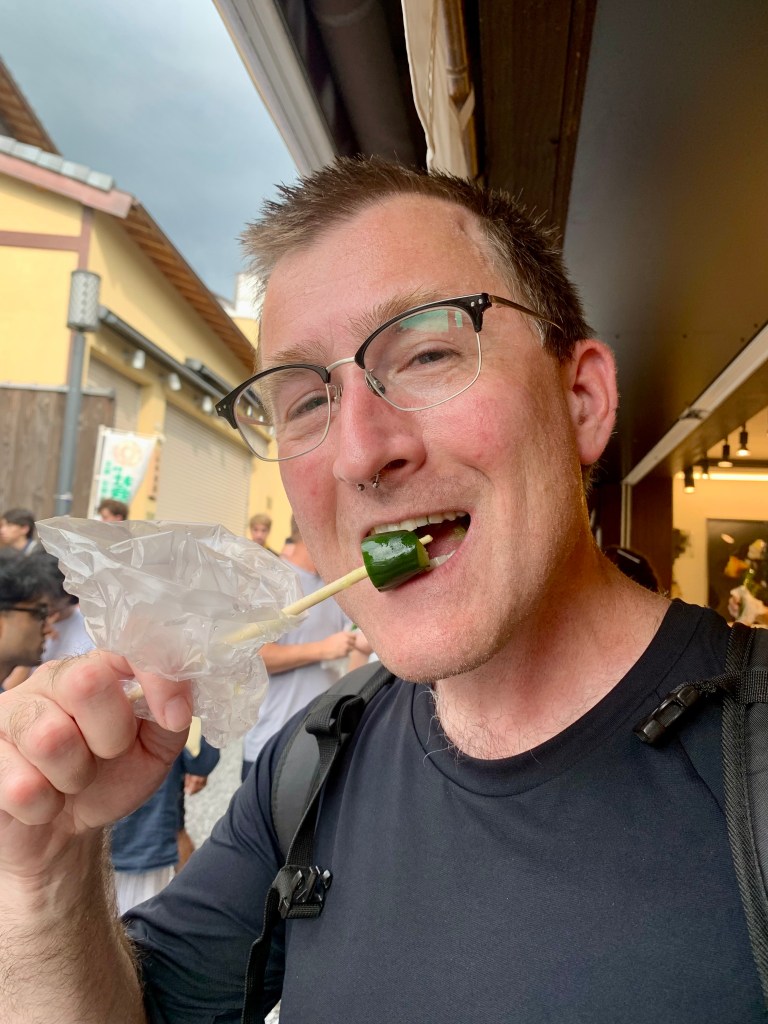
We wandered down the adjacent shopping street, and had one of the popular pickled cucumbers on a stick (not fully pickled). Scott enjoyed, I thought it was overrated.
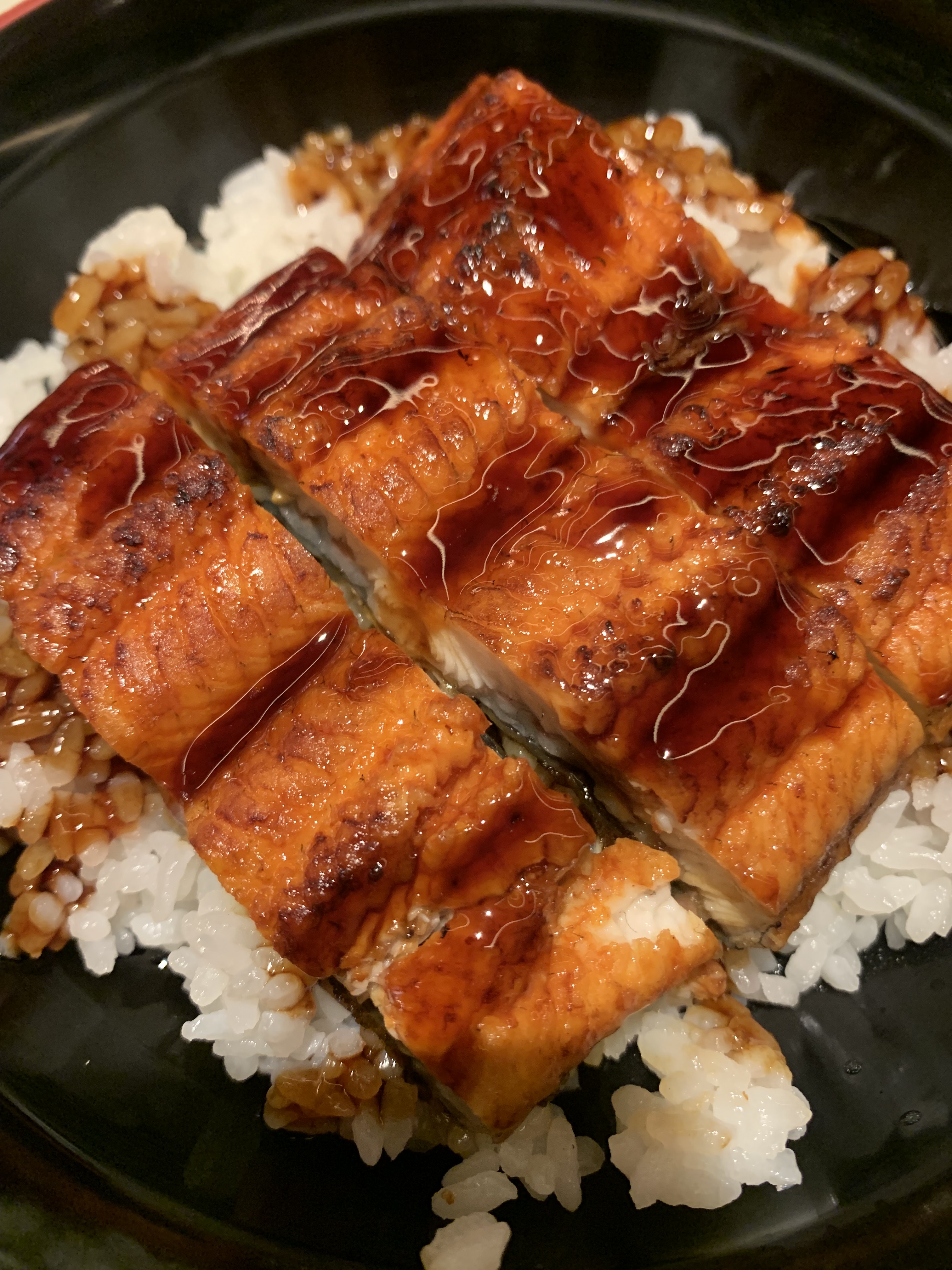
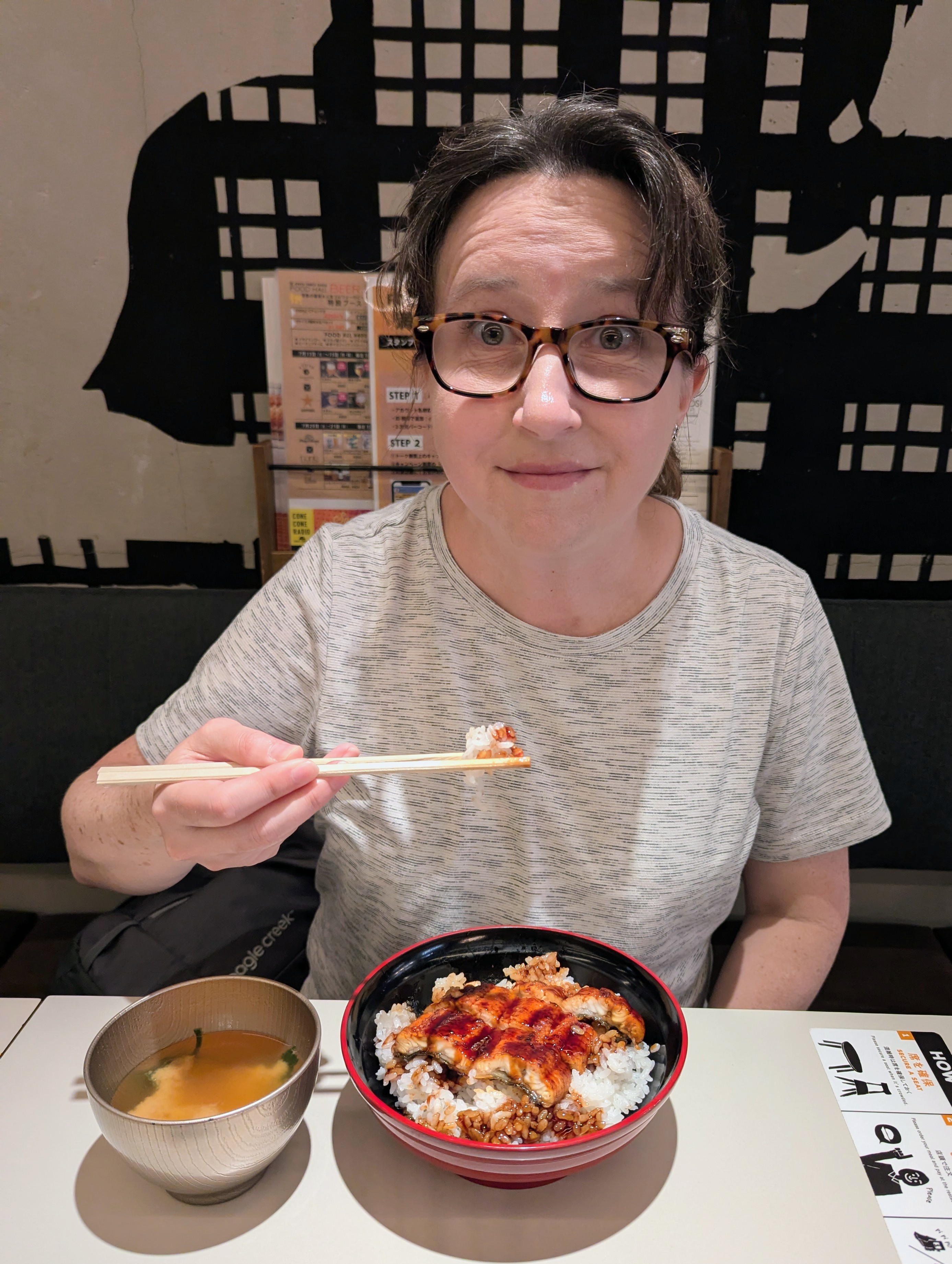
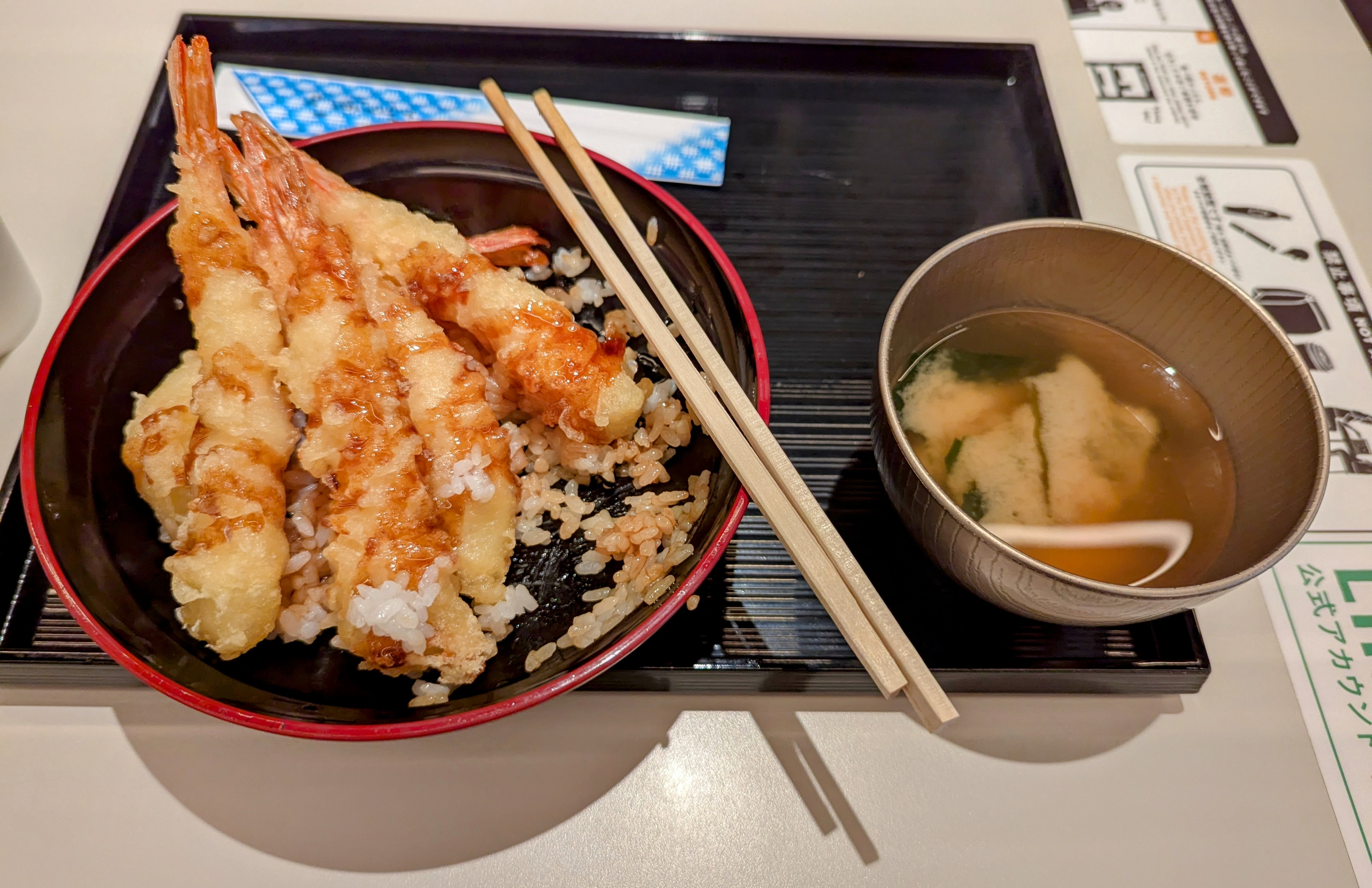
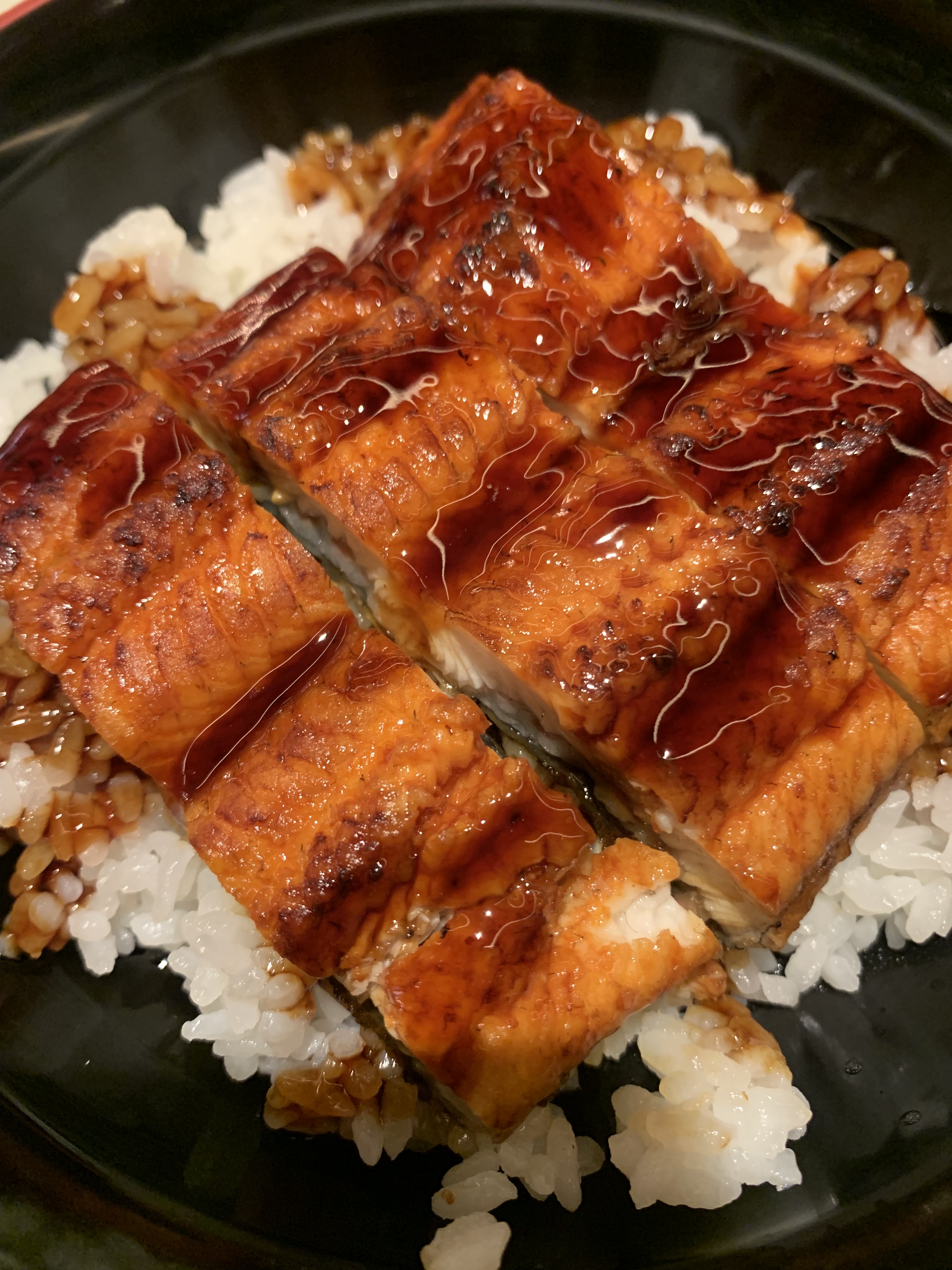
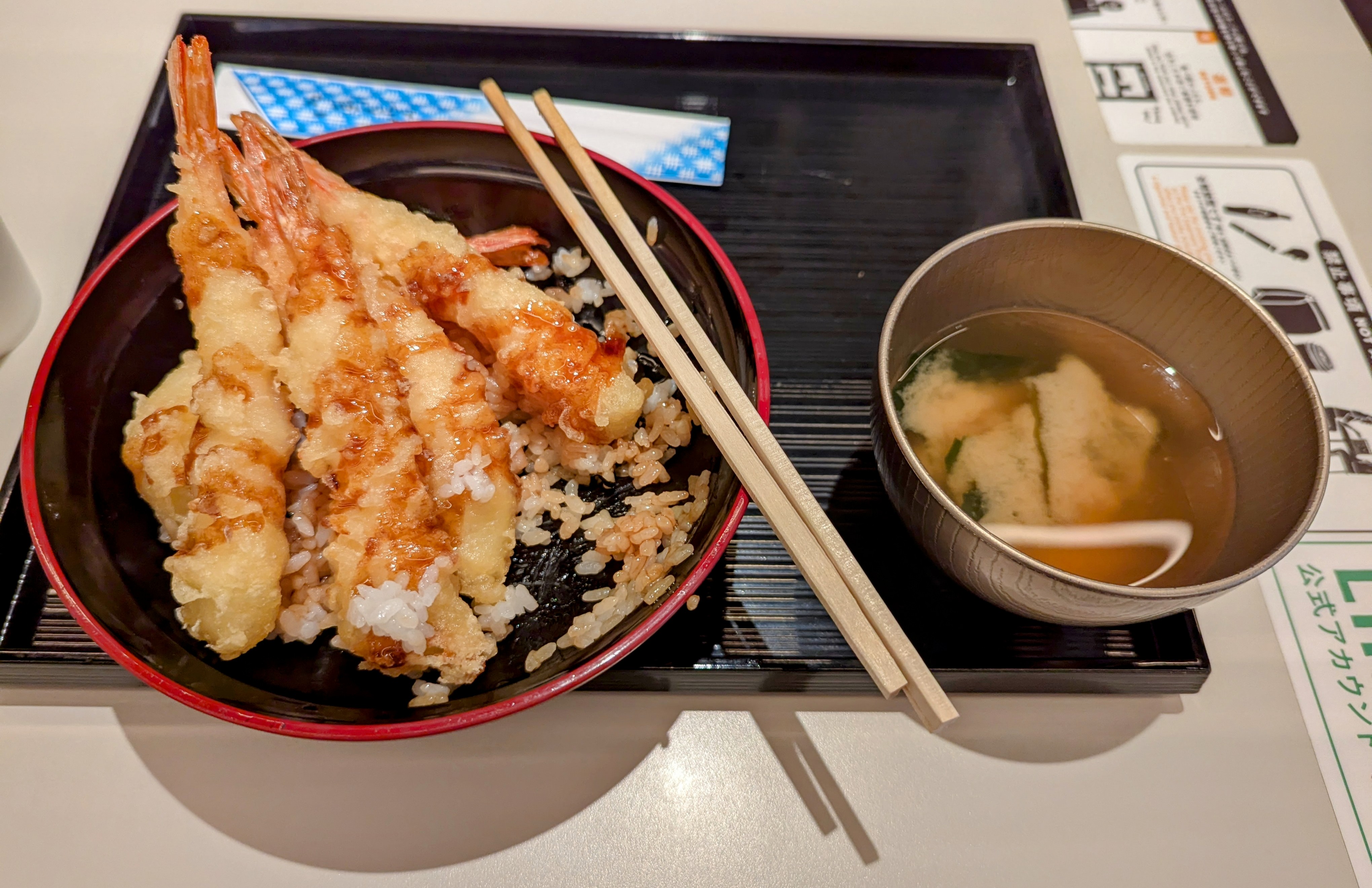
We caught a bus to Kyoto Station and found our way back into the food hall at Kyoto Tower Sando for a spot of dinner. Tempura for Scott and unagi for me.
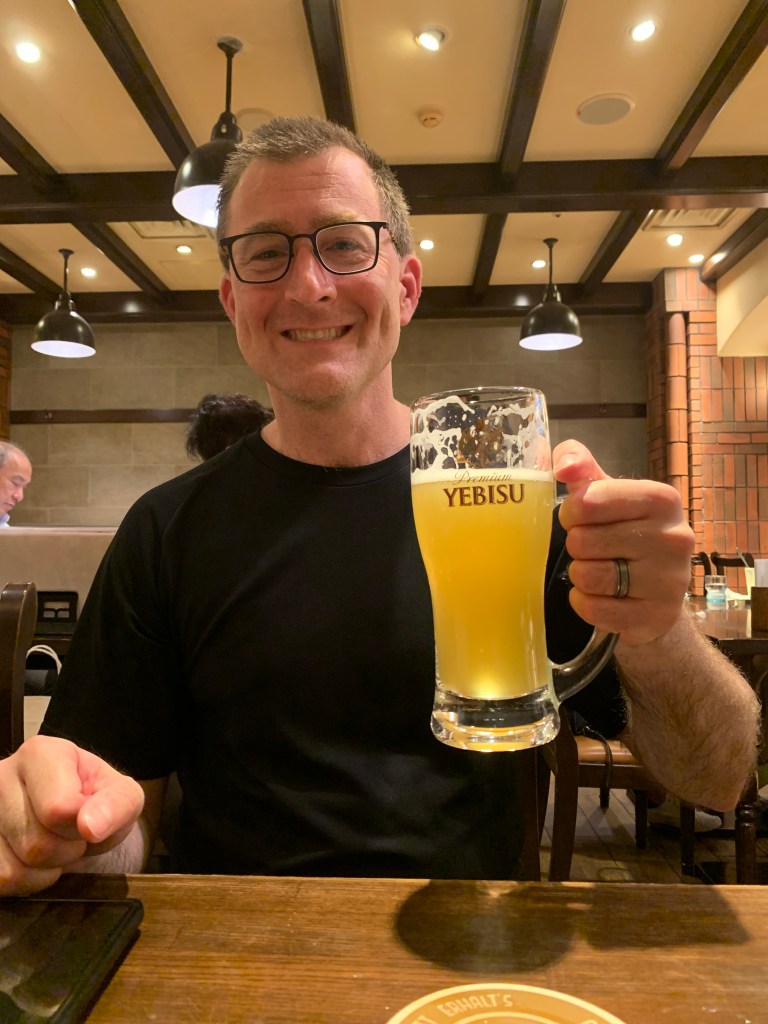
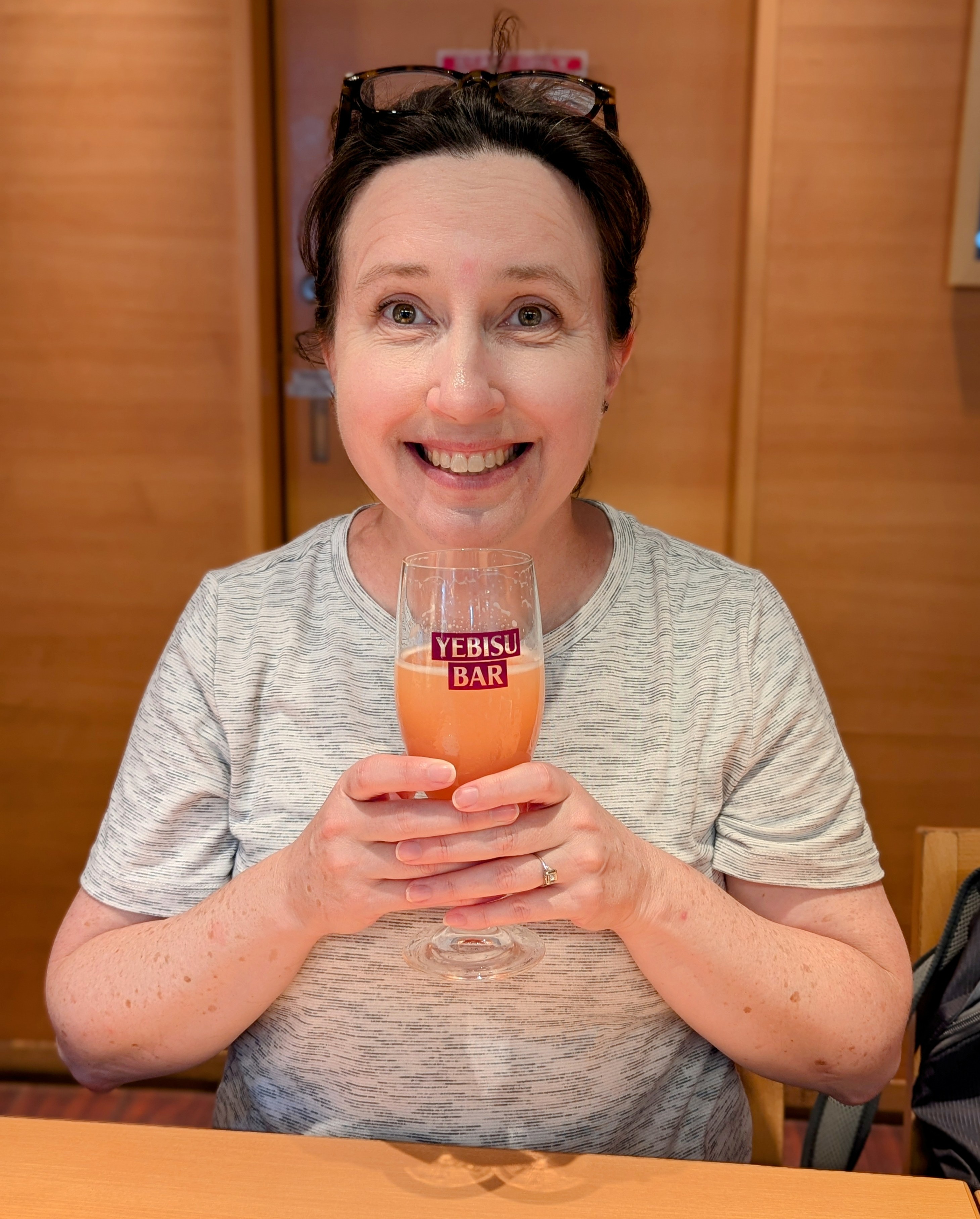
On the walk back to our hotel we stopped in at Yebisu Bar for a couple of beers.






















































































































 Kjar-ied Away